
Pinterest is more than a visual discovery platform. It is also a valuable source of keyword inspiration for bloggers, content creators, marketers, and online business owners. Every time someone searches for an idea, product, recipe, or solution, Pinterest provides clues about what its audience wants to discover. One of the easiest ways to uncover these clues is through Pinterest search suggestions.
These suggested searches can reveal popular topics, related phrases, specific user interests, and opportunities for creating content that matches real search behavior. Instead of guessing which keywords might attract attention, you can use Pinterest’s search features to build a more informed content strategy. Whether you publish seasonal articles, home decor inspiration, lifestyle content, or tutorials, understanding how to use search suggestions can help improve your Pinterest visibility and reach a more relevant audience. Here are 15 practical ways to turn Pinterest search suggestions into useful keyword research.
1. Start With Broad Seed Keywords
Begin your Pinterest keyword research by entering broad terms related to your niche into the search bar. These are known as seed keywords, and they provide a starting point for discovering more specific search phrases. For example, a home decor blogger might enter terms such as living room decor, bedroom ideas, or kitchen organization. Pinterest will often display suggestions that help narrow these broad topics into more focused searches.
Record the most relevant suggestions and organize them by topic. Avoid choosing phrases simply because they appear in the search bar. Consider whether each suggestion relates to your audience, your website content, and the type of information you can provide. Starting with broad keywords gives you a foundation for discovering valuable long-tail opportunities.

2. Discover Long-Tail Keyword Opportunities
Long-tail keywords are specific search phrases that usually communicate a clearer intention than broad terms. Instead of searching only for Christmas decor, Pinterest users might look for small apartment Christmas decor, neutral Christmas living room ideas, or budget-friendly Christmas decorations. These detailed suggestions can help you identify content opportunities with a well-defined audience.
Long-tail phrases are particularly useful for smaller blogs competing against established websites. A broad keyword may be difficult to target, while a more specific phrase gives you an opportunity to create content that answers a particular need. Look for suggestions containing descriptive words such as affordable, modern, easy, small, cozy, and beginner-friendly. These modifiers can make your article titles and Pinterest pin descriptions more relevant.

3. Use Alphabetical Search Suggestions
An effective way to expand your keyword list is to explore alphabetical variations of a seed keyword. Enter a broad phrase into Pinterest, then experiment with adding different letters or descriptive words after it. For example, searching for bedroom ideas followed by letters of the alphabet may reveal phrases such as bedroom ideas aesthetic, bedroom ideas for couples, or bedroom ideas with storage.
This technique helps uncover related searches you might not discover through ordinary brainstorming. Work through the alphabet systematically and record suggestions that make sense for your niche. You do not need to target every phrase. Select keywords that reflect meaningful topics and have enough content potential to support a useful article, tutorial, or collection of ideas.

4. Identify Seasonal Keyword Trends
Pinterest users frequently search for seasonal inspiration months before a holiday or special occasion. Search suggestions can help you identify these opportunities and prepare content ahead of peak interest. Try seed phrases such as fall decor, Thanksgiving recipes, winter outfits, or Christmas crafts to discover more specific seasonal searches.
Look for phrases that describe particular occasions, styles, activities, and preparation needs. For example, Christmas searches might reveal interest in small-space decorations, handmade ornaments, or holiday table settings. Add relevant phrases to a seasonal keyword calendar and plan your publishing schedule accordingly. Creating content early gives you time to optimize articles, design pins, and build visibility before seasonal searches become more competitive.

5. Find Specific Audience Interests
Search suggestions can reveal what different groups of Pinterest users want to explore. A broad keyword such as home office ideas may produce more specific phrases related to small apartments, students, remote workers, or minimalist spaces. These variations help you understand which audience segments are interested in particular subjects.
Use this information to develop content that addresses different needs instead of publishing several nearly identical articles. For example, a workspace guide for students could focus on affordable furniture and limited desk space, while a remote-work article might cover ergonomics and organization. Matching keywords to audience interests makes your content more focused and useful. It also helps you create pin designs and descriptions that speak directly to the intended reader.

6. Explore Related Search Phrases
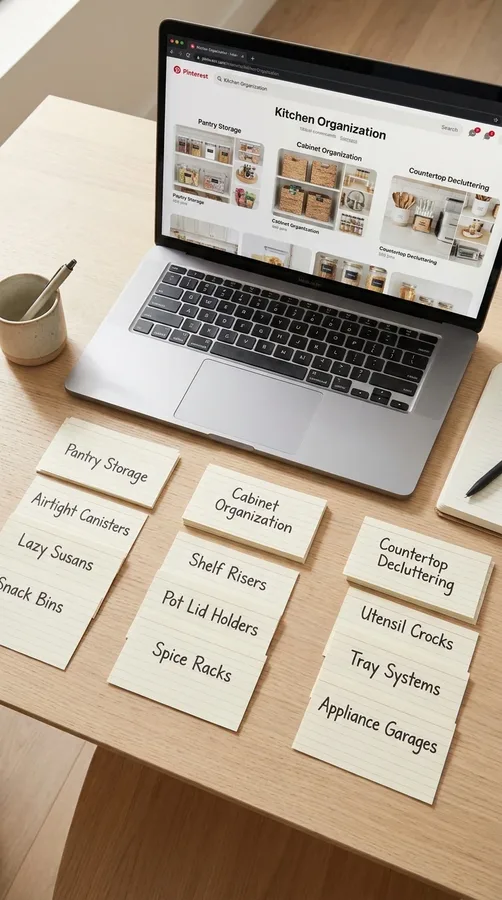
When you enter a keyword into Pinterest, examine the related suggestions that appear beneath or around the search experience. These phrases can introduce connected topics that complement your original idea. Someone researching kitchen organization, for example, may also be interested in pantry storage, cabinet organization, small kitchen solutions, and countertop decluttering.
Collect related phrases and group them according to their subject matter. This creates a broader picture of the topic and helps you identify supporting articles for your website. Related keywords can also be useful when writing pin descriptions because they provide natural ways to explain what an image or article contains. Keep the language relevant and readable rather than inserting every related phrase into one description.
7. Understand Search Intent Behind Suggestions
Not every keyword represents the same type of search intent. Some Pinterest users want inspiration, while others are looking for instructions, comparisons, shopping ideas, or solutions to a problem. Search suggestions can help you recognize these differences through descriptive words and phrases.
For example, a search beginning with DIY may indicate that users want step-by-step instructions. A phrase containing best or top may suggest comparison-oriented content, while easy or beginner-friendly often signals a preference for simple guidance. Identify the purpose behind each keyword before deciding what to publish. A well-matched article format is more likely to satisfy the searcher than content that uses a popular phrase without addressing the underlying need.
8. Build Keyword Clusters Around Main Topics
Keyword clustering involves grouping related search phrases under one central topic. Pinterest suggestions make this process easier because they often reveal different variations of the same subject. For example, a main topic such as small bedroom ideas could include storage solutions, minimalist furniture, color schemes, lighting, and layout inspiration.
Organize these phrases into clusters based on their search intent and relevance. A comprehensive article may cover several closely connected subtopics, while more distinct searches could become separate supporting articles. This approach helps you build topical depth without creating unnecessary duplicate content. It also gives you a clear structure for planning internal links and creating multiple Pinterest pins that lead to useful, related resources.

9. Research Question-Based Keywords
Some search suggestions reveal questions people want answered. These phrases can inspire helpful tutorials, detailed guides, and troubleshooting articles. Look for question-style keywords containing words such as how, what, why, when, and which. For instance, a gardening blogger might discover searches related to how to grow herbs indoors or which plants grow well in low light.
Question-based keywords are useful because they highlight a specific information gap. Build your content around providing a direct, accurate answer, then expand with practical examples and additional advice. You can also use these questions as H2 or H3 headings when they fit naturally. This makes your articles easier to scan and helps readers find the information they need quickly.

10. Compare Keyword Variations and Modifiers
Small changes in wording can reveal different search preferences. Compare variations of your main keyword by adding modifiers such as modern, rustic, affordable, elegant, simple, colorful, or minimalist. A search for dining room decor may lead to more focused phrases such as modern dining room wall decor or budget-friendly dining room decorating ideas.
Pay attention to the words that repeatedly appear across relevant suggestions. These modifiers can help you understand how users describe the style, budget, difficulty, or outcome they want. Use them to develop distinct content angles rather than changing only a few words in otherwise identical articles. The goal is to identify genuinely different reader needs and create content that addresses each one effectively.

11. Find Content Gaps in Your Niche
Pinterest suggestions can reveal specific topics that are missing from your existing content library. Start by comparing suggested searches with the articles already published on your website. If you have several general home decor guides but no content addressing small-space winter decorating, that phrase may represent an opportunity worth exploring.
Look for suggestions that connect to your niche but are not adequately covered by your current articles. Before creating a new post, evaluate whether the topic deserves its own article or belongs in an existing guide. Search suggestions alone do not prove that a topic is underserved, so review competing content and assess whether you can provide something more useful, detailed, or original. This helps you build a content strategy around genuine opportunities.

12. Use Suggestions to Improve Blog Titles
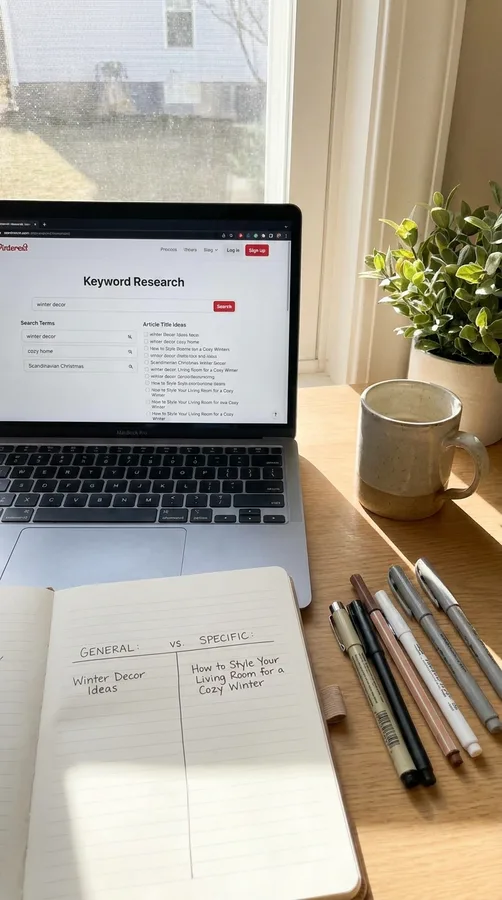
A strong blog title communicates the subject clearly and gives readers a reason to explore the article. Pinterest search suggestions can help you choose wording that reflects how people actually describe the topics they want to discover. If your initial title uses a broad phrase, a more specific suggested keyword may help you make it clearer and more appealing.
For example, a general title about winter decorations could become a more focused guide to cozy winter living room decor ideas. Include the primary phrase naturally and use supporting modifiers when they accurately describe the article. Avoid awkward keyword repetition or exaggerated promises. Your title should accurately represent the content while making its main benefit immediately understandable to potential readers.

13. Optimize Pinterest Pin Descriptions
Search suggestions are useful when writing Pinterest pin descriptions because they provide relevant language for explaining your content. Choose one primary keyword and a few closely related phrases that accurately describe the linked article or visual. For a pin about pantry organization, relevant terms might include pantry storage ideas, organized kitchen shelves, and small pantry solutions.
Write descriptions in natural sentences rather than creating a disconnected list of search terms. Explain what readers will find when they click, highlight a practical benefit, and include a clear reason to save or visit the content. Each pin should have a description that matches its specific image and destination. This creates a better experience for Pinterest users and keeps your keyword use relevant.

14. Create a Pinterest Keyword Research Spreadsheet
Collecting suggestions is more useful when you have a consistent system for organizing them. Create a spreadsheet with columns for the main topic, suggested keyword, search intent, seasonal relevance, content type, and publishing status. You can also add notes about related phrases and potential article titles.
Use separate tabs for different content categories, such as recipes, home decor, crafts, fashion, or business advice. This makes it easier to identify patterns and prevent repeated research. Review your spreadsheet regularly to update outdated ideas and identify new content opportunities. An organized keyword database also helps you plan Pinterest boards, optimize existing articles, and maintain a consistent publishing schedule without starting your research from scratch every time.

15. Validate Suggestions Before Publishing
Pinterest search suggestions are useful research clues, but they should not be treated as exact search-volume data or proof that a keyword will generate traffic. Before committing to an article, evaluate the phrase’s relevance, competition, and potential value to your audience. Search the keyword on Pinterest and examine the results to understand the content formats, visual styles, and topics already appearing.
Compare your findings with other research sources when possible, including Pinterest Trends, Google search results, and your own website analytics. Check whether the keyword matches your expertise and whether you can produce a genuinely helpful resource. Prioritize phrases that combine audience relevance with a clear content opportunity. This final validation step helps turn a collection of suggestions into a practical, focused publishing strategy.

Conclusion
Pinterest search suggestions offer a practical starting point for understanding what people want to discover, learn, and save. By exploring broad keywords, identifying long-tail phrases, researching seasonal interests, and organizing related searches into topic clusters, you can build a more intentional content strategy. Use suggestions to improve article titles, develop useful blog topics, and write relevant pin descriptions, but always validate your ideas before publishing. Combine Pinterest research with audience knowledge, quality content, and performance data to make informed decisions. With a consistent approach, Pinterest search suggestions can become a valuable part of your keyword research process and help your content reach people who are actively looking for it.
Leave a Reply