
Creating a peaceful home does not mean making every corner look perfect. Sometimes, the most beautiful interiors are the ones that celebrate natural materials, handmade objects, weathered finishes, and little imperfections. This is the heart of wabi-sabi, a Japanese-inspired design philosophy that finds beauty in simplicity, authenticity, and the passage of time. Wabi-sabi decor embraces earthy colors, organic textures, vintage furniture, and meaningful pieces that make a home feel personal rather than staged.
If you love relaxed interiors with warmth and character, wabi-sabi decorating offers a refreshing alternative to perfectly coordinated spaces. You do not need an expensive renovation or an entirely new furniture collection to achieve the look. Small changes, such as adding handmade pottery, choosing linen curtains, or displaying natural branches, can make a noticeable difference. These 17 wabi-sabi decor ideas will help you create an imperfect, calm, and inviting home that feels connected to nature and comfortable for everyday living.
1. Choose Earthy and Muted Color Palettes
One of the easiest ways to introduce wabi-sabi style is through a soft, earthy color palette. Think warm beige, creamy white, mushroom gray, muted brown, clay, and gentle olive green. These colors create a peaceful foundation without making a room feel cold or overly minimal. Instead of using several bold shades, let subtle variations in natural tones bring depth to your interior. Paint walls in warm off-white, choose sand-colored upholstery, or introduce a muted brown rug. You can also layer slightly different shades of the same color to create interest. The goal is a relaxed atmosphere that feels inspired by the natural world rather than a perfectly matched showroom.
2. Decorate with Handmade Ceramic Pottery
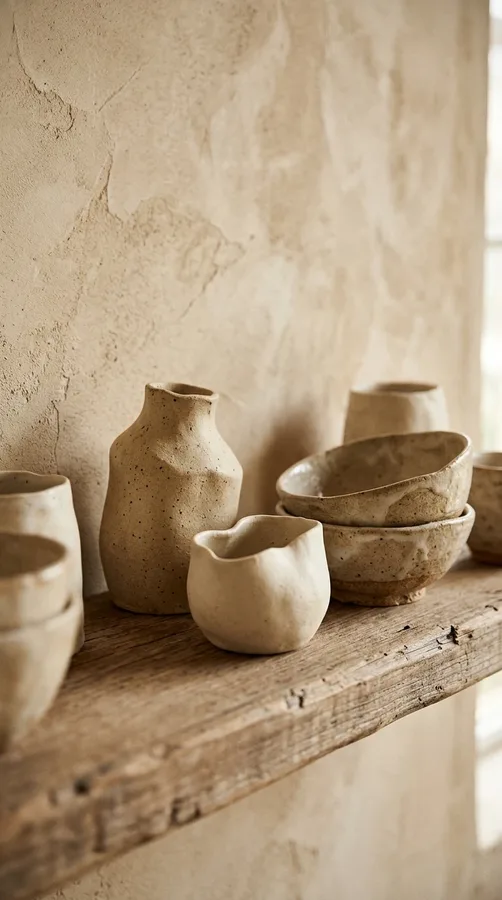
Handmade ceramics are a natural fit for wabi-sabi interiors because every piece has its own character. Look for pottery with uneven edges, textured surfaces, subtle color variations, and organic shapes. A handmade vase on a coffee table or a collection of ceramic bowls on an open shelf can add warmth without creating clutter. Choose finishes in cream, charcoal, sand, or earthy brown to maintain a cohesive look. You do not need to display expensive artisan pieces either. Locally made pottery and simple handmade objects can bring the same authentic feeling. Allow each item enough space to stand out, making its texture and imperfect details part of the decoration.
3. Bring in Natural Wood Furniture
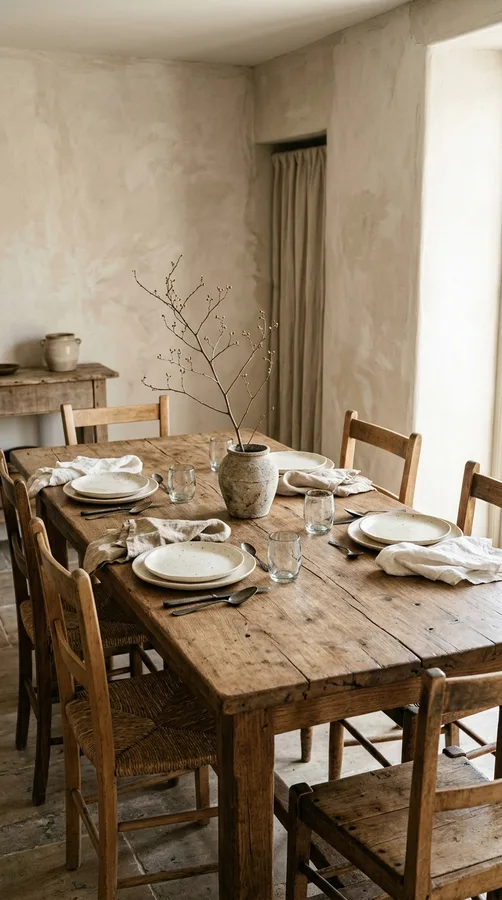
Natural wood adds warmth and an organic quality that makes a wabi-sabi home feel grounded. Instead of choosing furniture with glossy finishes or perfectly uniform surfaces, consider pieces that show their grain, knots, and natural variations. A solid wood dining table, a rustic bedside cabinet, or a simple wooden bench can become a beautiful focal point. Light oak, walnut, reclaimed timber, and weathered wood all work well with this aesthetic. Keep the styling uncomplicated so the material remains the main attraction. Small scratches and signs of age do not necessarily need to be hidden; they can contribute to the lived-in character that makes wabi-sabi interiors feel authentic.
4. Add Relaxed Linen Curtains
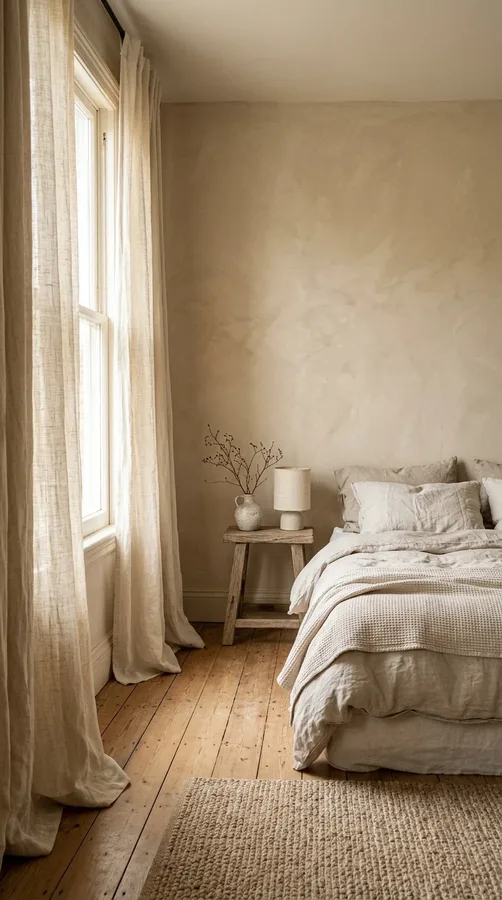
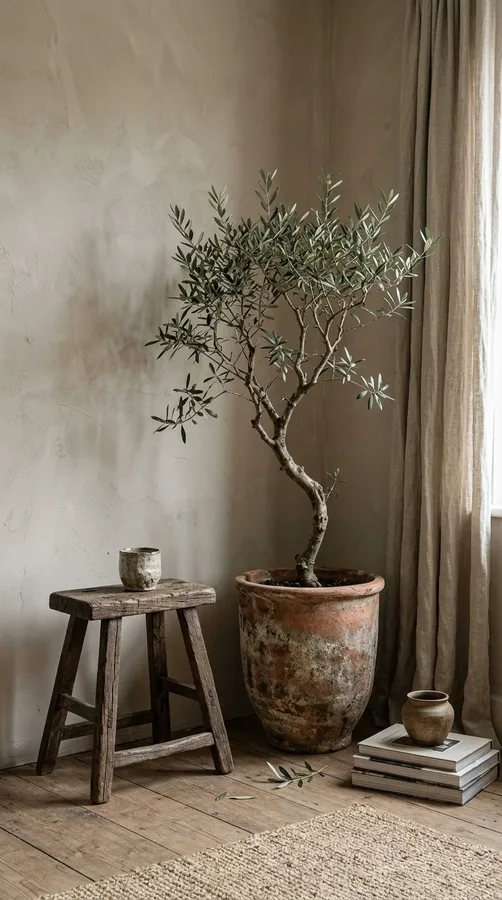
Linen curtains are perfect for creating a soft, effortless atmosphere. Their slightly uneven texture and natural folds add movement to a room, while their breathable appearance allows the space to feel light and comfortable. Choose unlined or lightly lined linen in ivory, oatmeal, warm white, or muted beige. Let the fabric hang naturally rather than creating perfectly stiff folds. Floor-length curtains can make a living room or bedroom feel taller and more inviting. During the day, natural light filtering through linen creates gentle shadows and a peaceful atmosphere. This simple change can make a room feel more connected to nature without requiring additional furniture or decorative accessories.
5. Create a Minimalist Wabi-Sabi Living Room
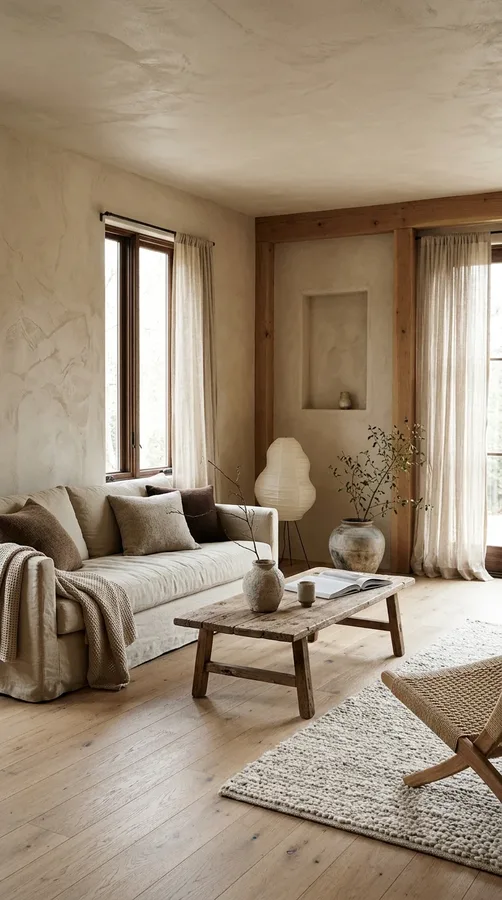
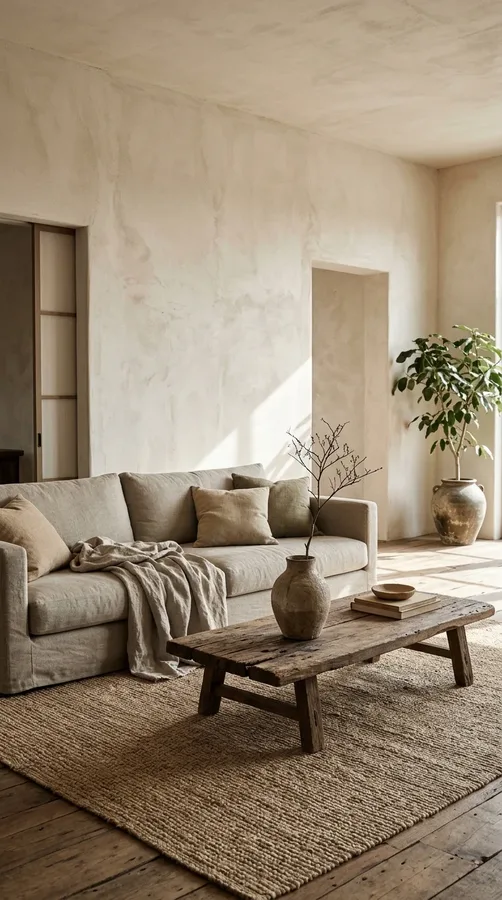
A wabi-sabi living room should feel comfortable, open, and easy to enjoy. Start with a few essential pieces, such as a relaxed sofa, a low wooden coffee table, and a textured area rug. Avoid filling every empty corner with accessories. Instead, allow negative space to become part of the design. Choose furniture with rounded edges, natural materials, and understated finishes. A slightly wrinkled throw blanket or an imperfect handmade bowl can add enough personality without overwhelming the room. Keep the arrangement practical for everyday conversations and relaxation. The result should feel welcoming rather than staged, with every object serving a purpose or adding genuine character.
6. Use Stone and Textured Plaster Walls
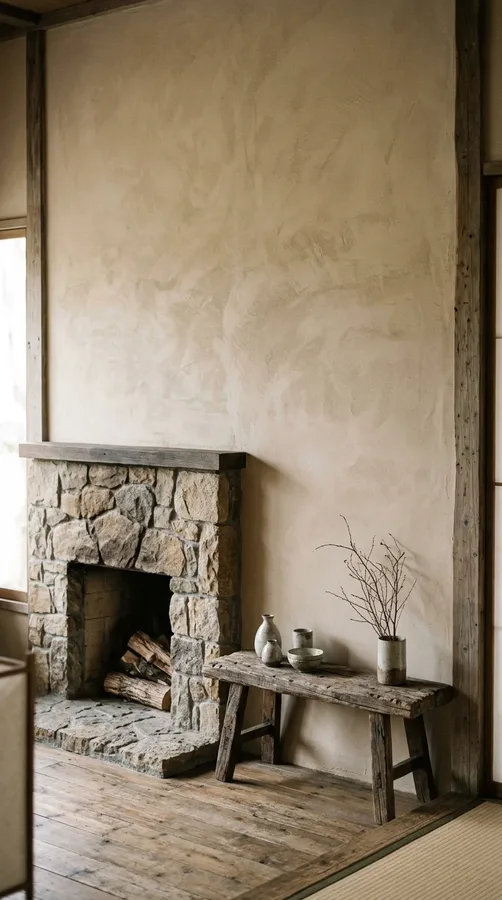
Wabi-sabi interiors often celebrate surfaces that look natural rather than perfectly polished. Textured plaster walls, limewash finishes, and exposed stone can create subtle visual depth without requiring decorative patterns. A warm plaster finish in beige, taupe, or soft gray makes an excellent background for simple furniture and natural accessories. If a complete wall treatment is outside your budget, try a smaller accent wall or introduce stone through a fireplace surround or decorative shelf. Slight variations in the finish help create an authentic appearance. Avoid overly shiny coatings that hide the material’s character. These understated surfaces make rooms feel layered, calm, and beautifully connected to natural architecture.
7. Style Your Home with Dried Branches
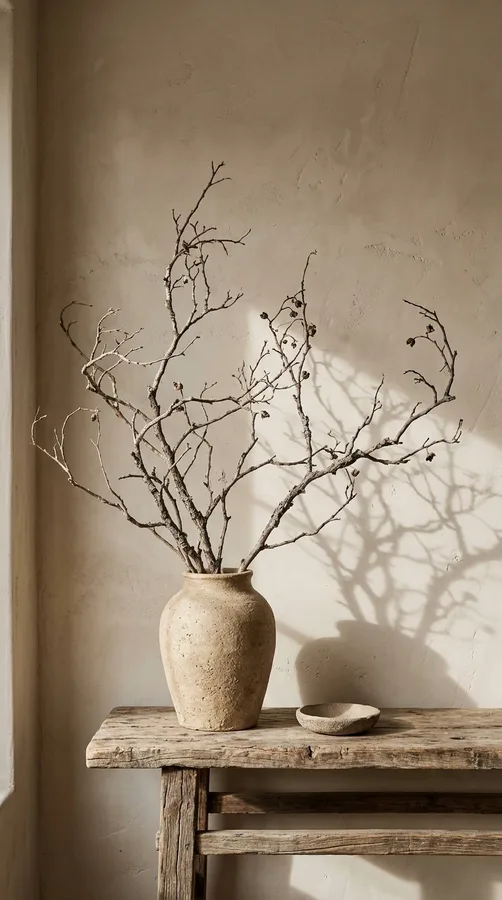
Natural branches are an affordable way to bring organic beauty into a wabi-sabi home. Place a few sculptural branches in a handmade ceramic vase and display them on a console, dining table, or empty corner. Their irregular shapes create visual interest without introducing bright colors or unnecessary decoration. You can use dried eucalyptus, bare seasonal branches, or simple twigs collected responsibly from the outdoors. Choose arrangements that look loose and natural rather than tightly organized. A single branch can sometimes make a stronger statement than a large bouquet. This decorating idea also changes naturally with the seasons, giving your home a fresh look without requiring frequent purchases.
8. Embrace Vintage and Weathered Furniture
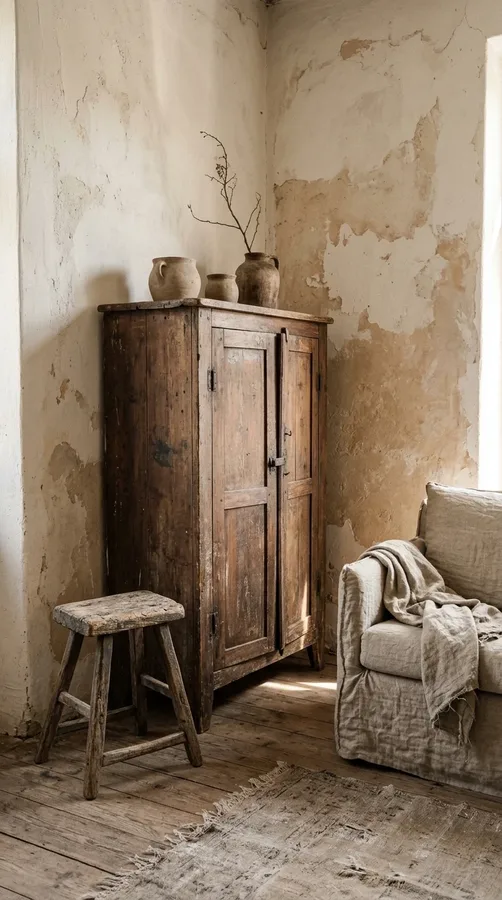
Vintage furniture adds history and individuality to a wabi-sabi interior. Rather than replacing every old item, consider whether a worn wooden cabinet, an antique stool, or a weathered side table could become part of your design. Look for pieces with interesting grain, aged finishes, and simple silhouettes. Small marks and uneven coloring can give furniture a sense of character that new mass-produced pieces sometimes lack. If a piece needs refreshing, use a gentle restoration approach that preserves its original appearance. Combine vintage furniture with contemporary basics to keep the room feeling balanced. The mix of old and new creates a personal interior that develops naturally over time.
9. Layer Natural Textures for Warmth
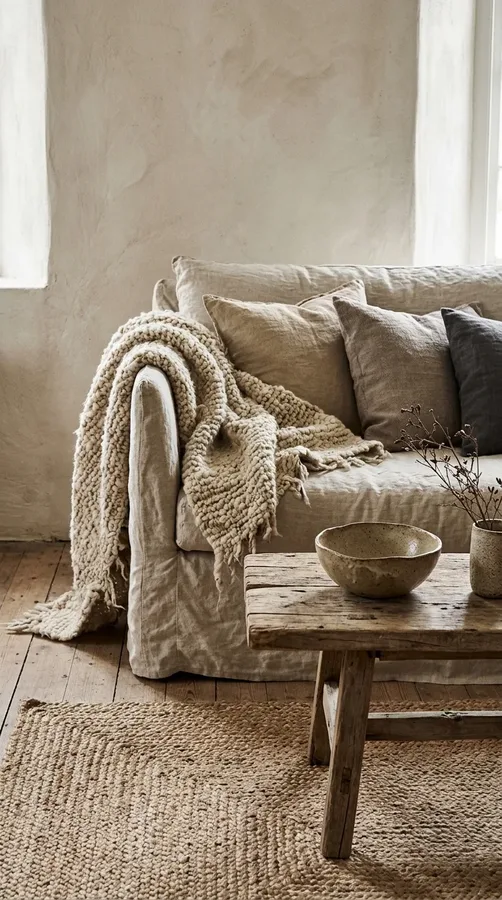
Texture is one of the most important elements of wabi-sabi decorating. When your color palette is simple, different materials help prevent the room from feeling flat. Combine linen, wool, cotton, jute, wood, stone, and handmade ceramics to create a rich but understated environment. For example, place a woven jute rug beneath a wooden coffee table, add a soft wool throw to a linen sofa, and finish the arrangement with a ceramic vase. The materials do not need to match perfectly. Their natural differences create the visual interest. Keep the palette connected through earthy shades so the layered textures feel harmonious rather than busy.
10. Keep Your Bedroom Soft and Uncluttered
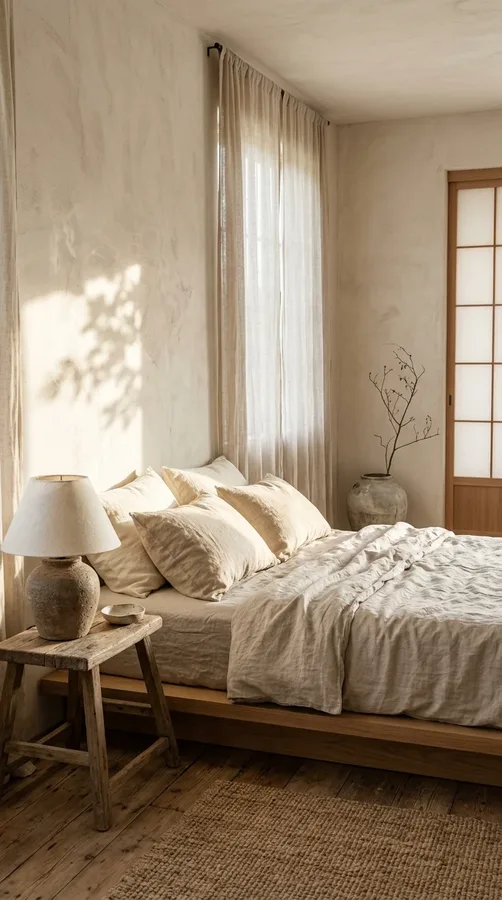
A wabi-sabi bedroom should feel like a peaceful retreat from everyday distractions. Choose simple bedding in natural fabrics such as washed linen or soft cotton. Warm white, oatmeal, dusty beige, and muted gray are excellent choices for creating a restful atmosphere. A low wooden bed, understated bedside tables, and soft lighting help maintain the relaxed look. Instead of decorating every surface, display only a few meaningful objects, such as a small ceramic lamp or a handmade bowl. Slightly rumpled bedding is welcome because it makes the room feel lived in rather than overly styled. Prioritize comfort, natural materials, and an uncluttered layout.
11. Introduce Handmade Woven Baskets
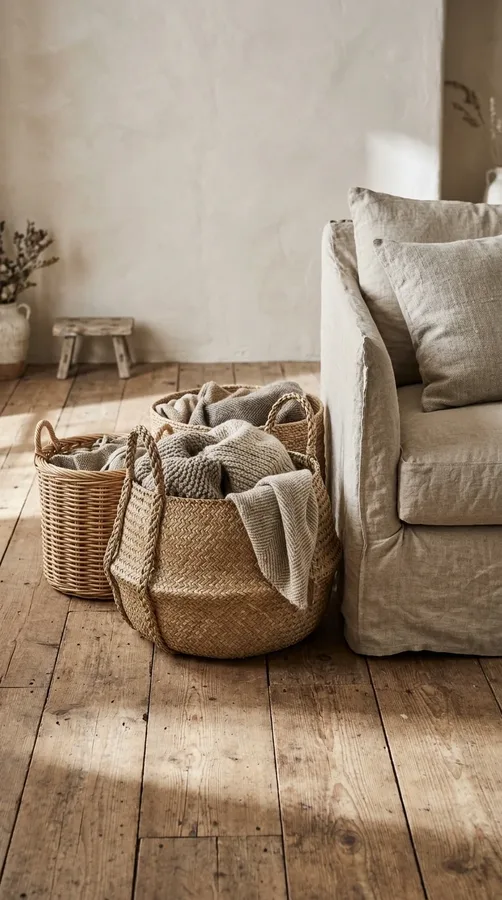
Woven baskets combine practical storage with beautiful natural texture. They can hold extra blankets, magazines, toys, laundry, or everyday accessories while keeping your home visually organized. Choose baskets made from materials such as rattan, seagrass, jute, or other natural fibers. Their slight variations in color and shape make them especially suitable for wabi-sabi interiors. Place a large basket beside the sofa, use smaller ones on open shelves, or keep one near the bedroom for extra linens. Avoid arranging too many baskets in one area, as the goal is to maintain a calm atmosphere. Functional objects that are attractive in their own right are central to this decorating approach.
12. Decorate with Organic-Shaped Mirrors
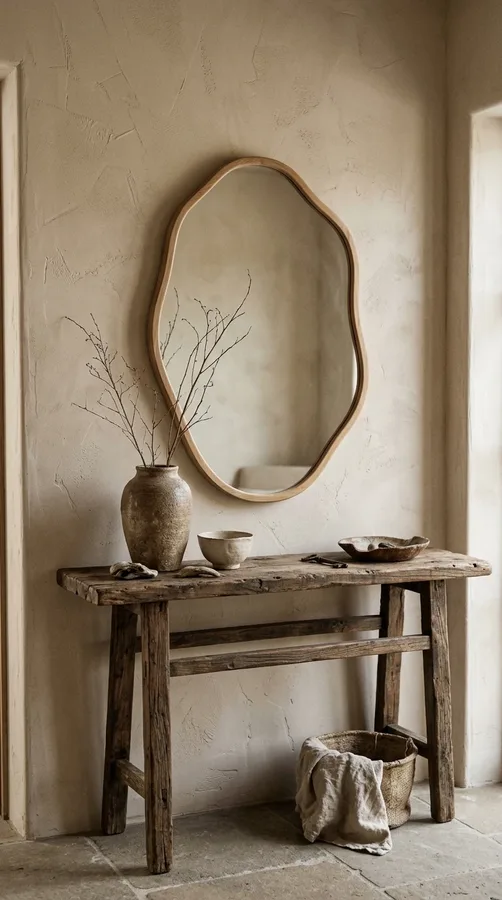
Mirrors with irregular, rounded, or asymmetrical frames add softness to wabi-sabi interiors. Unlike sharply geometric designs, organic-shaped mirrors introduce a natural flow that works beautifully with textured walls and wooden furniture. Choose a simple frame in natural wood, aged metal, or a subtle neutral finish. Place a larger mirror above a console or use a smaller one in the bedroom or entryway. Mirrors also reflect natural light, helping a compact room feel brighter and more spacious. Keep the surrounding decoration simple so the mirror remains a quiet focal point. Its imperfect outline can provide enough visual interest without needing additional decorative details.
13. Create a Calm Natural Dining Area
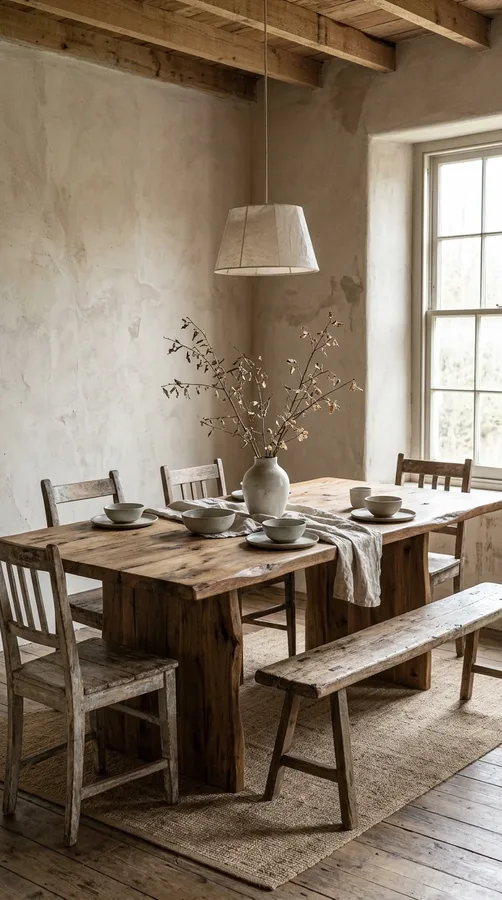
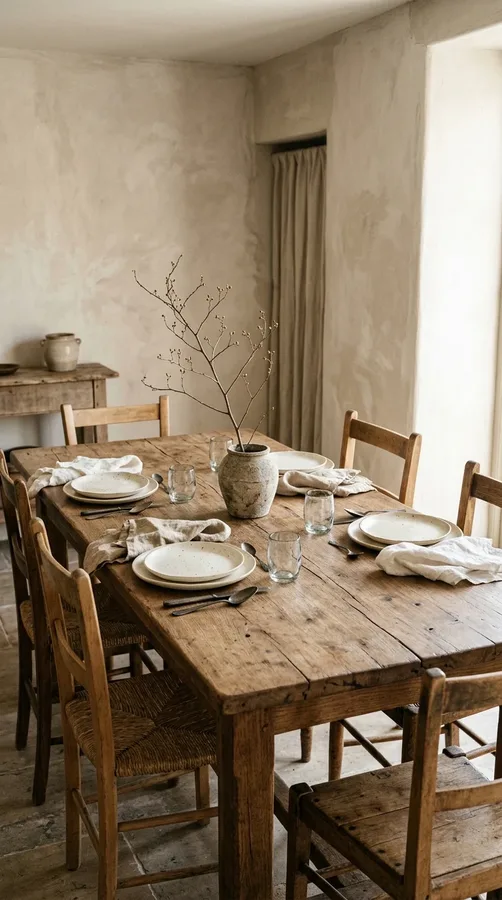
A wabi-sabi dining area should feel inviting and uncomplicated, making everyday meals feel special without formal styling. Choose a wooden dining table with visible grain and pair it with simple chairs in wood, woven materials, or understated upholstery. Handmade ceramic plates, linen napkins, and natural serving bowls add thoughtful details to the table. A small branch arrangement or a single ceramic vase can serve as a centerpiece. Avoid overly elaborate table settings and let the natural materials create the atmosphere. You can also mix different but complementary dining chairs for a more collected appearance. The result is a relaxed space where comfort and connection matter more than perfect coordination.
14. Use Soft, Warm Lighting
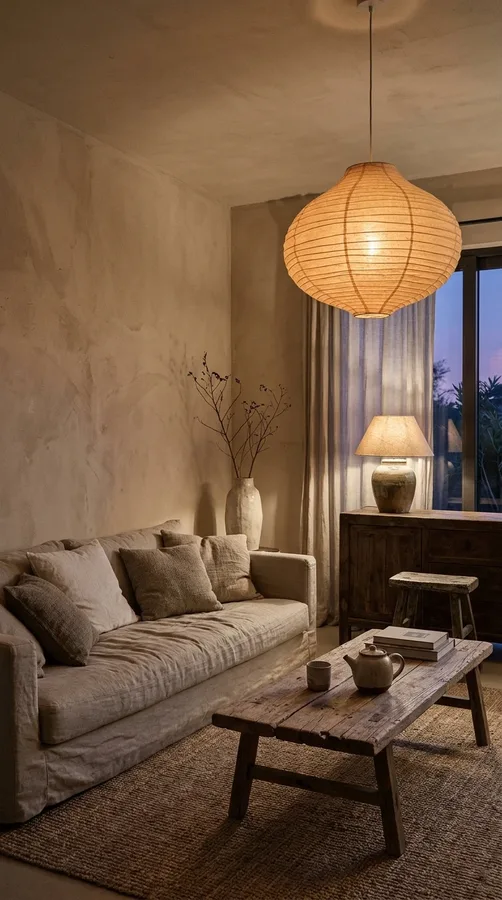
Lighting can completely change the mood of a wabi-sabi home. Instead of relying only on bright overhead fixtures, introduce several sources of soft, warm light throughout your rooms. Paper lanterns, fabric lampshades, ceramic table lamps, and simple wall sconces can create a gentle atmosphere. Choose warm-white bulbs and position lamps where people naturally read, relax, or gather. The light should highlight the textures of wood, linen, plaster, and ceramics without creating harsh contrasts. During the evening, a combination of low-level lighting makes the home feel especially peaceful. Select simple fixtures with natural finishes so they complement the rest of your decor rather than becoming overly decorative.
15. Add Indoor Plants with Natural Character
Indoor plants bring life and a sense of connection to nature into a wabi-sabi home. Rather than creating perfectly symmetrical plant displays, choose varieties with interesting leaf shapes and natural growth patterns. Olive trees, rubber plants, ferns, trailing pothos, and sculptural branches can all work beautifully depending on the available light and space. Display them in terracotta pots, handmade ceramic planters, or simple stone-colored containers. Allow the plants to grow naturally while removing damaged leaves when necessary. A few thoughtfully placed plants can soften a room and make it feel more welcoming. Choose varieties suited to your home’s conditions so their beauty is sustainable and easy to maintain.
16. Display Meaningful Objects Instead of Excess Decor
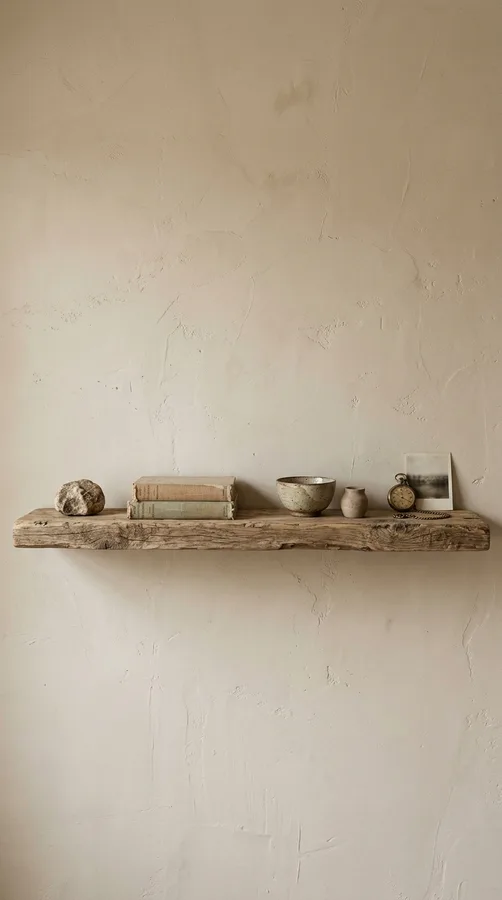
Wabi-sabi decorating is not about filling shelves with beautiful accessories. It is about choosing objects that have personal meaning, practical value, or an interesting natural appearance. Display a handmade bowl from a local craftsperson, a favorite vintage book, a small family keepsake, or a stone collected during a memorable walk. Give each item enough breathing room instead of arranging everything tightly together. Open shelves and simple consoles are ideal places for these thoughtful displays. Changing a few objects occasionally can keep the space interesting without encouraging unnecessary shopping. When every item has a reason to be there, your home feels more personal, intentional, and peaceful.
17. Celebrate Imperfection with Kintsugi-Inspired Details
Kintsugi is a Japanese art of repairing broken pottery with lacquer and precious-metal details, often highlighting rather than concealing the repaired areas. Its philosophy makes a meaningful addition to a wabi-sabi-inspired home. Display a genuine repaired ceramic piece or choose a decorative object inspired by the technique. A repaired bowl can become a conversation starter on an open shelf, while a small kintsugi-inspired dish can add character to a bedside table. The idea is not simply to create a gold-accented look but to appreciate the history and continued usefulness of an object. This thoughtful approach encourages a home filled with pieces that have stories rather than disposable decorations.
Conclusion
Wabi-sabi decor reminds us that a beautiful home does not need to be flawless. Natural materials, muted colors, handmade ceramics, vintage furniture, and thoughtful accessories can create a space that feels peaceful and genuinely personal. Start with a few simple changes, such as introducing linen curtains, displaying natural branches, or reducing unnecessary clutter. Let your rooms evolve gradually instead of trying to achieve a perfectly finished look all at once. Most importantly, choose pieces that make your everyday life more comfortable and meaningful. When you embrace natural beauty and allow imperfections to remain visible, your home becomes a calm retreat with warmth, character, and lasting appeal.
Leave a Reply