
Coastal living rooms are often associated with predictable nautical decorations, blue-and-white stripes, seashell collections, and oversized anchors. But creating a beautiful coastal-inspired space doesn’t mean decorating your home like a beach souvenir shop. The most inviting modern coastal interiors take inspiration from the natural world through soft colors, organic textures, relaxed furniture, and thoughtful details. Think sun-washed walls, weathered wood, sculptural ceramics, linen upholstery, and subtle references to the sea that feel effortless rather than themed.
Whether you live near the ocean or simply love the peaceful atmosphere of seaside homes, there are countless ways to bring coastal character into your living room. The secret is balancing natural materials with comfortable furnishings and personal touches. These 18 coastal living room ideas offer fresh alternatives to traditional beach decor, helping you create a timeless, sophisticated, and welcoming space that feels connected to the coast without relying on clichés.
1. Embrace a Warm, Sand-Inspired Neutral Palette
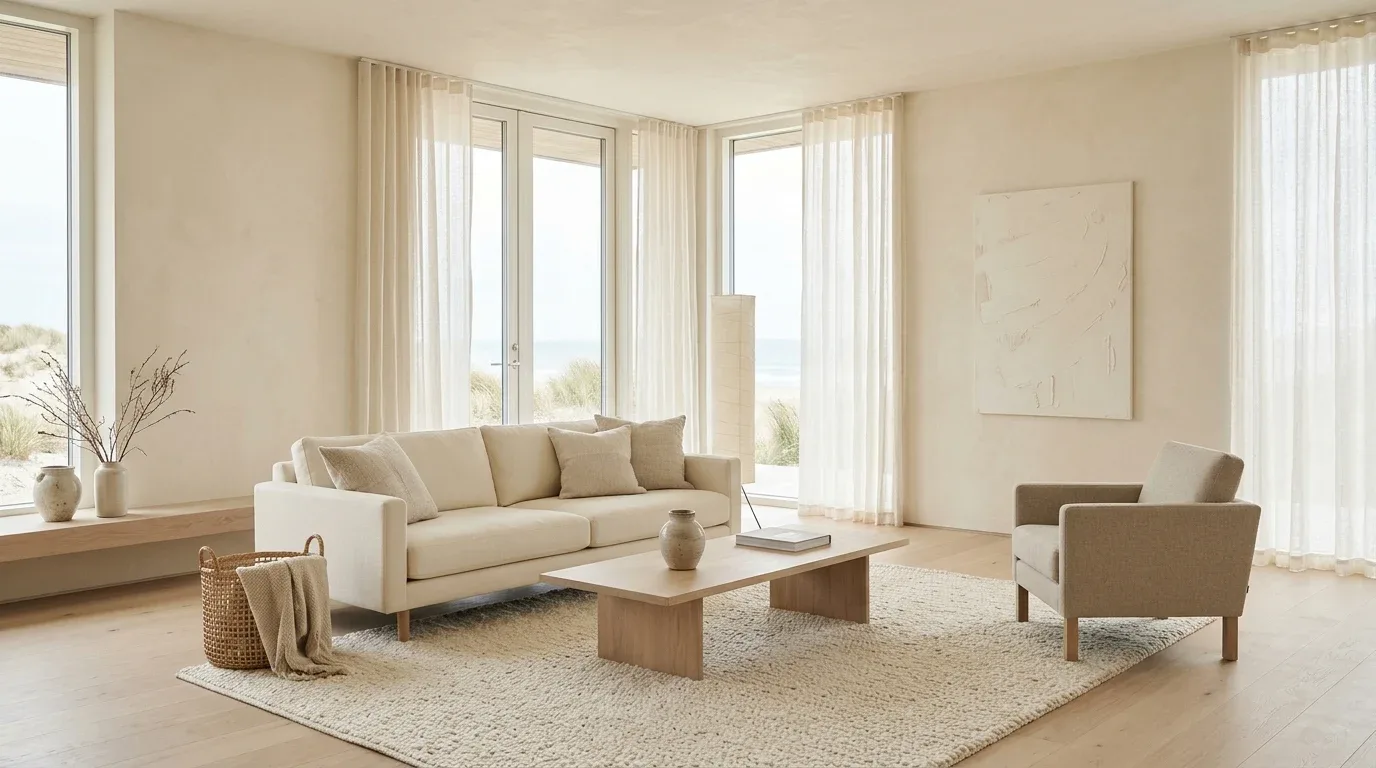
One of the easiest ways to create a sophisticated coastal living room is to borrow colors from the shoreline rather than relying on obvious ocean-themed shades. Warm sand, creamy ivory, pale taupe, oatmeal, and soft mushroom create a calming foundation that feels naturally connected to the coast. Use these shades across walls, upholstery, curtains, and area rugs to establish a harmonious look. Add depth with slightly darker wood furniture and textured accessories. The result is a welcoming interior that feels bright without looking stark. For extra character, introduce subtle variations in tone instead of matching every neutral perfectly. This layered approach gives the room the relaxed elegance of a sunlit coastal retreat.
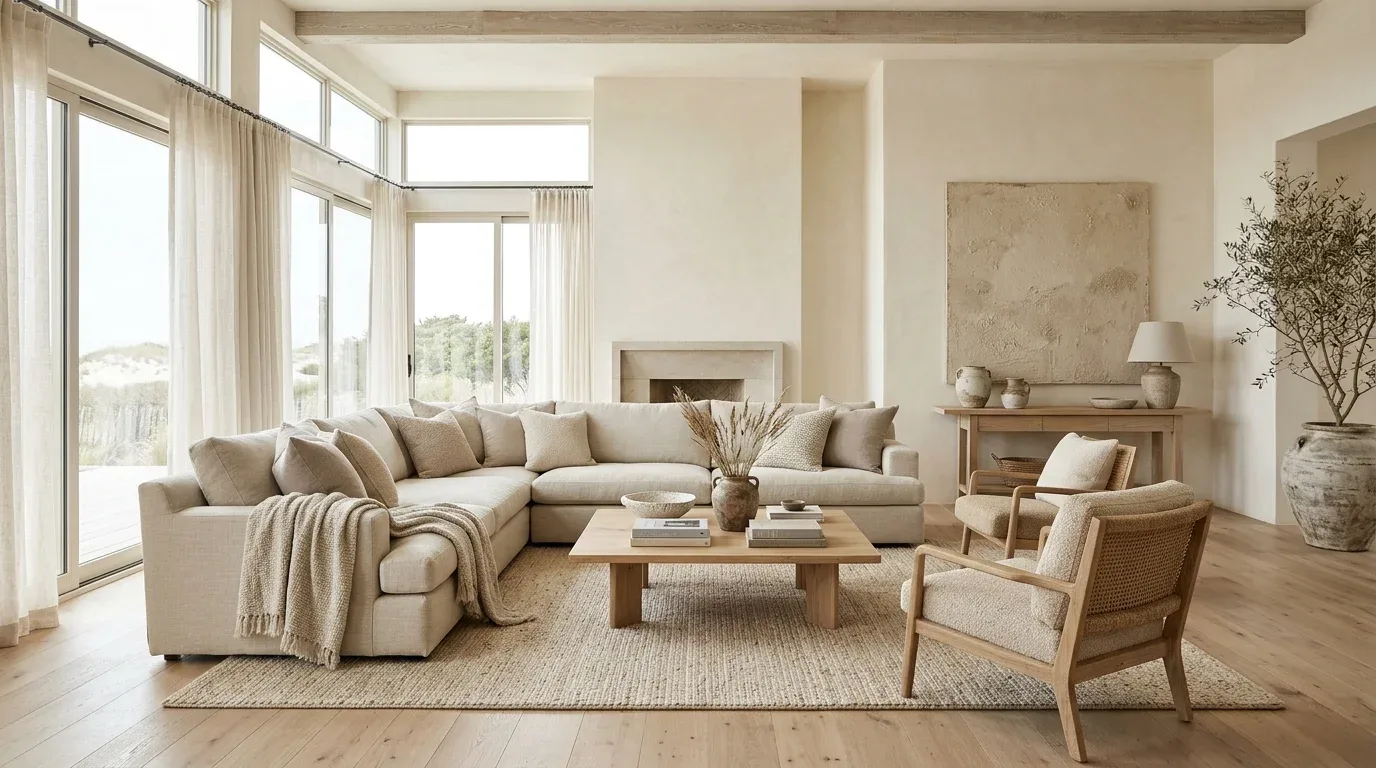
2. Choose Weathered Wood Instead of Nautical Accessories
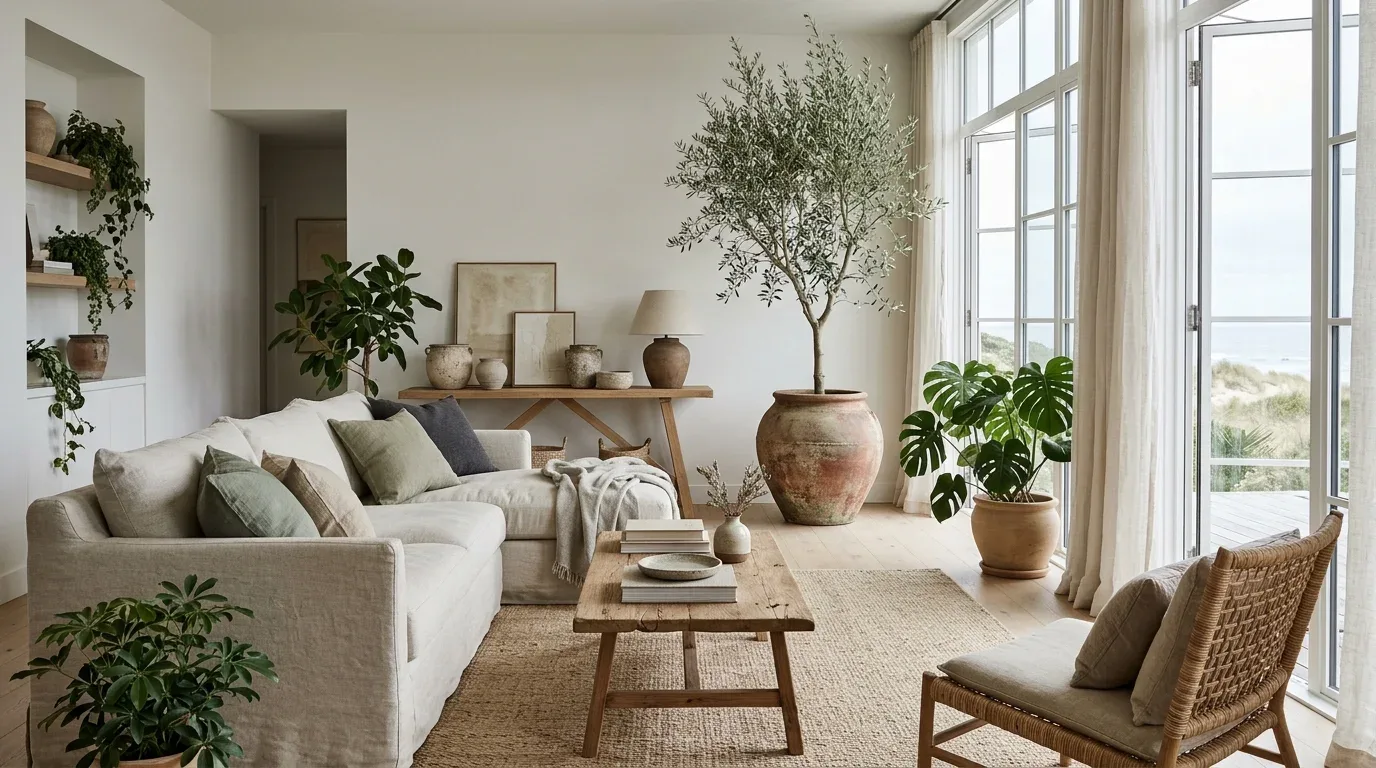
Weathered wood brings the natural beauty of coastal landscapes indoors without making the room feel overly themed. Look for coffee tables, sideboards, shelving, and ceiling details with visible grain, lightly distressed finishes, or a naturally sun-bleached appearance. Pale oak, reclaimed timber, and whitewashed finishes work particularly well with neutral upholstery. Rather than filling shelves with shells and anchors, let the wood become an important decorative feature. A substantial reclaimed coffee table can add warmth to a minimalist living room, while a weathered console creates an inviting focal point behind the sofa. Pair these pieces with simple ceramics and soft textiles to keep the overall design balanced and contemporary.
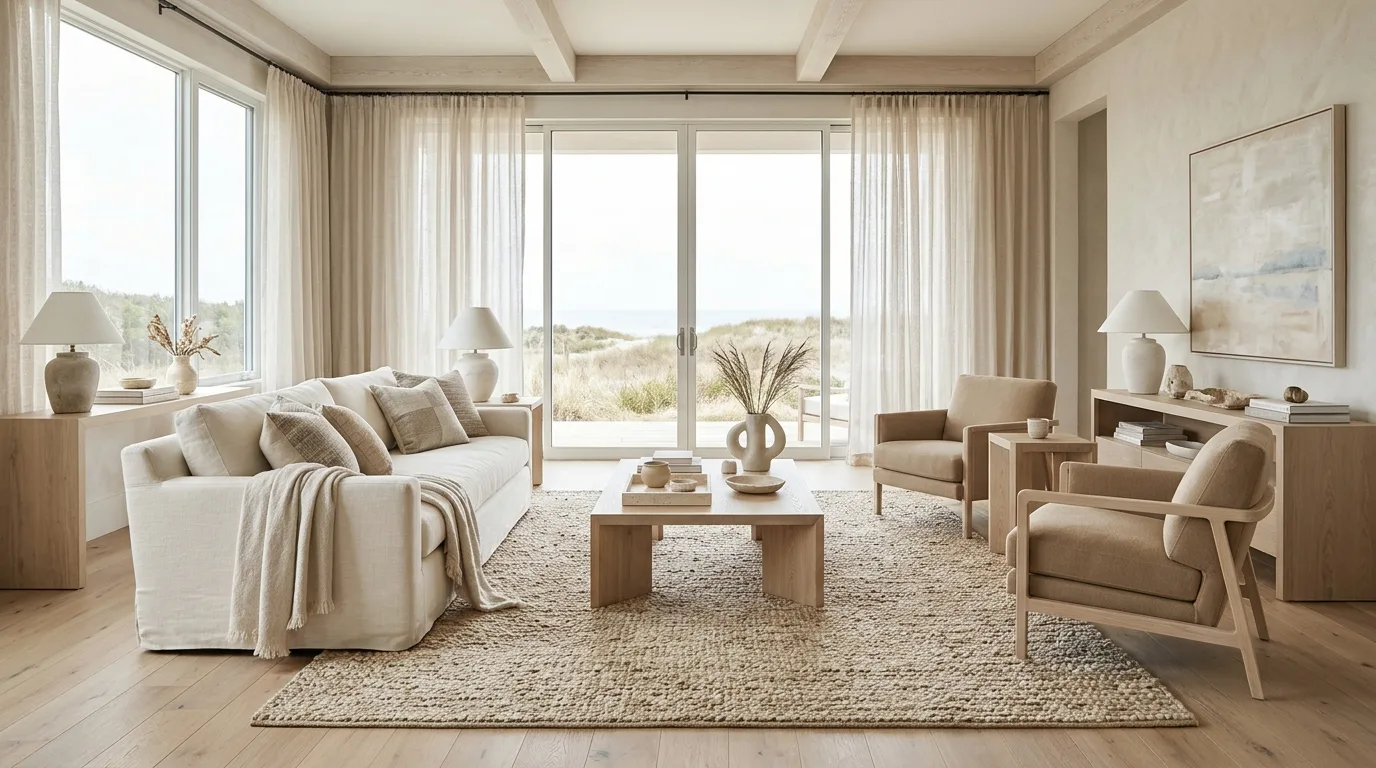
3. Layer Natural Linen for an Effortless Look
Linen is one of the most versatile materials for a coastal-inspired living room because its relaxed texture naturally complements the laid-back atmosphere of seaside homes. Choose linen or linen-blend upholstery for sofas, armchairs, and cushions in shades of ivory, flax, or soft beige. Floor-length linen curtains can filter sunlight beautifully while adding movement and softness to the space. Slight wrinkles are part of the appeal, so there is no need to make everything look perfectly pressed. Combine linen with cotton throws, woven rugs, and wooden furniture for a comfortable, layered interior. This approach creates understated luxury without requiring expensive decorative objects or elaborate styling.
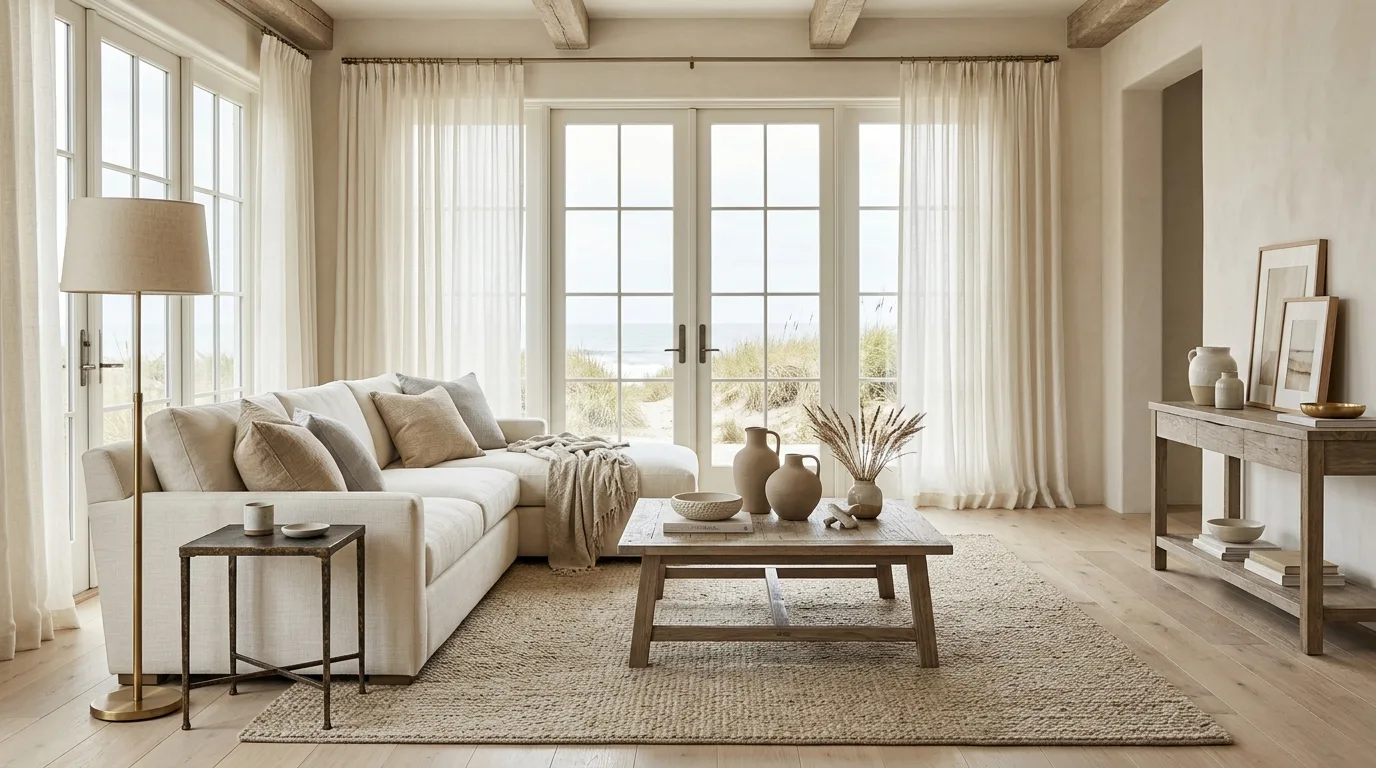
4. Bring in Sculptural Stone and Ceramic Accents
Natural stone and handmade ceramics offer an artistic alternative to traditional coastal decorations. Instead of displaying obvious beach souvenirs, introduce sculptural vases, irregular bowls, textured candleholders, and stone accessories with organic shapes. Materials such as travertine, limestone, and matte clay create visual interest through their natural imperfections. A substantial stone coffee table can become a striking centerpiece, while a collection of ceramic vessels adds personality to a console or open shelf. Choose pieces in muted white, warm gray, sandy beige, or earthy brown. Keep the arrangement relatively simple so each object has room to stand out. These understated materials bring a subtle connection to coastal landscapes without making the room feel themed.
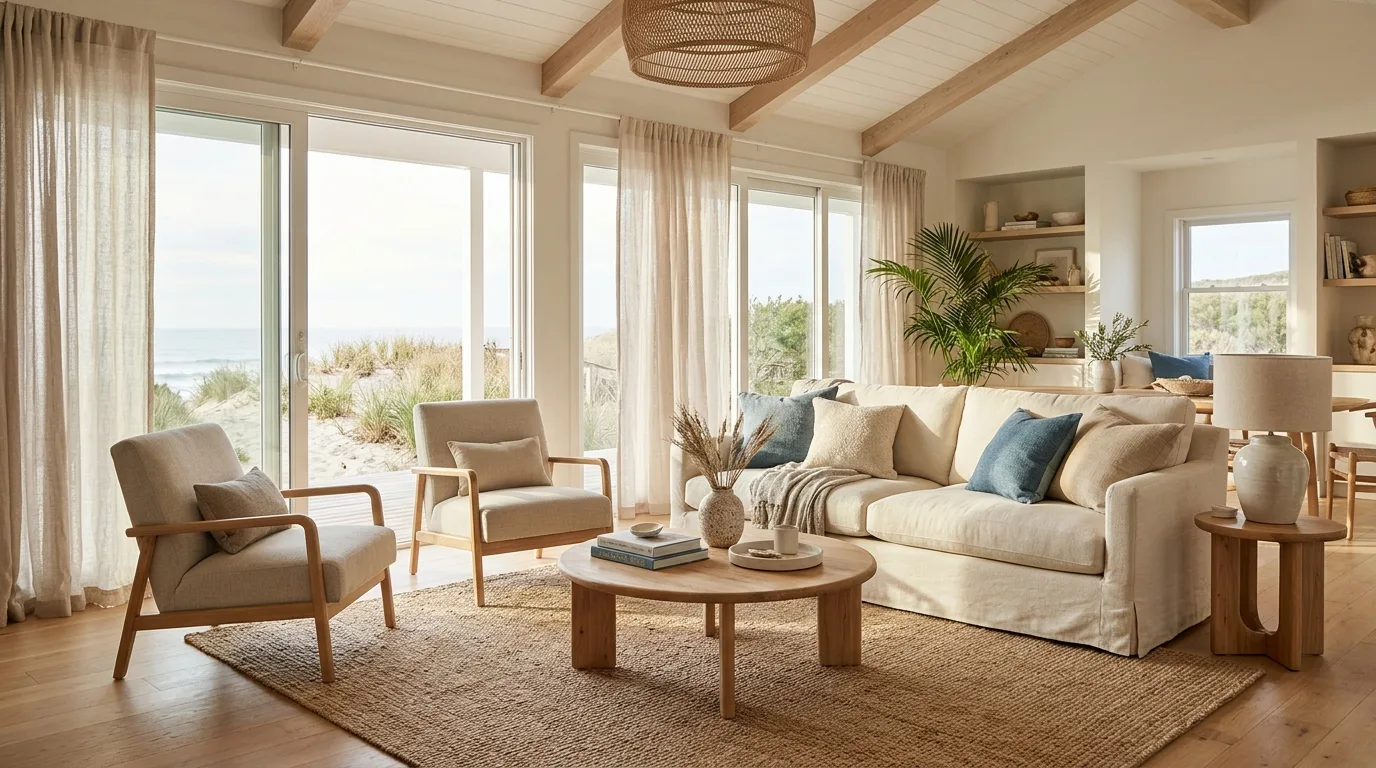
5. Use Muted Blue as an Unexpected Accent
Blue doesn’t have to dominate a coastal living room to establish a seaside connection. Instead, introduce it in small, sophisticated doses through a single accent chair, a textured cushion, artwork, or a painted cabinet. Dusty blue, slate, muted teal, and faded denim feel more natural than bright nautical navy. Pair these shades with warm neutrals and natural wood to prevent the space from feeling cold. A blue-gray accent wall can also work beautifully when balanced with creamy upholstery and soft lighting. The goal is to suggest the colors of distant water and changing skies rather than recreate a traditional maritime theme. Restrained use of color makes the room feel timeless and adaptable.
6. Make a Statement With Organic-Shaped Furniture
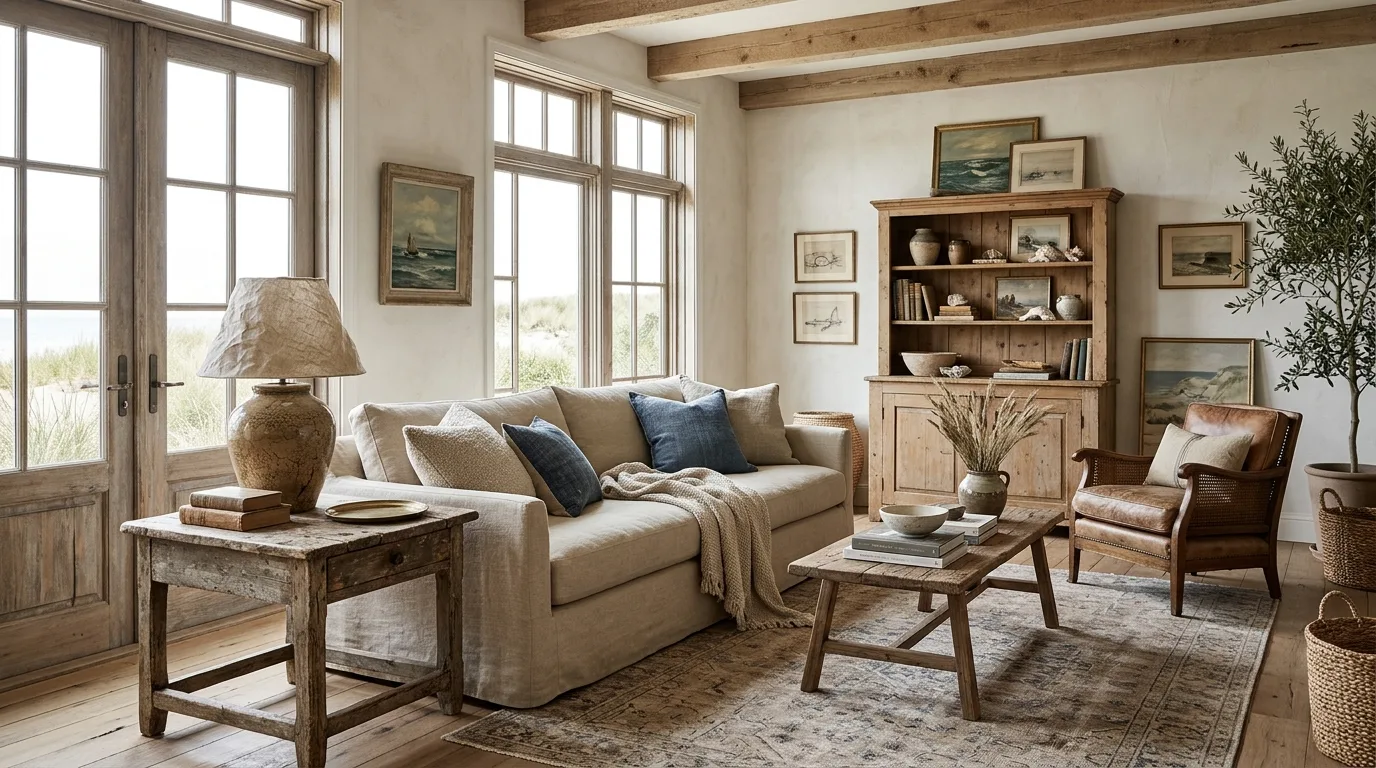
Coastal interiors benefit from furniture that feels relaxed, approachable, and inspired by natural forms. Consider a curved sofa, rounded armchairs, an oval coffee table, or a sculptural wooden side table to soften the room’s overall appearance. Organic silhouettes create a gentle flow, especially in living rooms with straight architectural lines. Choose upholstery in textured neutrals and furniture finishes that reveal natural materials rather than glossy synthetic surfaces. Avoid overcrowding the arrangement with too many statement pieces. One or two distinctive shapes are usually enough to give the room personality. This combination of soft forms and understated materials makes a coastal living room feel contemporary, comfortable, and thoughtfully designed.
7. Introduce Woven Textures Beyond Rattan
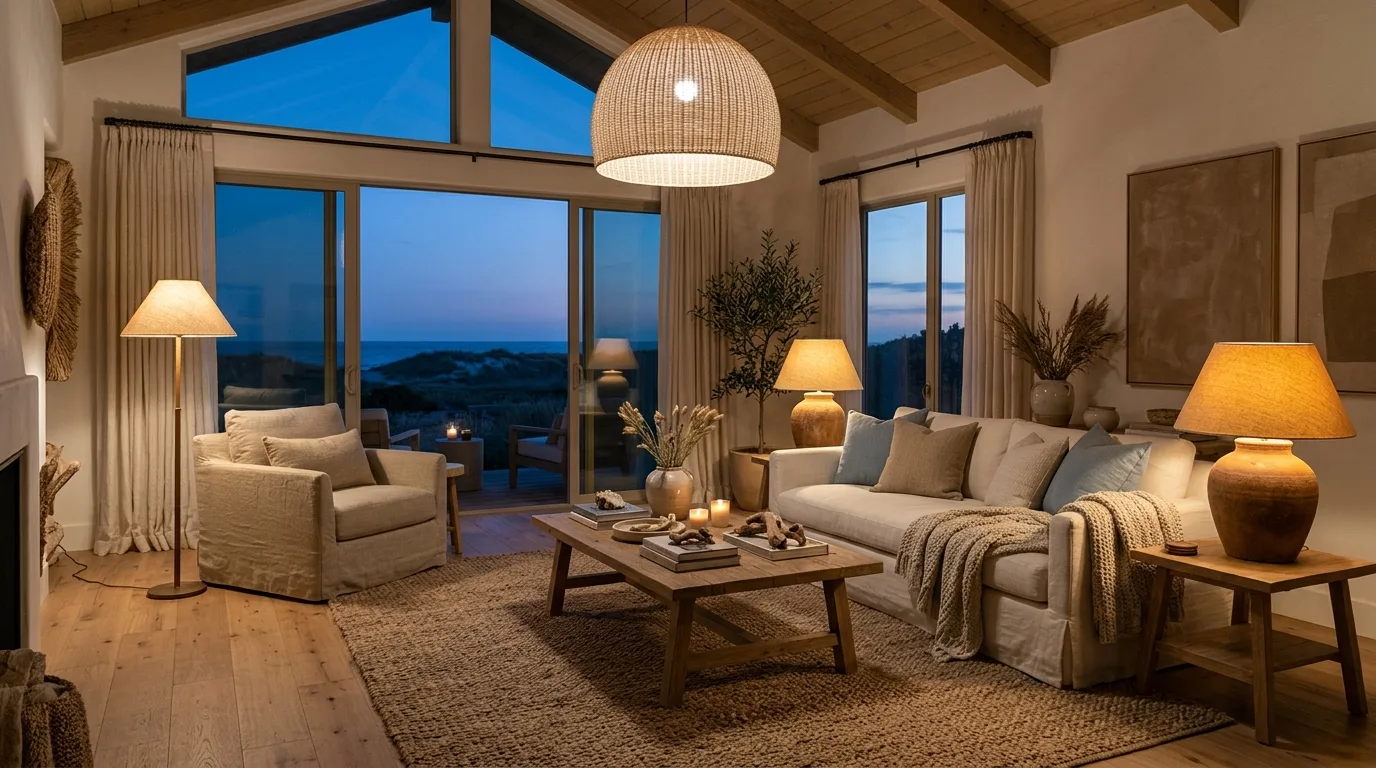
Woven materials are a natural fit for coastal interiors, but there is no need to rely exclusively on rattan furniture. Expand the look with jute rugs, seagrass baskets, braided pendant lights, woven wall hangings, and textured natural-fiber stools. These materials introduce depth while keeping the room visually relaxed. A large jute rug can anchor the seating arrangement, while a woven basket beside the sofa provides practical storage for blankets. For a more refined finish, mix coarse natural textures with smoother materials such as linen, polished wood, and stone. Varying the scale and weave of these accessories prevents the design from looking repetitive and gives the living room an inviting, collected atmosphere.
8. Let Architectural Details Create the Coastal Atmosphere
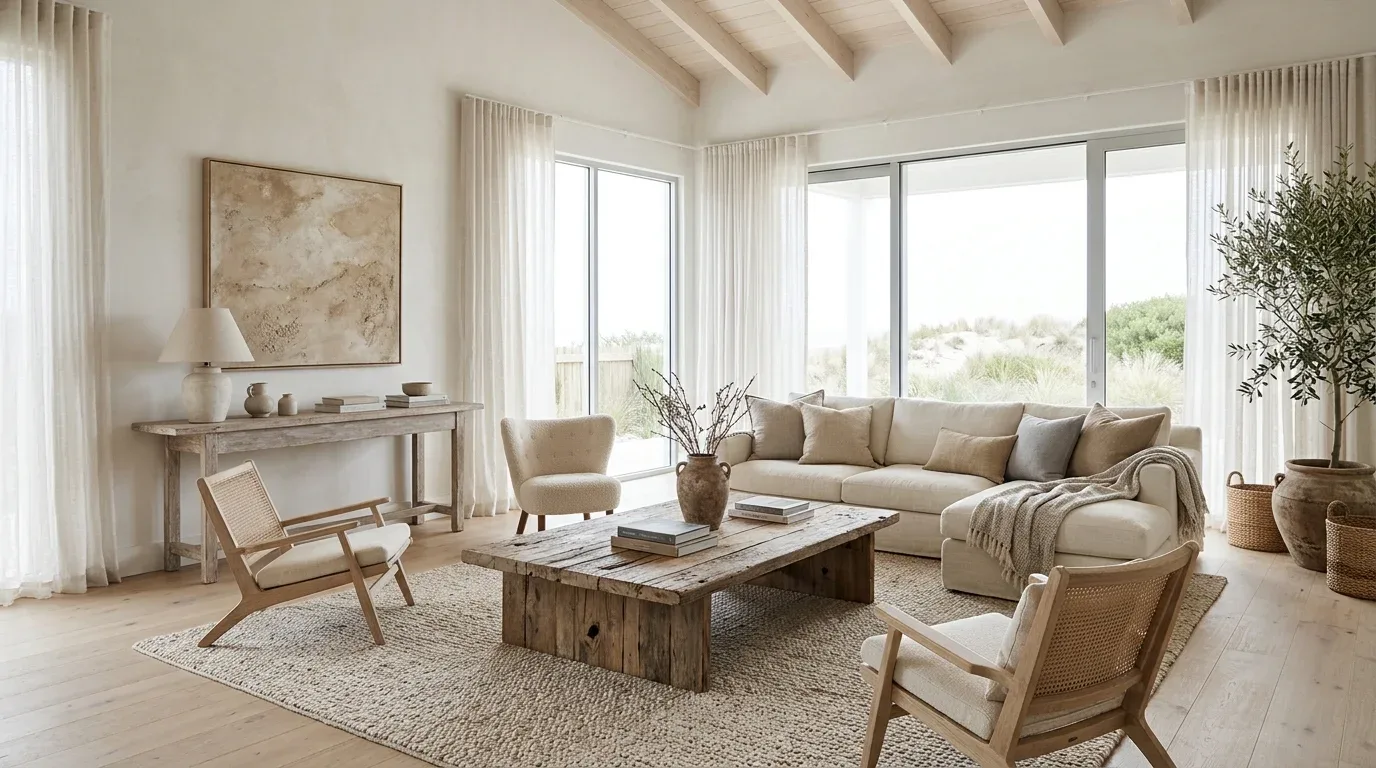
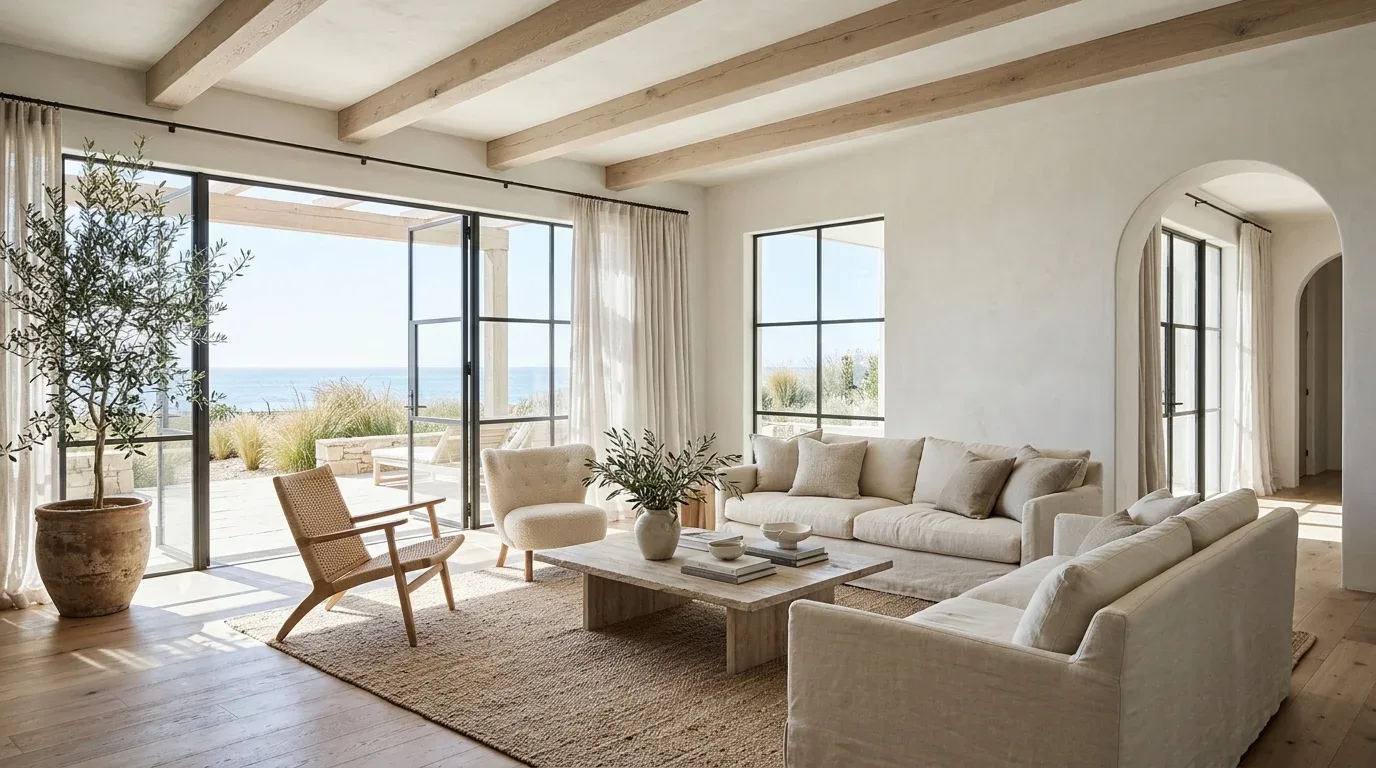
Rather than decorating every surface, use architectural details to establish a subtle coastal identity. Exposed ceiling beams, wide-plank flooring, arched doorways, limewashed walls, and natural wood paneling can all create a connection to relaxed seaside architecture. If a renovation isn’t practical, introduce similar effects with removable wall treatments, simple trim, or carefully chosen finishes. White oak flooring, for example, adds warmth and creates a beautiful foundation for neutral furniture. Keep architectural features relatively understated so they complement rather than overwhelm the room. When natural materials and thoughtful proportions do most of the decorating, the space feels authentic and sophisticated without requiring traditional beach-themed accessories.
9. Create a Gallery Wall With Abstract Ocean-Inspired Art
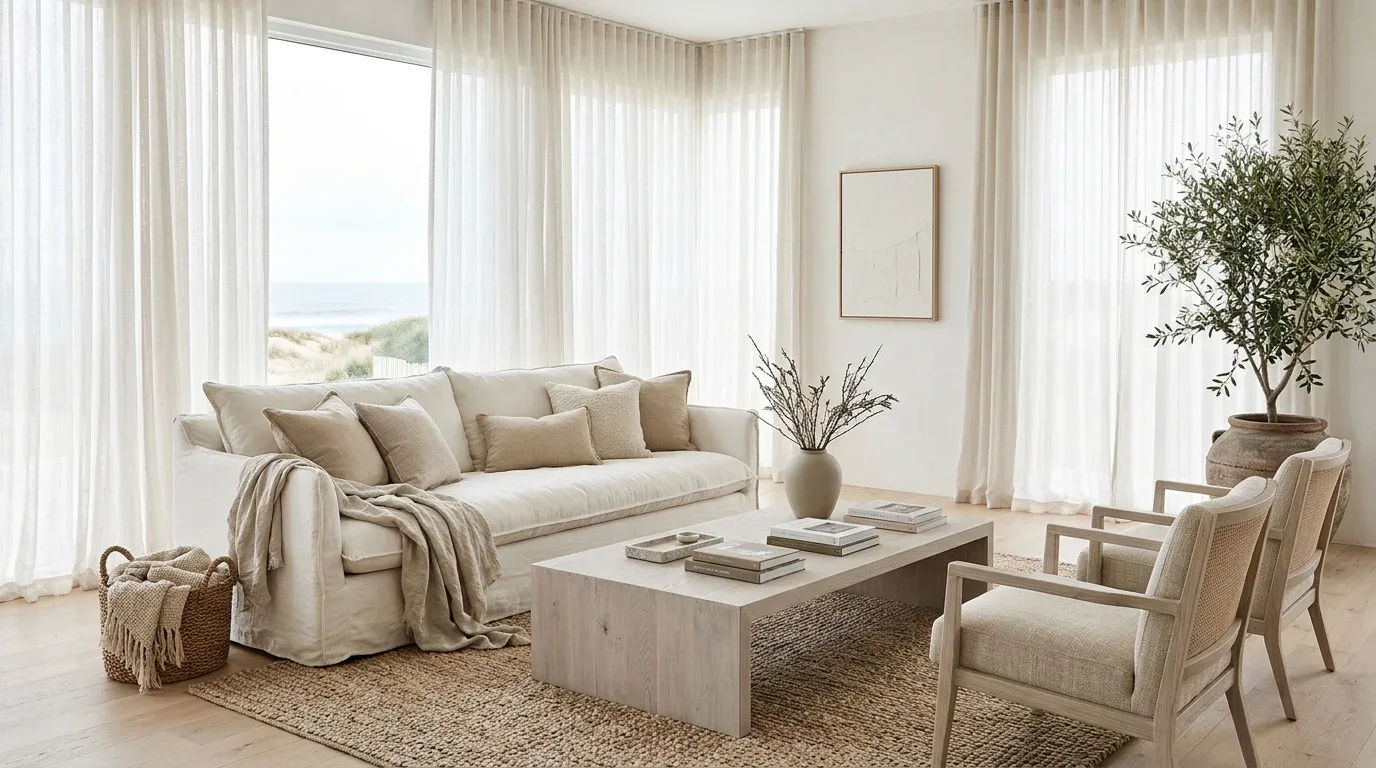
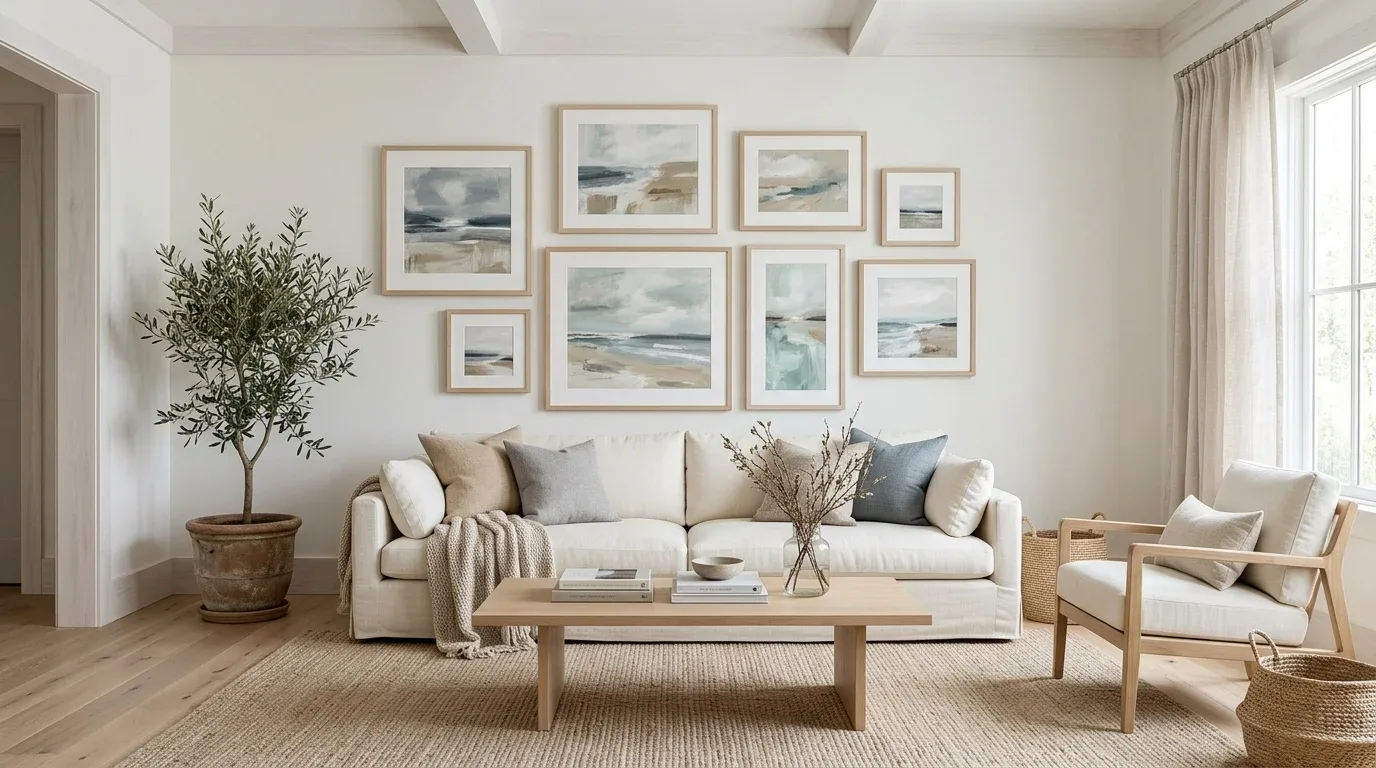
Artwork is an excellent way to bring coastal character into a living room without using predictable beach imagery. Choose abstract paintings inspired by shifting water, coastal cliffs, weathered landscapes, or hazy horizons. Soft blue-gray, chalky white, sandy beige, and muted green create an understated palette that works beautifully with neutral interiors. A large statement canvas above the sofa can establish a focal point, while a thoughtfully arranged gallery wall adds personality. Consider mixing paintings with minimalist photography, textured paper art, or subtle line drawings. Use simple wooden or natural-toned frames to maintain a cohesive appearance. The best coastal artwork suggests the feeling of the ocean rather than illustrating it too literally.
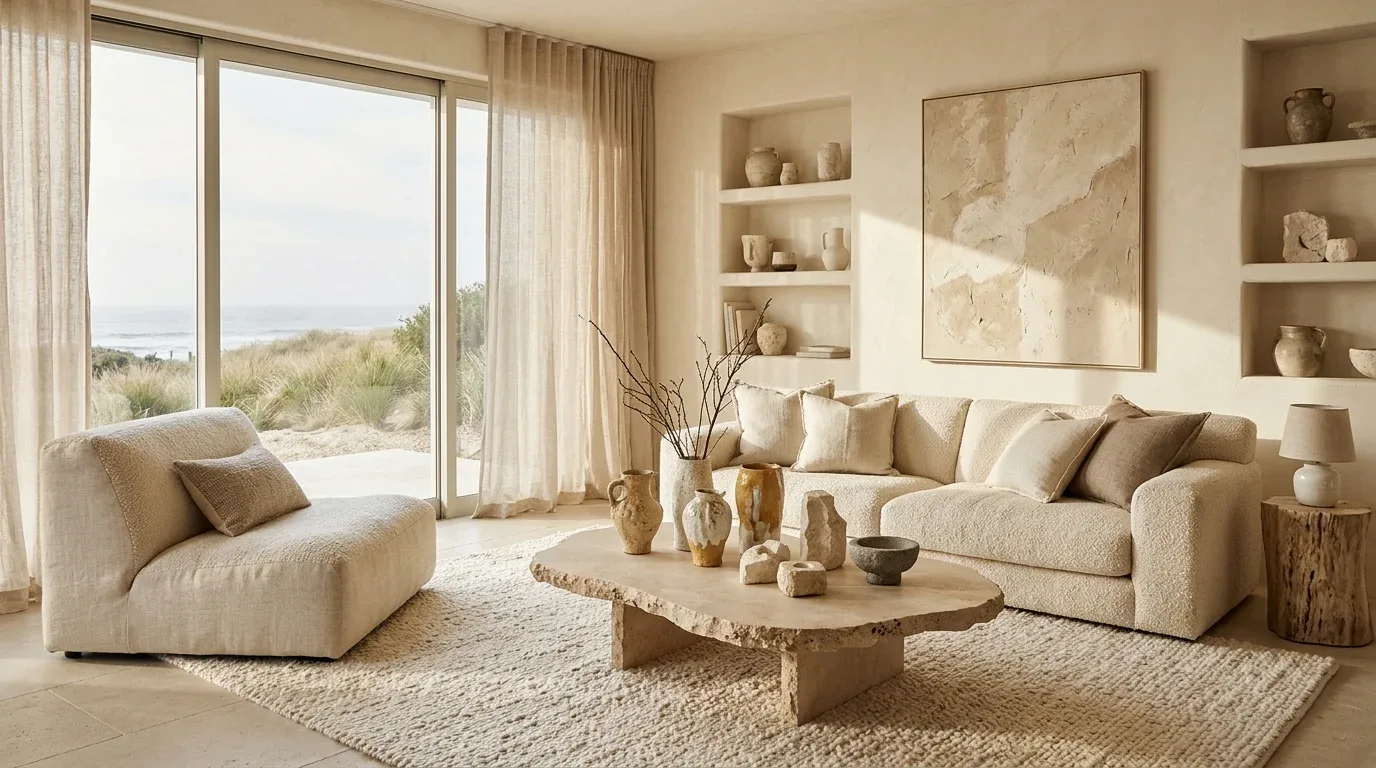
10. Design Around Large Windows and Natural Light
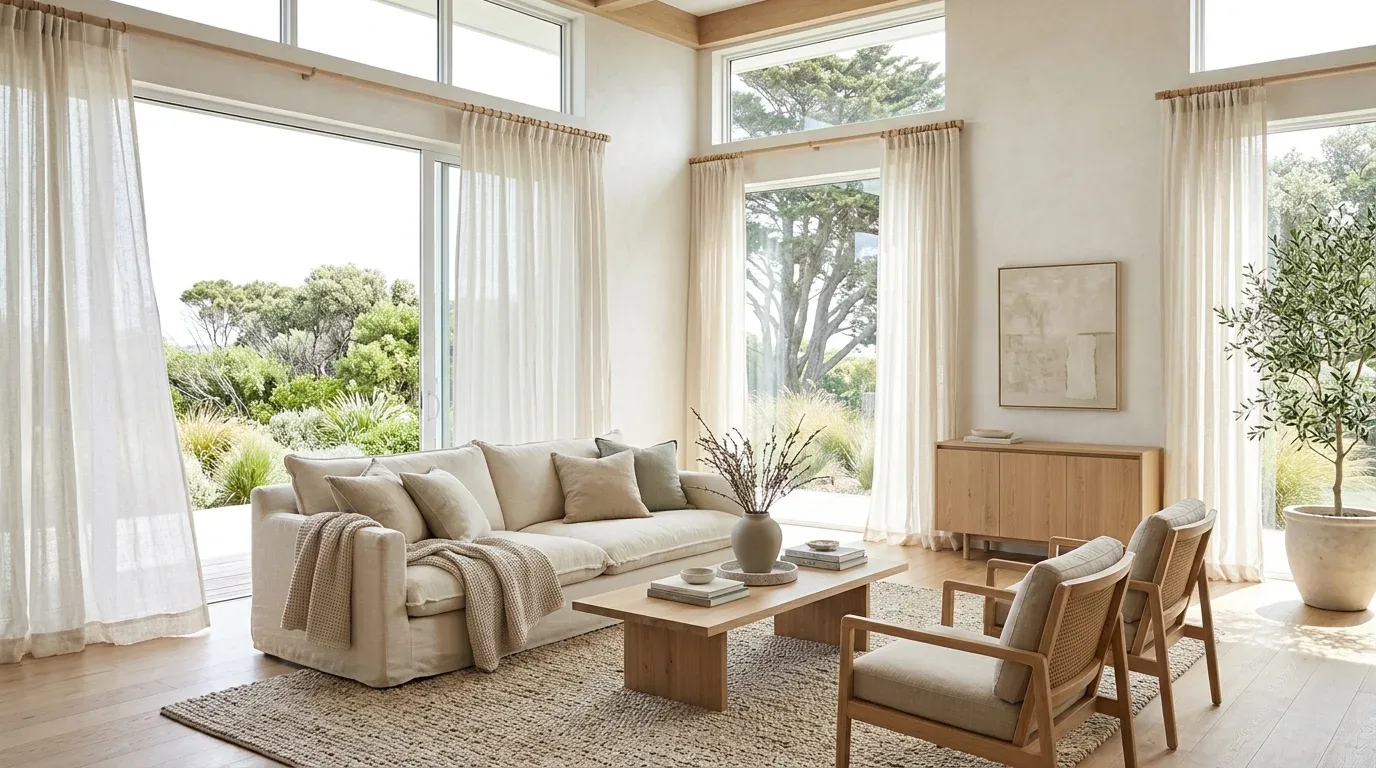
Natural light is one of the defining features of beautiful coastal interiors. If your living room has large windows, make them a central part of the design instead of hiding them behind heavy treatments. Choose sheer linen curtains, lightweight cotton panels, or simple woven shades that soften incoming sunlight while maintaining an open atmosphere. Arrange seating to take advantage of pleasant outdoor views whenever possible. If privacy is necessary, consider layered window coverings that provide flexibility throughout the day. Keep window areas relatively uncluttered and use reflective neutral surfaces to distribute light throughout the room. Even without an ocean view, abundant daylight can make the space feel fresh, peaceful, and connected to nature.
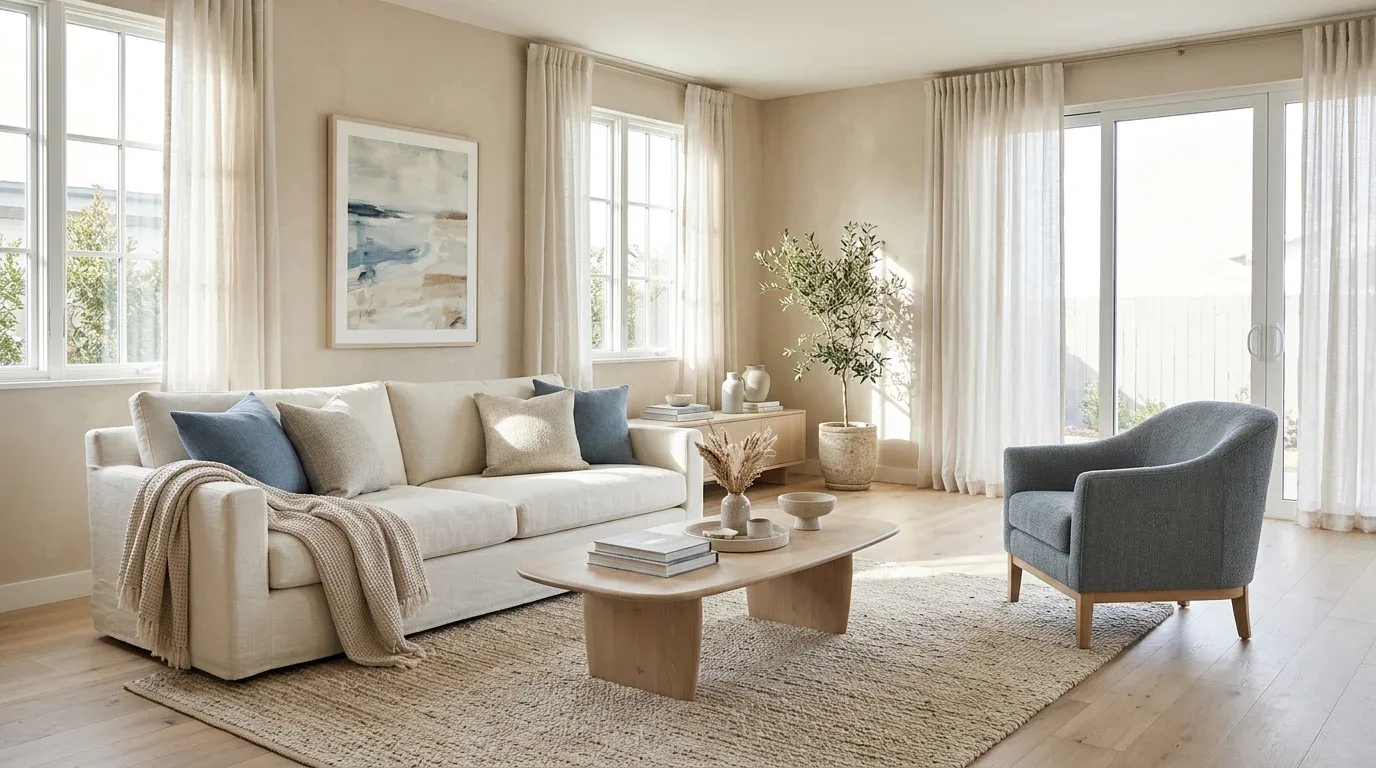
11. Add a Coastal-Inspired Fireplace Surround
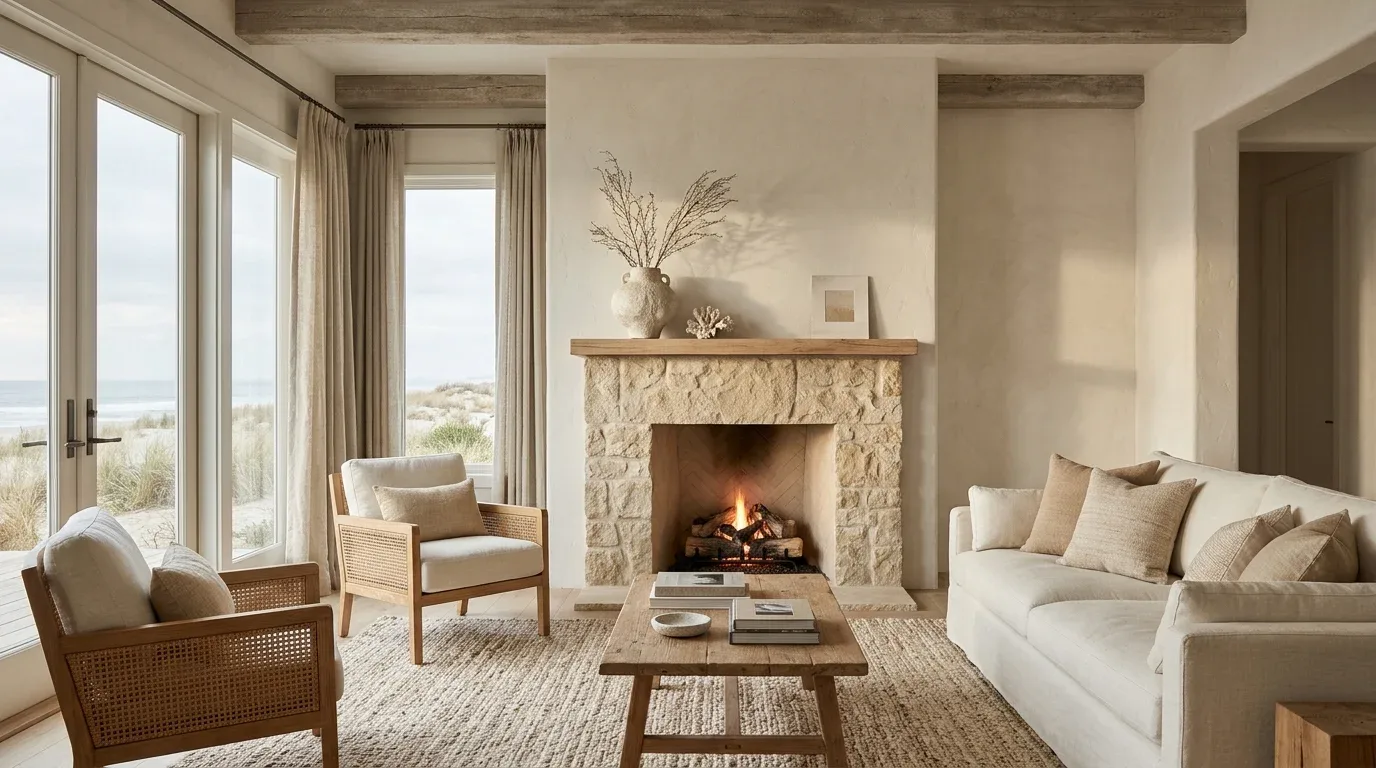
A fireplace can become a beautiful focal point in a coastal living room, particularly when its materials feel natural and understated. Consider a limestone surround, textured plaster finish, pale stone hearth, or simple whitewashed brick. These finishes introduce subtle texture without relying on decorative nautical motifs. Style the mantel with a few carefully selected objects, such as a sculptural ceramic vase, a framed abstract artwork, or a small stack of neutral-toned books. If your home doesn’t have a working fireplace, a decorative architectural surround can still provide a sense of structure. Keep the styling restrained so the materials remain the main attraction. This creates a cozy gathering area that feels relaxed in every season.
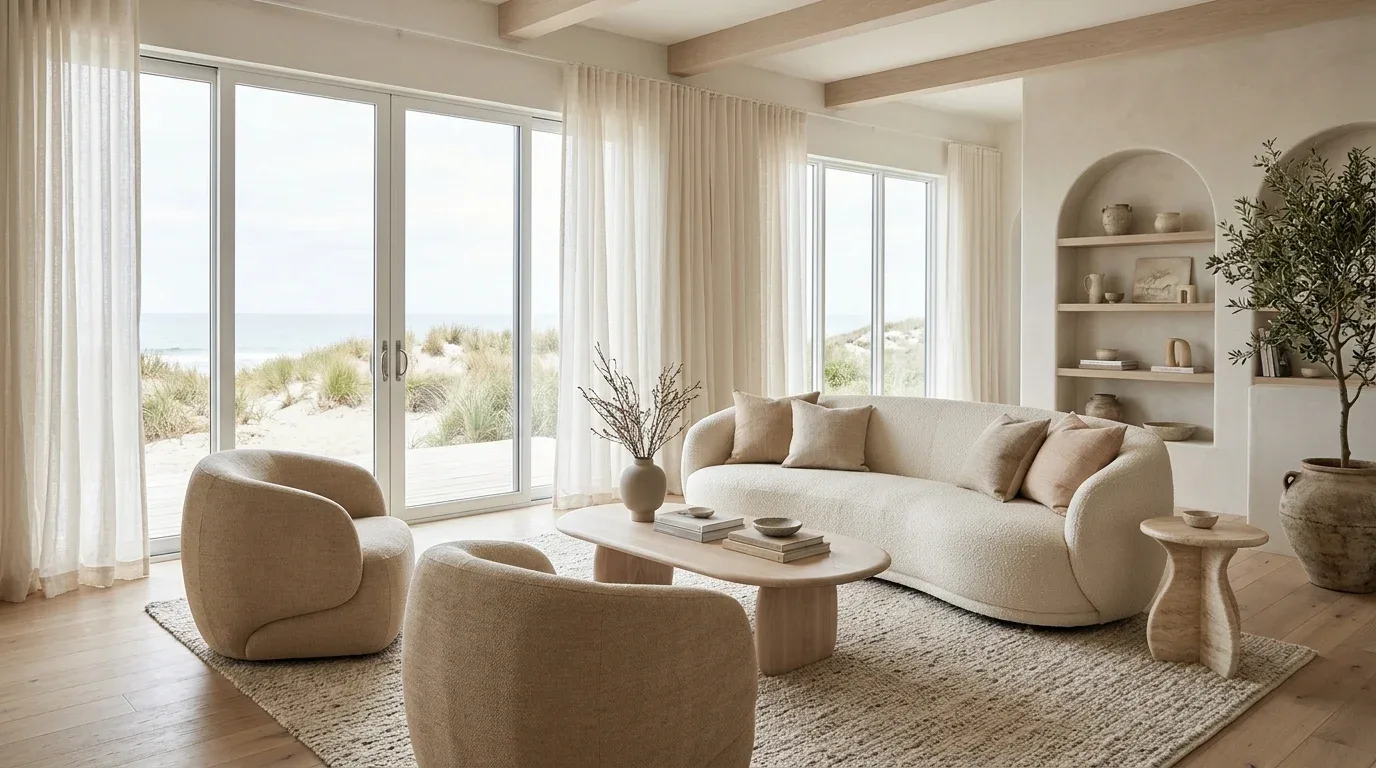
12. Mix Coastal Style With Modern Minimalism
Modern minimalism offers a fresh way to interpret coastal living room design. Start with a simple furniture arrangement, clean-lined seating, and a restrained color palette. Instead of filling the room with decorative accessories, focus on a few high-quality materials and distinctive shapes. A low-profile sofa, streamlined wooden coffee table, and understated floor lamp can create a sophisticated foundation. Add warmth through natural textures, such as a wool rug, linen cushions, or a woven storage basket. Leave some negative space around furniture and accessories so the room feels open rather than unfinished. This approach works particularly well in smaller homes because it creates a peaceful coastal atmosphere without making the space feel crowded.
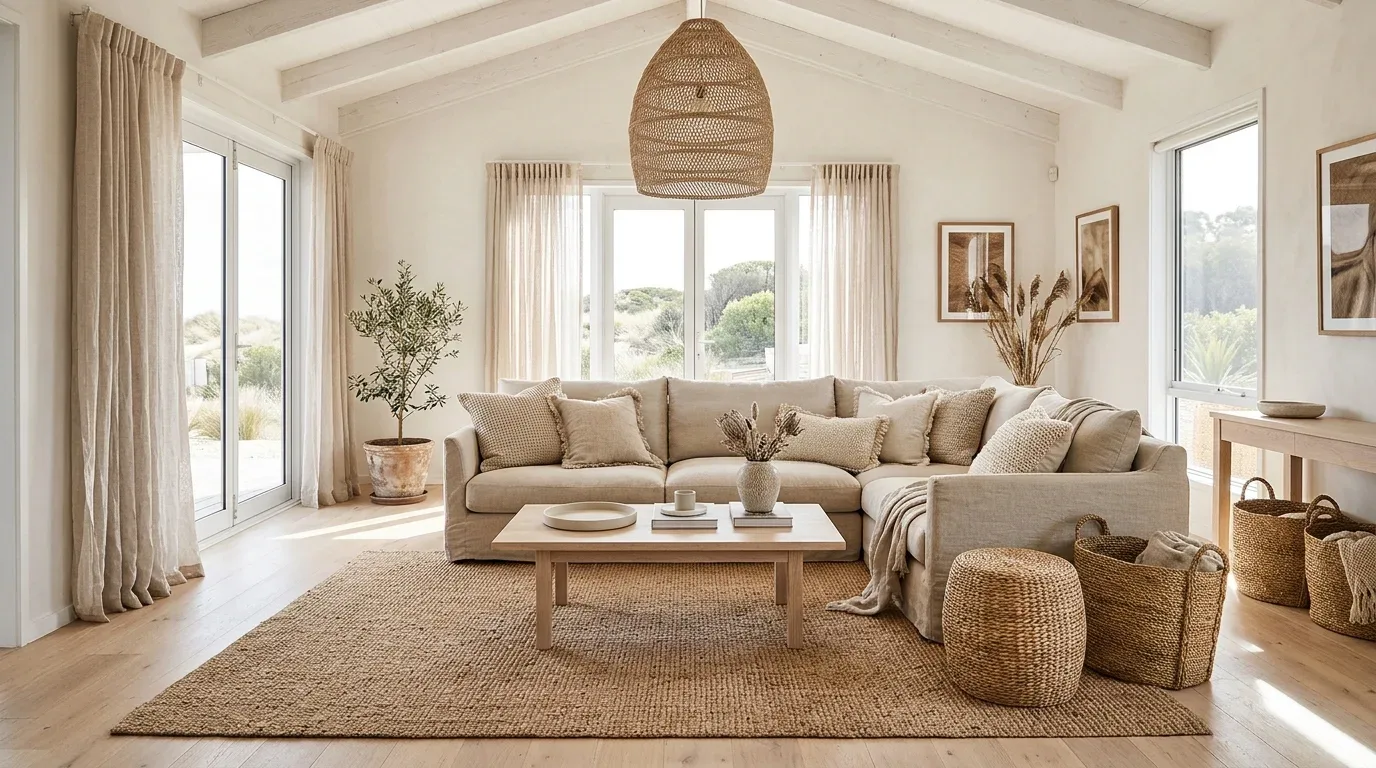
13. Bring the Outdoors In With Thoughtful Greenery
Plants add freshness and movement to a coastal living room while creating a stronger connection to the natural environment. Choose greenery with interesting leaf shapes and relaxed silhouettes, such as olive trees, fiddle-leaf figs, palms, or rubber plants. A larger floor plant can soften an empty corner, while smaller varieties look beautiful on consoles and open shelving. Use understated planters made from terracotta, ceramic, stone, or woven materials instead of brightly colored decorative pots. Pay attention to the amount of sunlight available before choosing your plants, since not every variety thrives in the same conditions. A few healthy, well-positioned plants can make a neutral coastal interior feel much more alive.
14. Choose a Textured Neutral Area Rug
An area rug can bring the entire coastal living room together while adding warmth underfoot. Rather than choosing a rug covered in obvious shells, stripes, or ocean motifs, look for subtle patterns and tactile materials. Natural wool, jute, cotton, and wool-jute blends are excellent choices. Consider faded geometric designs, irregular woven patterns, or tonal stripes in ivory, beige, and warm gray. Make sure the rug is large enough for at least the front legs of the main seating pieces to rest on it. This helps create a connected furniture arrangement. A beautifully textured neutral rug adds depth without competing with artwork, upholstery, or other decorative elements.
15. Use Warm Metallics for Subtle Sophistication
Coastal design doesn’t have to rely entirely on rustic wood and natural fibers. A small amount of warm metal can introduce a more polished, sophisticated finish. Consider brushed brass, aged bronze, or softly antiqued gold in lighting fixtures, cabinet hardware, table bases, and decorative objects. These finishes work especially well with creamy walls, sandy upholstery, and weathered wood. A brass floor lamp beside a linen sofa, for example, creates an elegant contrast without looking overly formal. Avoid using too many shiny surfaces, as excessive reflection can disrupt the relaxed atmosphere. Instead, select a few carefully positioned metallic details that complement the natural materials throughout the room.
16. Create a Relaxed Conversation Area
A coastal living room should feel like a place where people naturally want to gather. Arrange sofas and chairs to encourage conversation instead of pushing every piece against the walls. A pair of comfortable armchairs facing a sofa can create an inviting seating zone, while a rounded coffee table makes the arrangement feel approachable. Leave enough space between furniture for comfortable movement and consider adding a small side table within easy reach of each seat. Choose soft upholstery, supportive cushions, and lightweight throws to make the room feel welcoming. This thoughtful layout creates the relaxed hospitality associated with seaside homes while making the living room more functional for everyday family life.
17. Add Character With Collected Vintage Pieces
One way to keep a coastal living room from looking like a showroom is to incorporate a few carefully selected vintage pieces. Look for an antique wooden stool, an aged cabinet, a vintage ceramic lamp, or a beautifully worn side table. These objects introduce history and individuality, making the interior feel more personal. You can also mix old and new furniture to create a comfortable balance between timeless charm and contemporary simplicity. A vintage piece doesn’t need to be beach-related to work in a coastal home. Focus on its material, craftsmanship, and finish. When paired with clean-lined furniture and natural textiles, these collected details add depth without creating visual clutter.
18. Finish With Soft, Layered Ambient Lighting
Lighting has a major influence on how relaxing a coastal living room feels, particularly in the evening. Instead of depending on one bright overhead fixture, combine several sources of warm, gentle illumination. Use table lamps with ceramic or textured bases, floor lamps beside reading chairs, and subtle wall sconces to create different layers of light. Choose warm-white bulbs that make natural materials and neutral colors appear inviting. A pendant made from linen, woven fibers, or softly aged metal can provide an attractive focal point without feeling overly decorative. Place lighting at different heights to create depth and atmosphere. This layered approach gives the room a comfortable glow that feels just as welcoming after sunset as it does during daylight.
How to Create a Coastal Living Room That Feels Timeless
The most successful coastal living rooms capture the atmosphere of the shoreline without relying on predictable nautical decorations. Start with a calm foundation of warm neutrals, then build character through natural materials, organic furniture shapes, thoughtful artwork, and comfortable textiles. Choose details that reflect your personal style rather than trying to recreate a specific beach house. Remember that balance matters: too many woven accessories can feel rustic, while too much white can make a room appear flat. Mix textures, introduce subtle color, and allow natural light to play an important role. With these ideas, you can create a sophisticated coastal living room that feels peaceful, personal, and beautifully connected to nature throughout the year.
Leave a Reply