
A small kitchen can quickly feel crowded when countertops are covered, cabinets are overflowing, and everyday essentials are difficult to reach. However, you do not need a major renovation or an expensive remodeling project to create a more organized cooking space. The secret is making better use of the storage you already have while introducing practical solutions that keep frequently used items within easy reach.
From overlooked cabinet corners and narrow gaps to vertical wall space and clever drawer organizers, even the smallest kitchen has opportunities for additional storage. The best small kitchen storage ideas combine functionality with attractive design, helping your room feel less cluttered without sacrificing its personality. Whether you live in an apartment, a compact home, or simply have limited cabinet space, these clever solutions can make everyday cooking and cleaning easier. Here are 18 practical ways to maximize every inch of your kitchen.
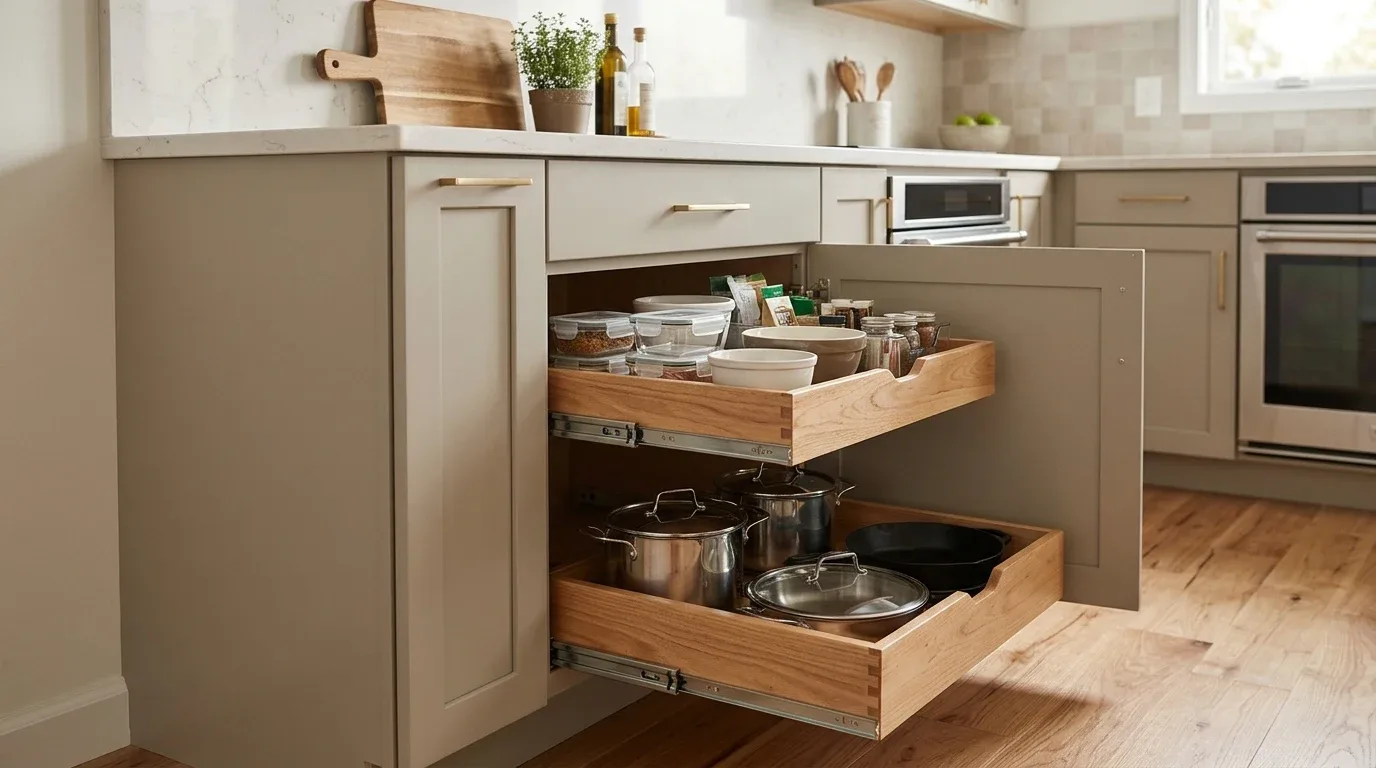
1. Install Pull-Out Shelves Inside Deep Cabinets
Deep kitchen cabinets often become difficult to organize because items stored at the back are easily forgotten. Pull-out shelves solve this problem by bringing everything forward whenever you need it. Instead of removing several containers to reach one item, simply slide the shelf outward and see your entire collection. These organizers work particularly well for pots, pans, canned goods, baking ingredients, and small appliances. Choose sturdy shelves that fit your cabinet measurements and support the weight of your kitchen essentials. Two-tier pull-out systems can provide even more storage without requiring additional cabinet space. This simple upgrade makes deep cabinets significantly more practical and easier to maintain.
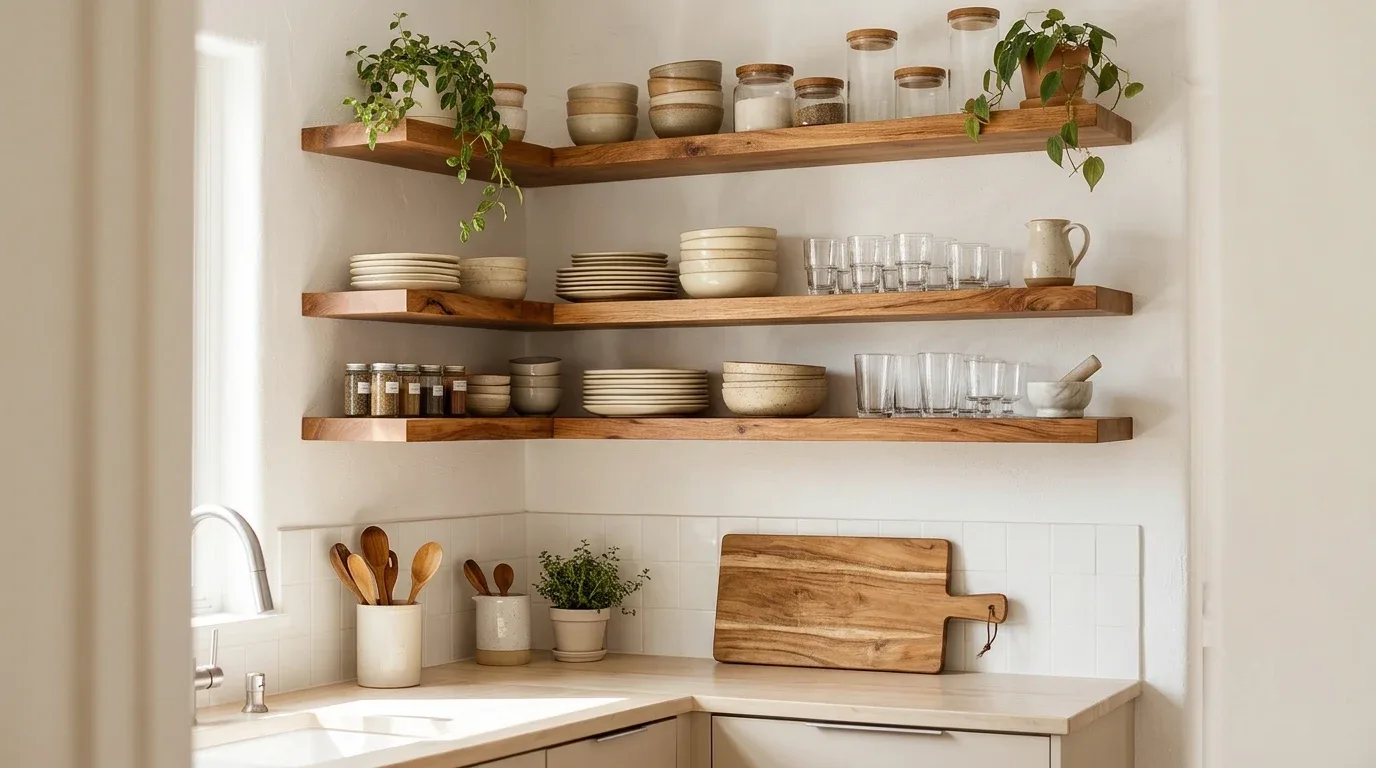
2. Use Vertical Space With Wall-Mounted Shelves
When countertop and cabinet space are limited, look toward your kitchen walls. Floating shelves provide attractive storage for dishes, drinking glasses, spice jars, and everyday cooking essentials. Install them above a countertop, beside the refrigerator, or on an empty wall that would otherwise remain unused. Keep frequently used objects on lower shelves so they are easy to reach, while decorative pieces can occupy higher positions. For a cohesive appearance, choose materials that complement your cabinets, such as natural wood, white finishes, or black metal brackets. Avoid overcrowding open shelves because too many objects can make a small kitchen appear visually busy. A carefully arranged display offers both convenience and style.
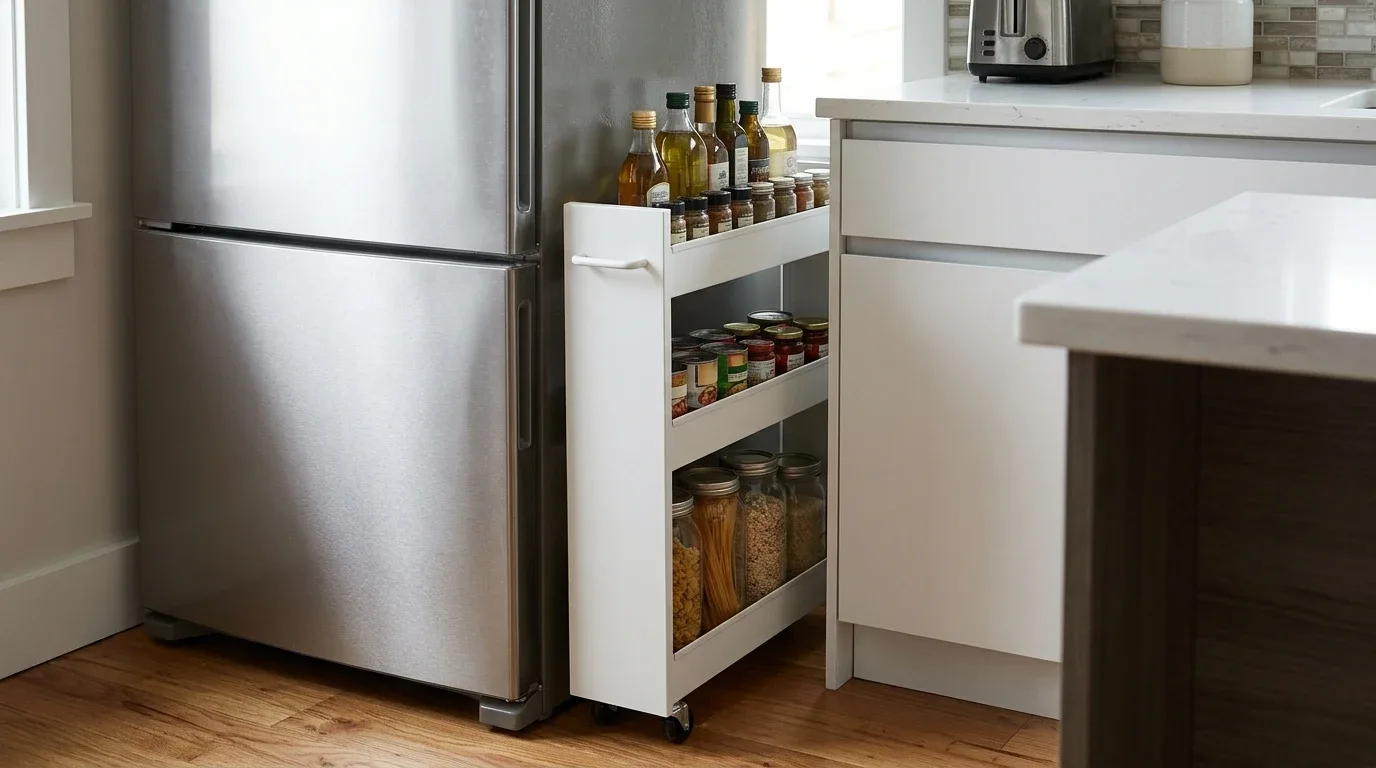
3. Add a Slim Rolling Cart Between Cabinets
A narrow gap between kitchen cabinets, appliances, or the refrigerator can become valuable storage with a slim rolling cart. These compact organizers are designed to fit into spaces that are otherwise difficult to use. Depending on their width, they can hold canned foods, cooking oils, cleaning supplies, spices, or bottled drinks. Choose a model with several tiers and locking wheels so it stays securely in place when needed. Open-sided carts make it easy to identify items, while models with baskets help prevent smaller products from falling out. Before purchasing, measure the available gap carefully and leave enough clearance for the cart to slide comfortably.
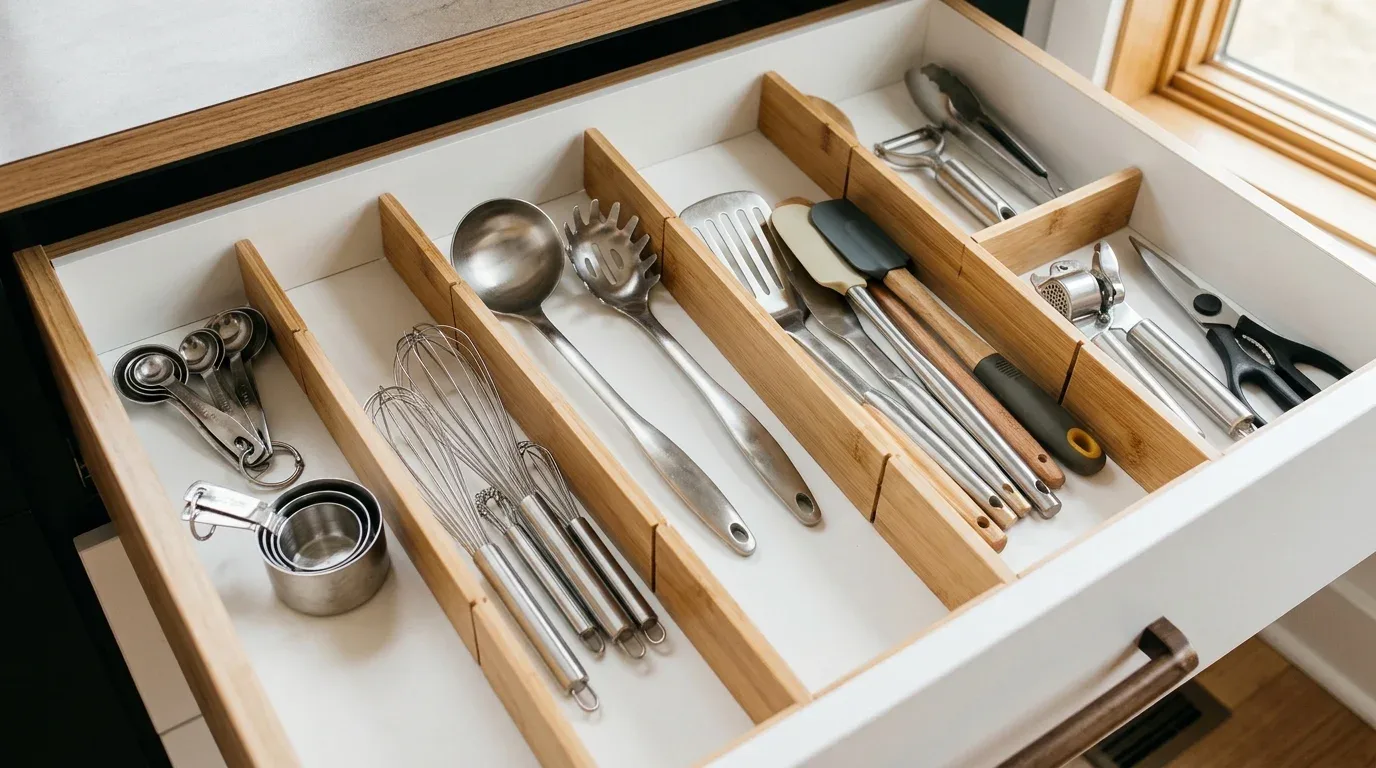
4. Organize Drawers With Adjustable Dividers
Kitchen drawers can become messy surprisingly quickly, especially when utensils, measuring tools, and miscellaneous gadgets share the same space. Adjustable drawer dividers create separate compartments for different categories, making everything easier to find. Use longer sections for spatulas and serving spoons, smaller compartments for measuring spoons, and dedicated spaces for knives or other accessories. Expandable organizers are especially useful because they can adapt to different drawer widths. Bamboo, plastic, and metal options are available to match different kitchen styles. Start by removing everything from the drawer and keeping only useful items before arranging the dividers. This small improvement makes everyday cooking more efficient and prevents unnecessary clutter.
5. Make the Most of Cabinet Door Storage
The inside of a cabinet door offers an overlooked opportunity to create additional kitchen storage. Install shallow racks, hooks, or specialized organizers to hold measuring cups, pot lids, cutting boards, and lightweight cleaning supplies. This approach keeps frequently used accessories accessible without taking up valuable shelf space. For pantry cabinets, a narrow door-mounted rack can organize spice packets, seasoning containers, and small food items. Make sure the organizer is not too deep, as it should not interfere with the cabinet shelves when the door closes. Also check the weight limit before loading it with heavy objects. With thoughtful placement, cabinet doors can become some of the hardest-working areas in your kitchen.
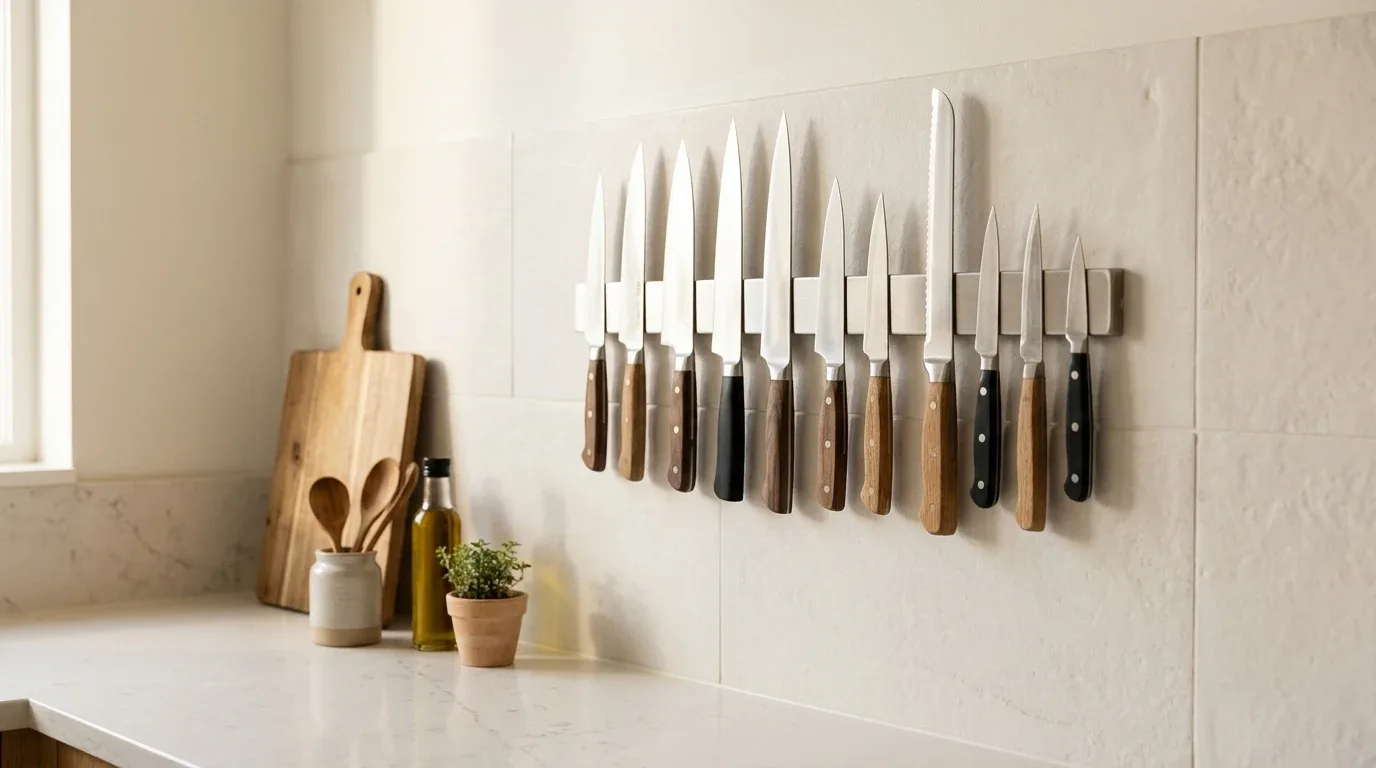
6. Install a Magnetic Knife Strip
A magnetic knife strip is an excellent alternative to bulky knife blocks that occupy valuable countertop space. Mounted securely on a wall or backsplash, it keeps knives organized, visible, and easy to access while cooking. Some magnetic strips can also hold metal kitchen tools, such as scissors and selected utensils. Choose a sturdy model with a strong magnetic surface and install it at a comfortable height away from children’s reach. Position knives with their handles facing outward and make sure the strip provides enough room between blades. A simple stainless steel or wooden design can blend beautifully with different kitchen styles. Always secure knives carefully and follow the manufacturer’s installation instructions.
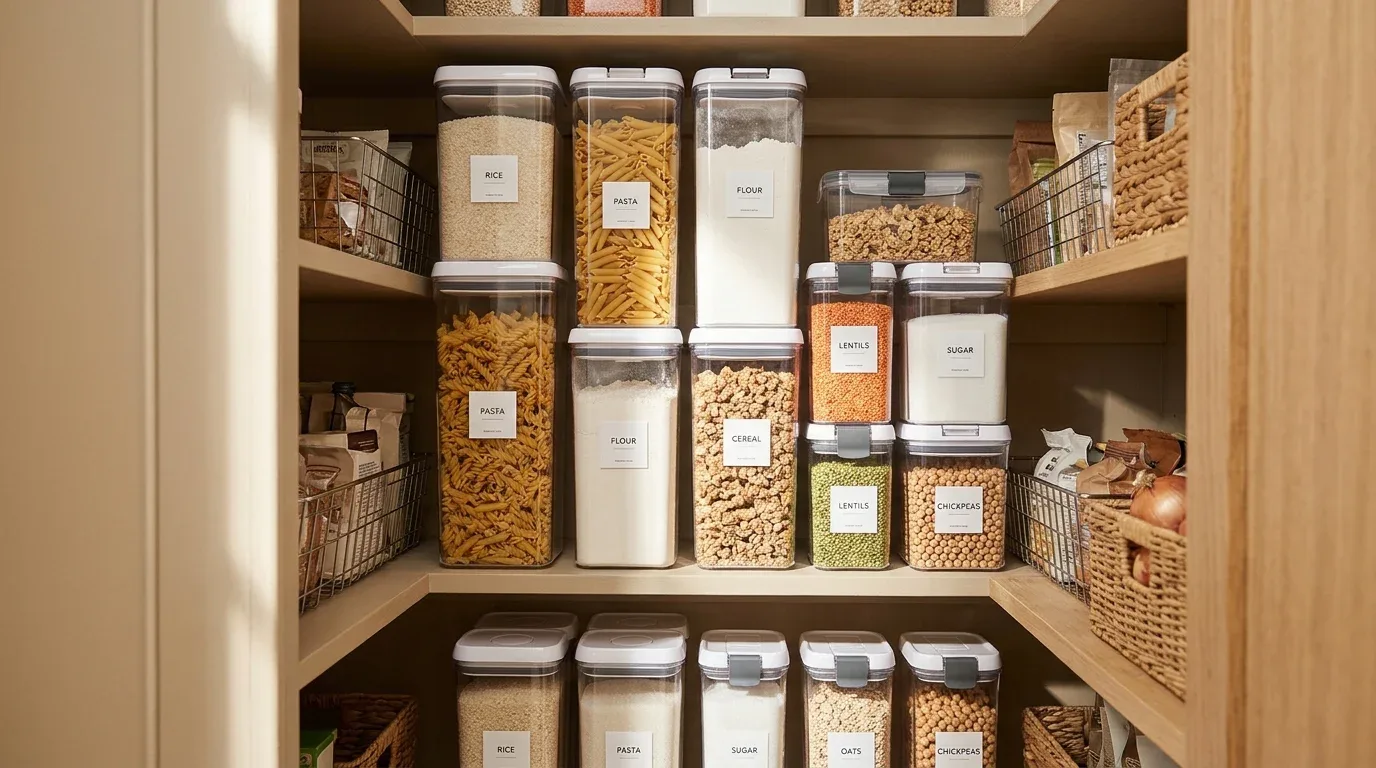
7. Use Stackable Containers for Pantry Storage
Food packaging comes in different shapes and sizes, making small pantry shelves difficult to organize efficiently. Stackable, airtight containers create a more uniform arrangement while protecting dry ingredients from moisture and pests. Transfer frequently used foods such as flour, rice, pasta, cereal, lentils, and sugar into containers that fit your available shelf depth. Clear containers make it easy to identify contents at a glance, while labels help distinguish similar ingredients. Choose square or rectangular designs because they generally use shelf space more efficiently than rounded containers. Before organizing, check expiration dates and group similar ingredients together. A consistent container system makes even a compact pantry look cleaner and more functional.
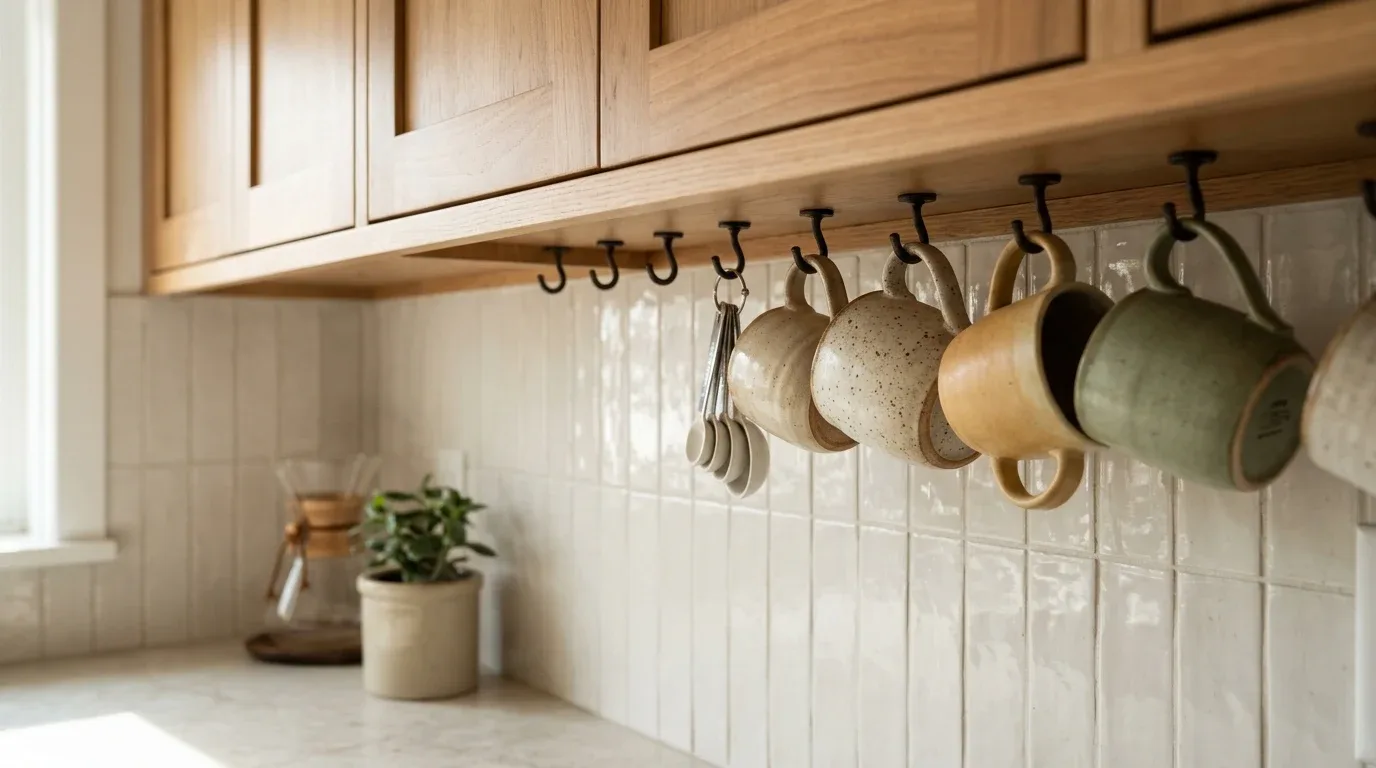
8. Add Hooks Under Upper Cabinets
The underside of upper kitchen cabinets can provide useful storage for lightweight everyday essentials. Small hooks installed beneath a cabinet can hold mugs, measuring spoons, or frequently used utensils. Alternatively, an under-cabinet rail with movable hooks offers flexibility when your storage needs change. This arrangement frees up shelf and drawer space while keeping frequently used objects within easy reach. It works particularly well above a coffee station or near a food preparation area. Choose moisture-resistant hardware and make sure the hooks are properly secured. Keep the arrangement simple rather than hanging too many objects together, as excessive visual clutter can make a compact kitchen feel even smaller.
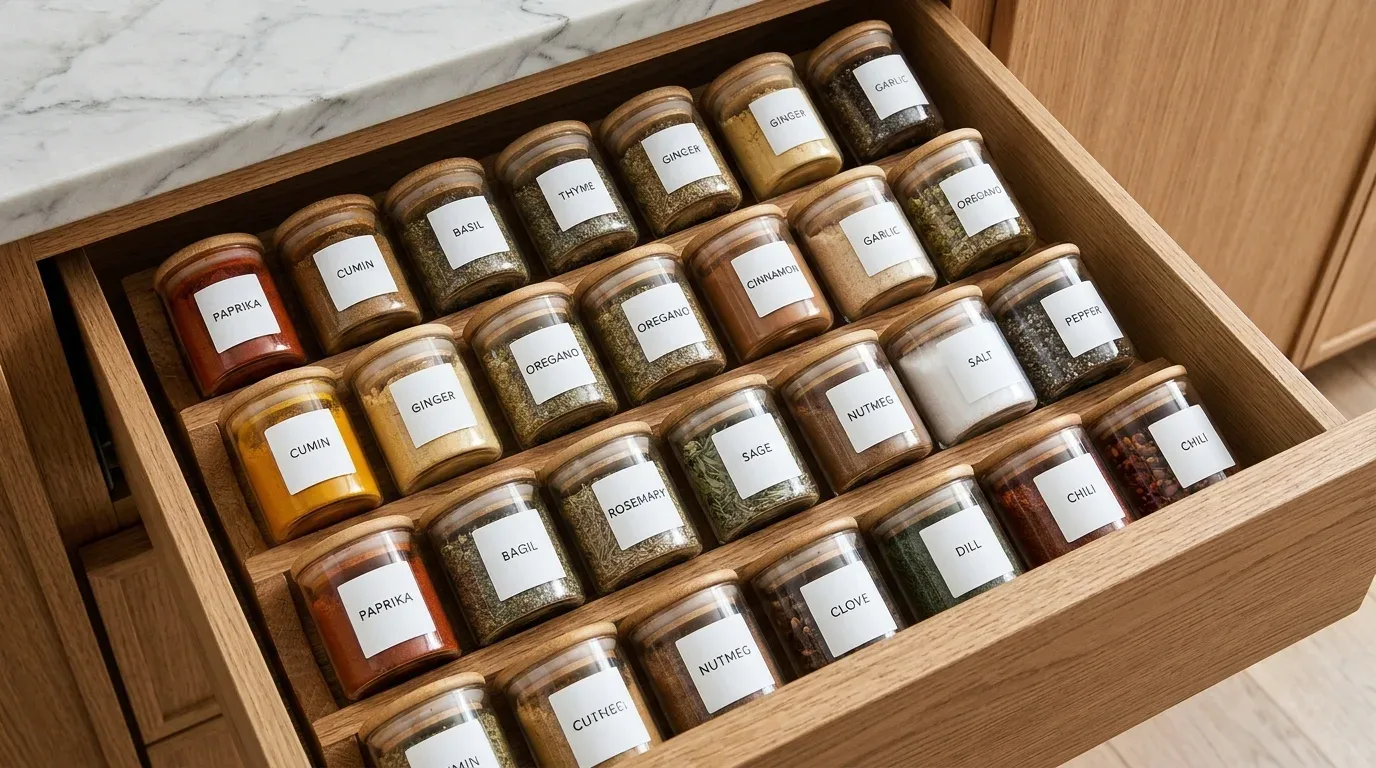
9. Create a Dedicated Spice Drawer
Spice containers often take up more cabinet space than expected, especially when they are scattered across multiple shelves. A dedicated spice drawer provides a convenient solution by arranging seasonings in a single, accessible location. Use angled inserts or tiered organizers so labels remain visible when the drawer opens. Arrange spices alphabetically or group them by cooking style, such as baking, everyday meals, and international dishes. Matching containers can create a neat appearance, but they are not essential if you prefer to keep original packaging. Check expiration dates regularly and avoid buying duplicate seasonings simply because you cannot locate the ones already available. A well-organized spice drawer makes cooking faster and more enjoyable.
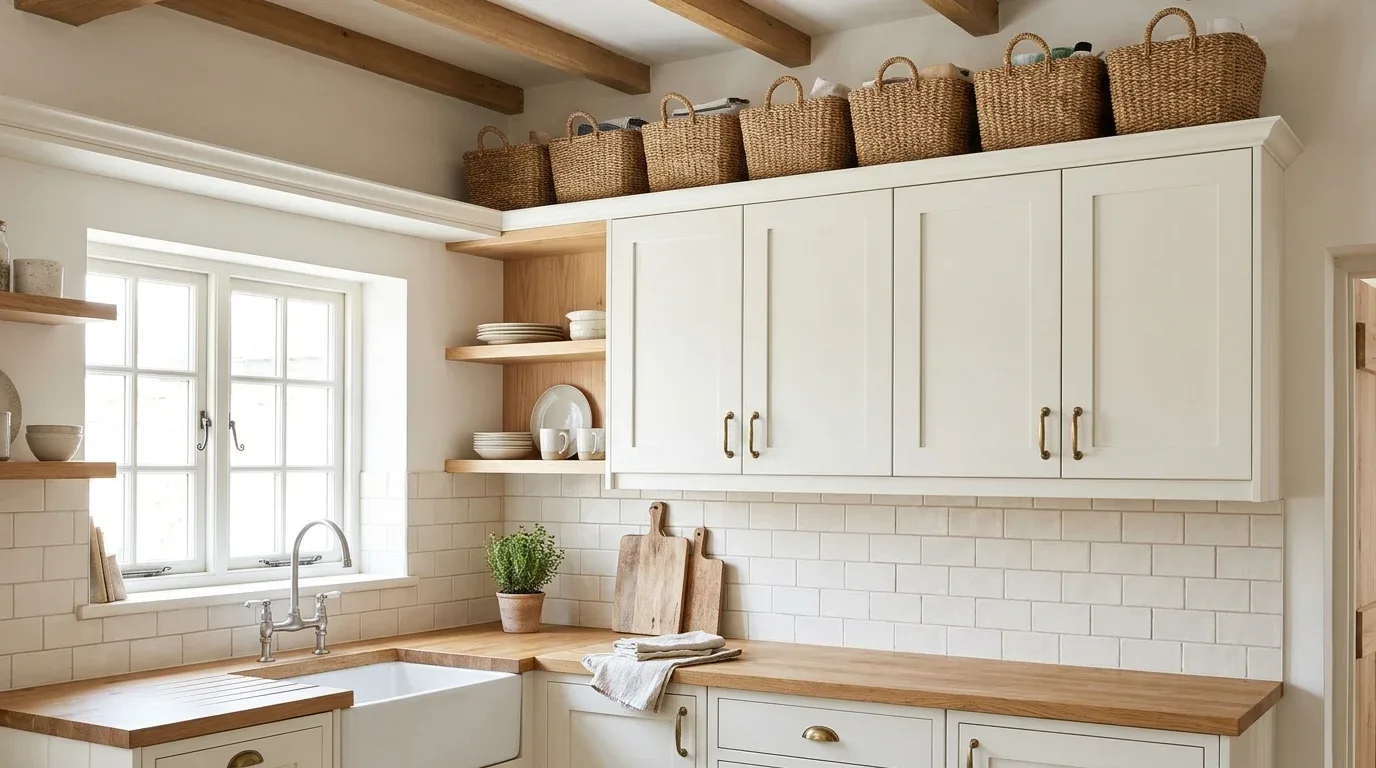
10. Turn the Space Above Cabinets Into Storage
If your kitchen cabinets do not extend all the way to the ceiling, the open area above them can offer additional storage. Use attractive baskets or matching storage boxes to keep less frequently used items organized and out of the way. This space is suitable for seasonal serving dishes, extra kitchen linens, entertaining supplies, or lightweight appliances that are not needed every day. Choose containers with lids to protect their contents from dust and grease. Keep the arrangement visually balanced by using similar colors and materials. Avoid storing heavy objects overhead, especially where access requires a ladder. This approach takes advantage of otherwise unused vertical space without changing your existing cabinetry.
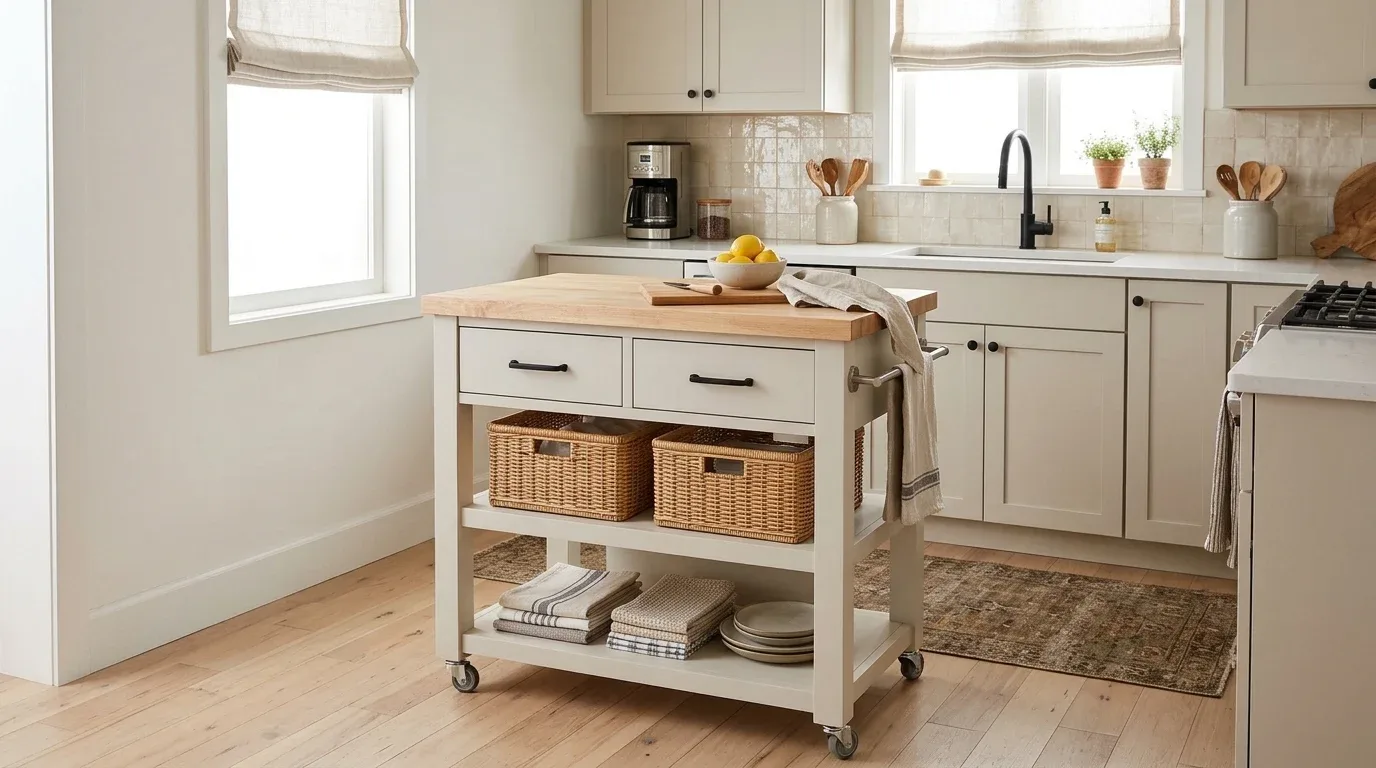
11. Choose a Kitchen Island With Built-In Storage
A compact kitchen island can provide extra storage while creating a useful surface for food preparation. Look for designs with drawers, open shelving, cabinet doors, or integrated baskets underneath. Even a narrow island can accommodate cutting boards, cookware, dish towels, and small appliances. If your kitchen is especially tight, consider a movable island that can be repositioned when additional floor space is needed. Measure the walking clearance around it before purchasing to ensure cabinet doors and appliances can still open comfortably. Choose a finish that complements your existing kitchen rather than introducing too many competing styles. A storage-focused island can make a small kitchen more functional without requiring permanent construction.
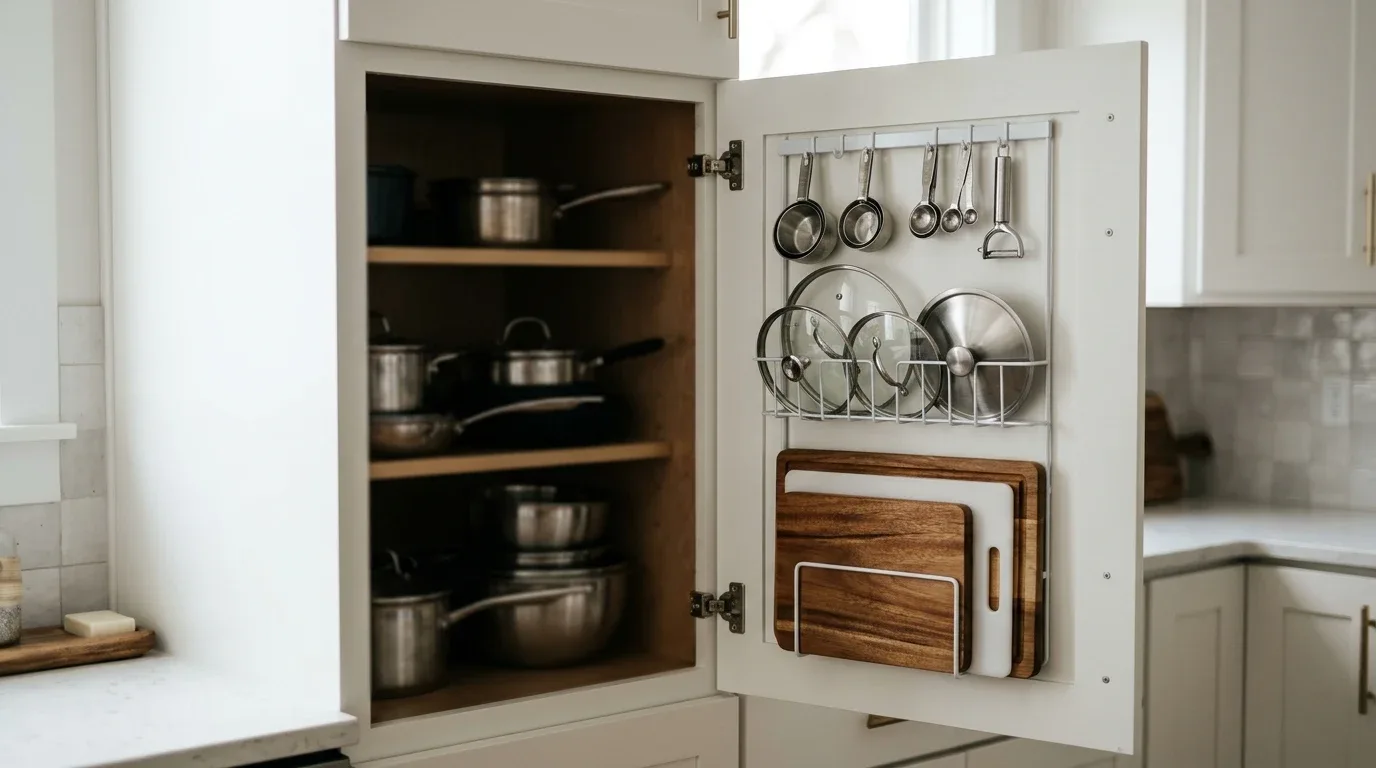
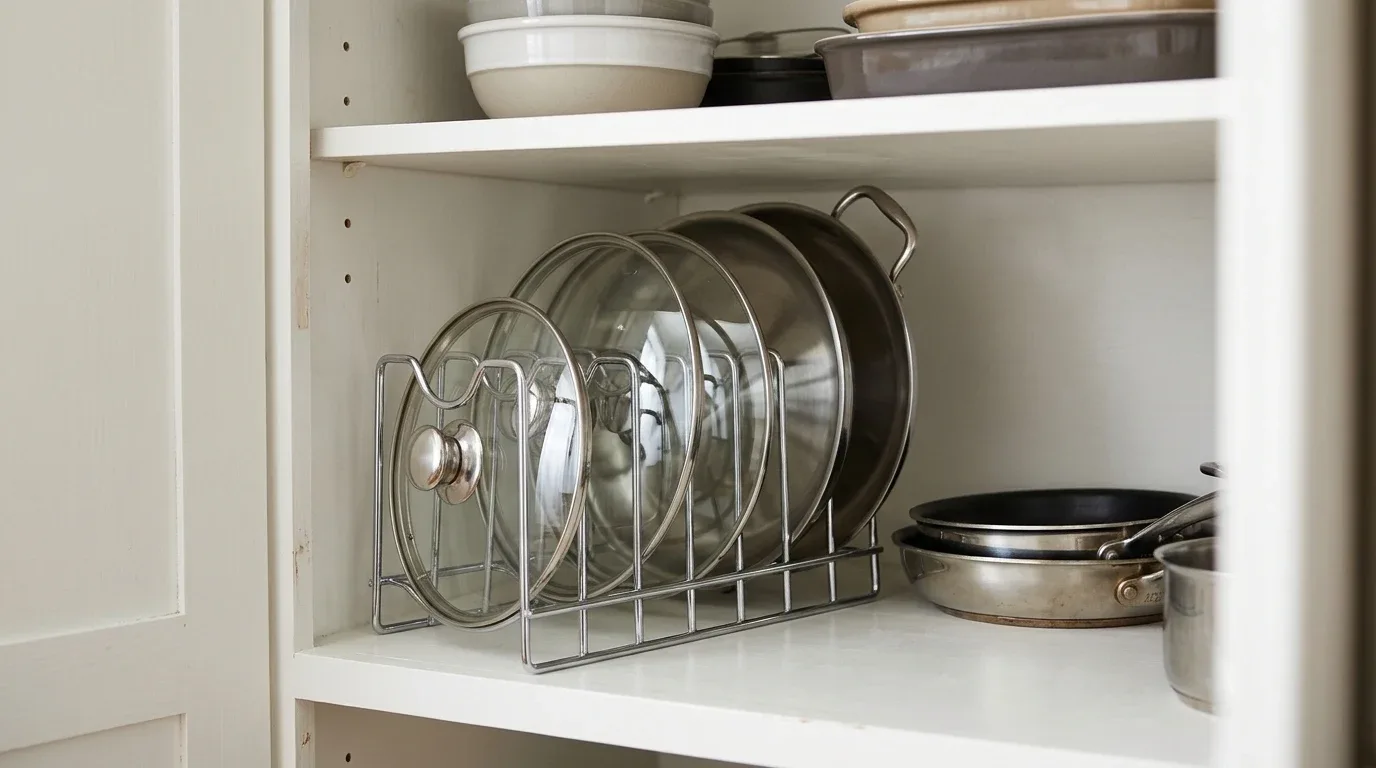
12. Store Pot Lids With a Dedicated Organizer
Pot lids are awkward to store because their rounded shapes easily slide over one another and create unnecessary clutter. A dedicated lid organizer keeps them separated and prevents the familiar pile of cookware from becoming difficult to manage. Place a vertical rack inside a cabinet, install a holder on the cabinet door, or use adjustable dividers in a deep drawer. These organizers can also accommodate baking trays, chopping boards, and flat serving dishes, depending on their design. Measure your available cabinet space before choosing a model and check that the rack supports the size of your cookware. Keeping lids upright makes it easier to find the correct one while cooking.
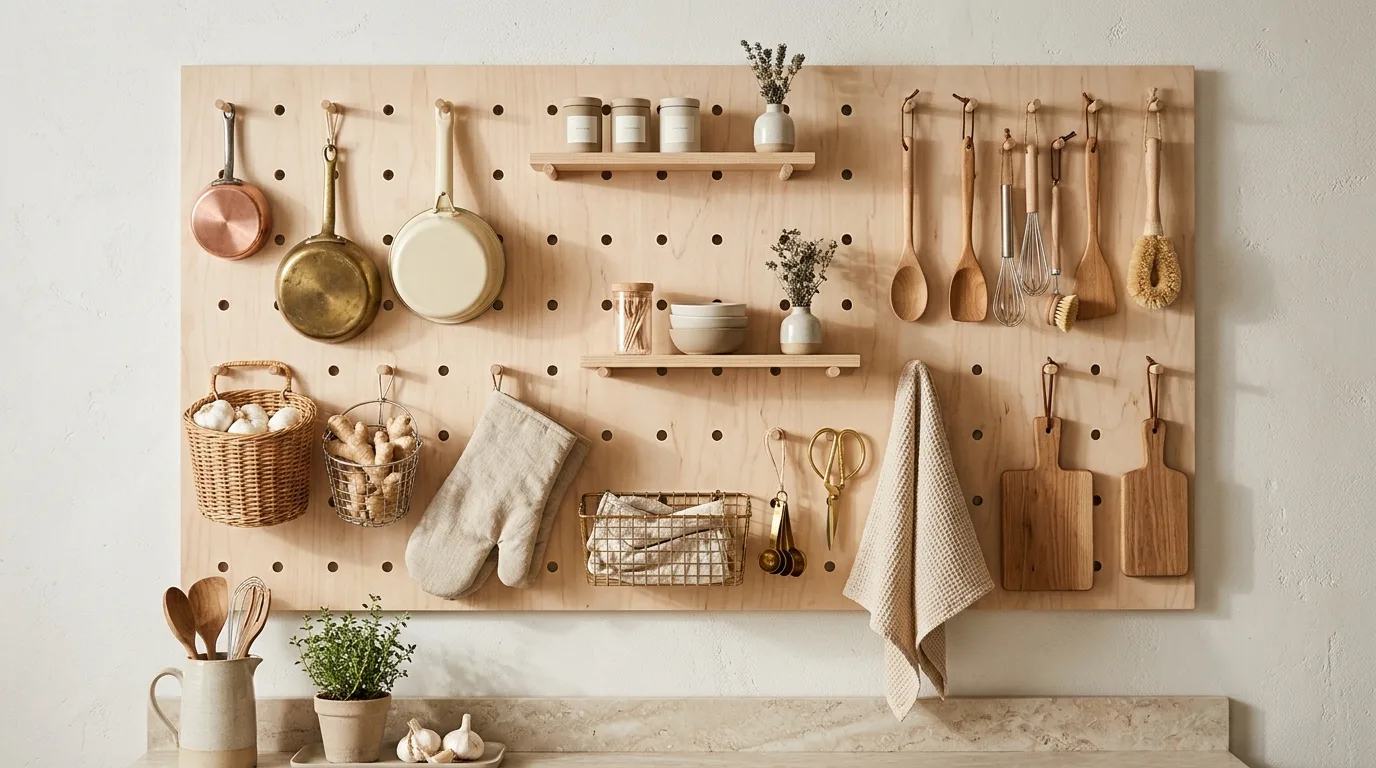
13. Install a Pegboard for Flexible Kitchen Storage
A wall-mounted pegboard creates customizable storage that can change as your kitchen needs evolve. Add hooks, small shelves, and baskets to organize lightweight pots, utensils, strainers, and frequently used accessories. Because the hooks can be moved, you can rearrange the layout whenever you purchase new tools or decide to reorganize your cooking area. A wooden pegboard adds warmth, while a painted metal design can create a modern industrial appearance. Install it on a suitable wall near your preparation area, making sure it does not interfere with appliance doors or walkways. Keep heavier cookware on properly rated supports and distribute the weight evenly. This practical system turns an empty wall into an organized storage feature.
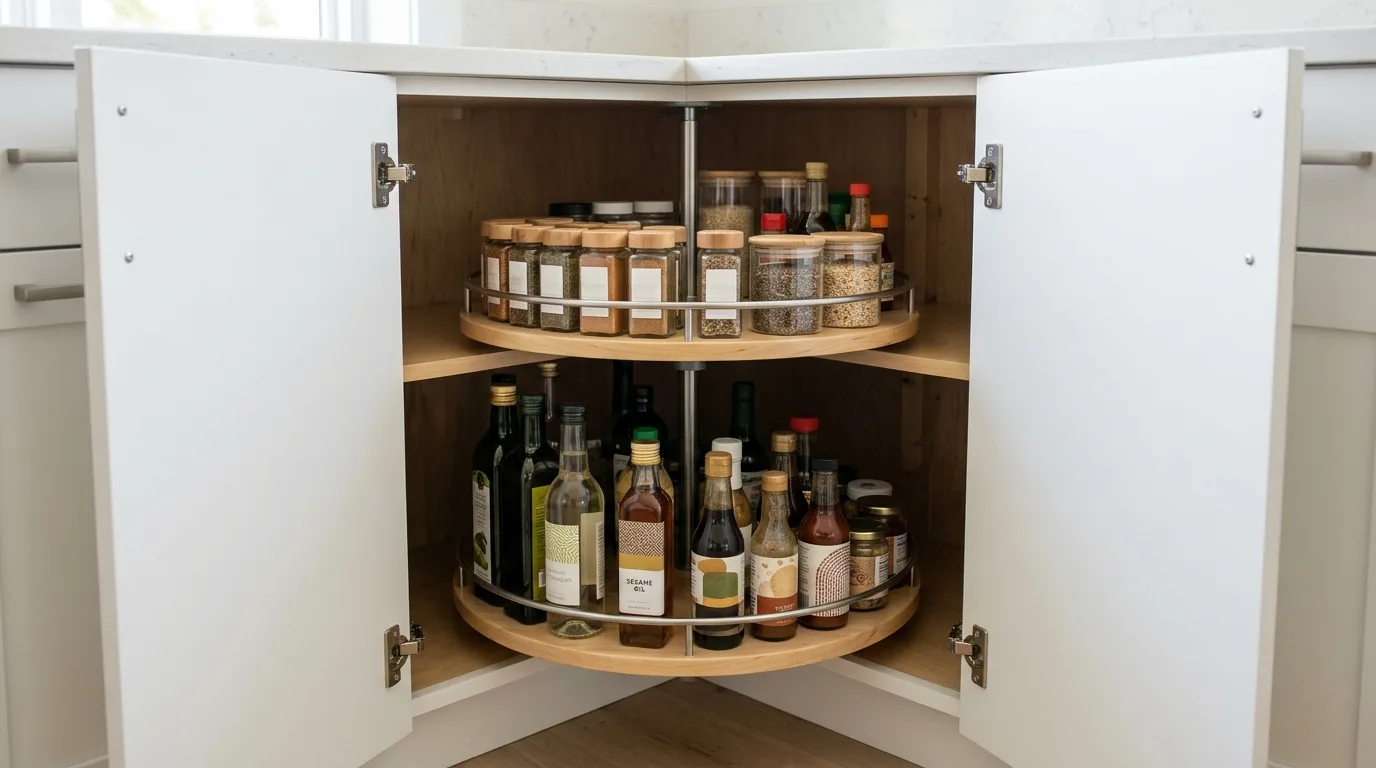
14. Use Corner Cabinet Lazy Susans
Corner cabinets frequently contain deep, awkward spaces that are difficult to access without moving everything in front. A lazy Susan makes these cabinets considerably more useful by allowing stored items to rotate toward you. Choose a rotating organizer that fits the cabinet dimensions and has raised edges to prevent bottles and containers from slipping. These turntables are useful for oils, sauces, canned foods, baking supplies, and smaller pantry products. Two-tier versions can increase storage capacity when the cabinet height allows enough clearance. Avoid overcrowding the rotating surface because containers can fall or become difficult to identify. A well-organized lazy Susan helps transform an inconvenient corner into practical everyday storage.
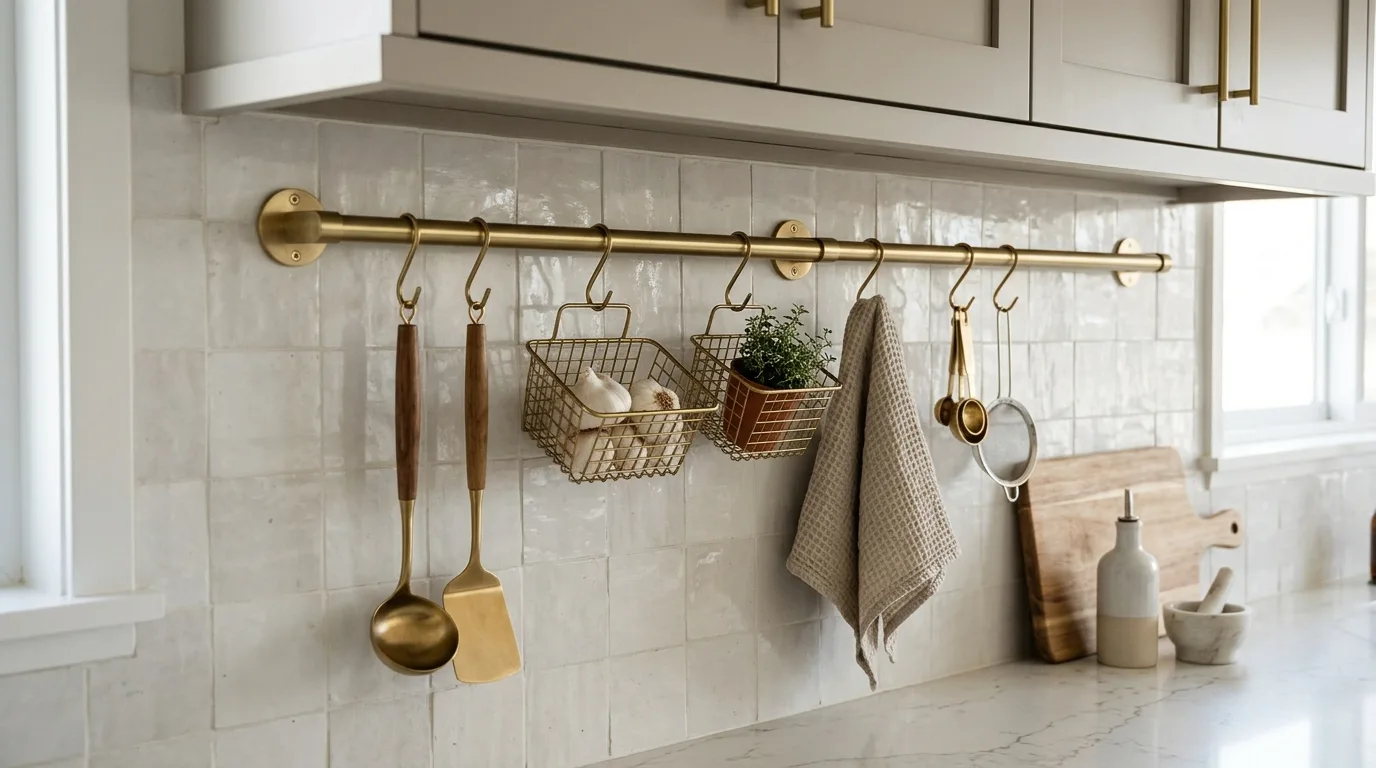
15. Add a Rail System Along the Backsplash
A backsplash rail can provide convenient storage for frequently used kitchen tools without occupying countertop space. Install a sturdy metal rail with compatible hooks, small baskets, and holders for cooking utensils, mugs, or dish towels. It is particularly useful near the stove or preparation area, where essential tools can remain within easy reach. Choose a finish that coordinates with your cabinet handles and faucet for a consistent appearance. Keep the rail organized by grouping similar objects together and leaving enough space between hanging accessories. Before drilling, check for hidden pipes and electrical wiring. A carefully positioned rail makes an empty backsplash more functional while adding a subtle decorative detail.
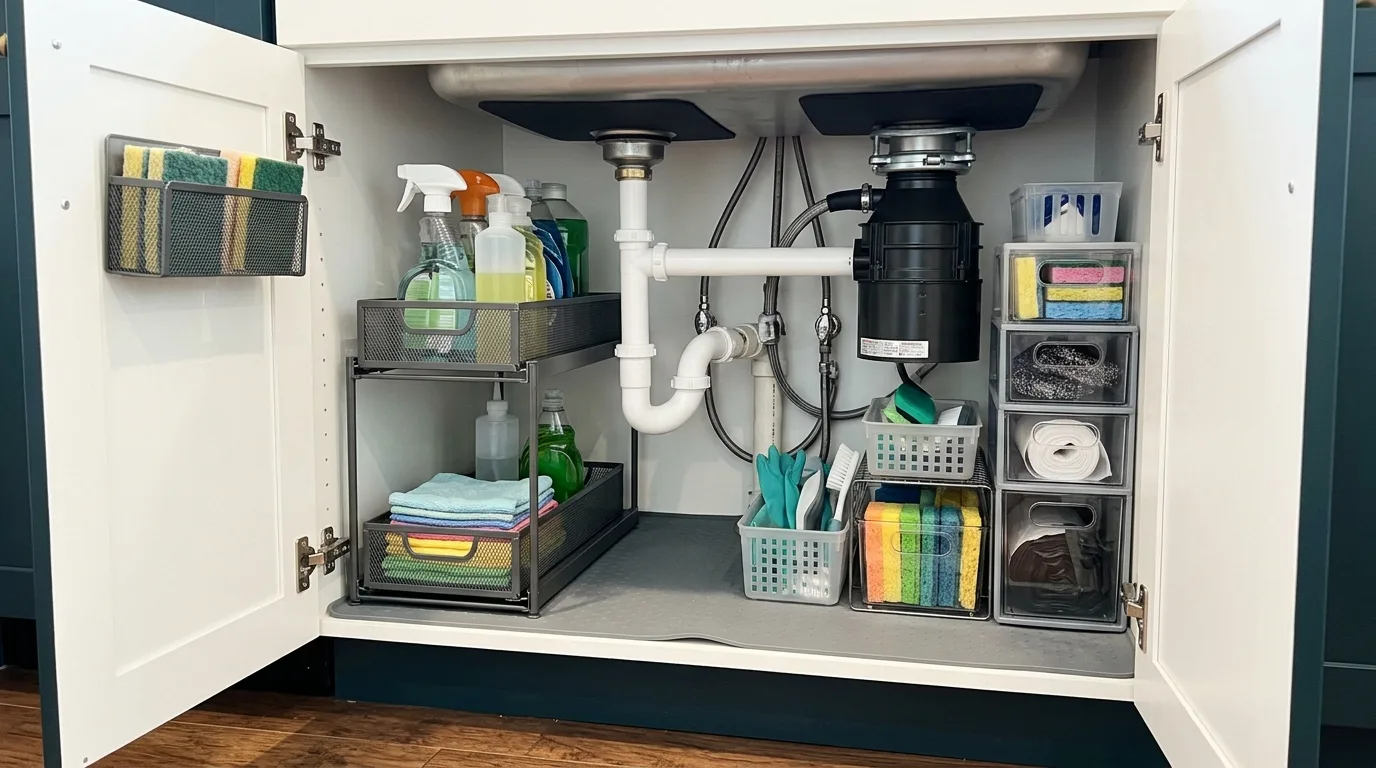
16. Maximize Under-Sink Storage With Stackable Organizers
The cabinet beneath a kitchen sink is often difficult to organize because plumbing pipes interrupt the available space. Stackable shelves and adjustable organizers help work around these obstacles while creating separate areas for cleaning products, sponges, trash bags, and dishwashing supplies. Look for expandable designs that can fit around pipes without blocking access to shut-off valves. Small baskets are useful for grouping similar products, while a pull-out caddy makes frequently used cleaners easier to reach. Store chemicals securely and away from food, cookware, and children’s access. Remove unnecessary packaging and dispose of empty containers before arranging everything. With a little planning, even this awkward cabinet can become a practical storage zone.
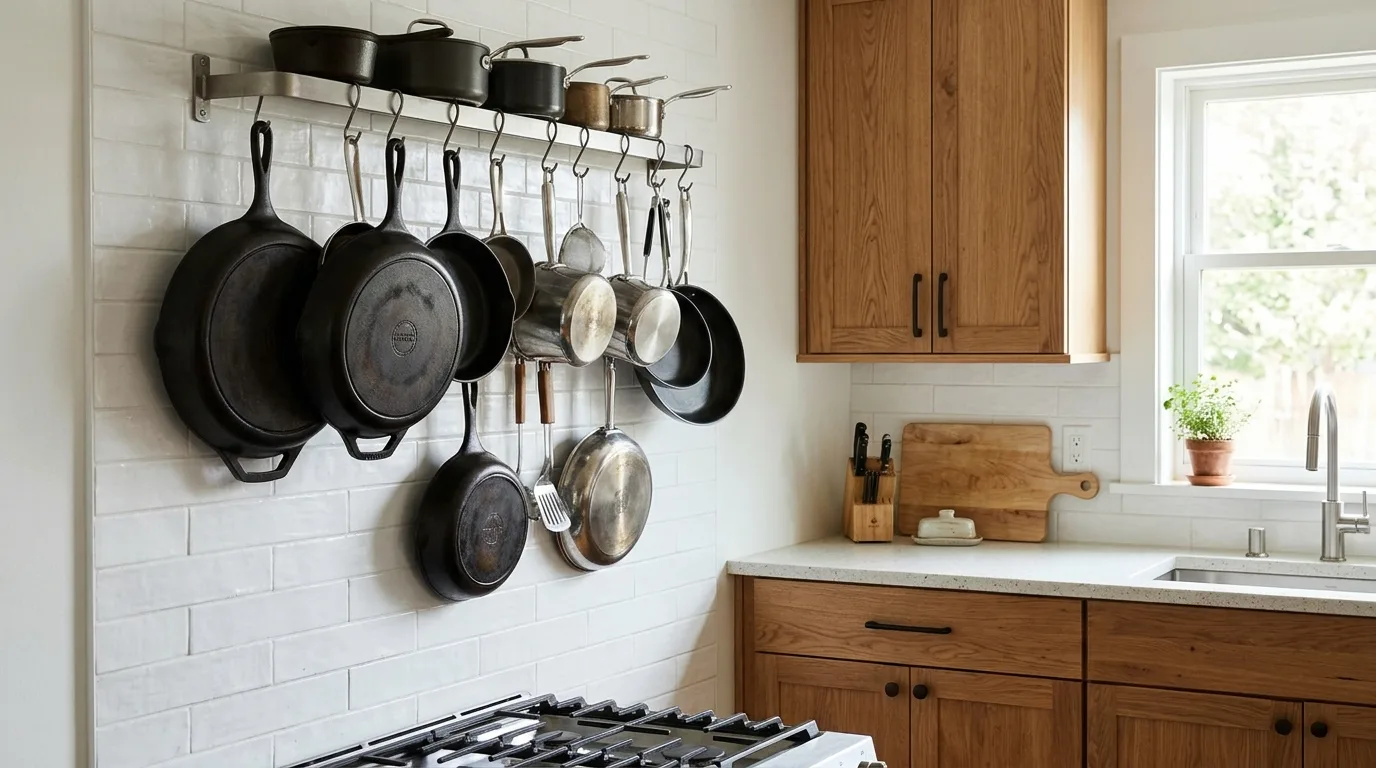
17. Hang a Pot Rack to Free Up Cabinet Space
Bulky pots and pans can quickly fill a small kitchen’s cabinets, leaving little room for other essentials. A properly installed hanging pot rack offers an alternative by moving suitable cookware onto an unused wall or ceiling area. Wall-mounted racks work well above a preparation counter, while ceiling-mounted designs can suit kitchens with enough vertical clearance. Choose a rack that supports the combined weight of your cookware and install it into appropriate structural supports. Arrange pans by size and keep frequently used pieces easy to reach. If exposed cookware does not match your preferred style, select a simple design with a coordinated finish. This solution can free up significant cabinet space while making everyday cooking equipment accessible.
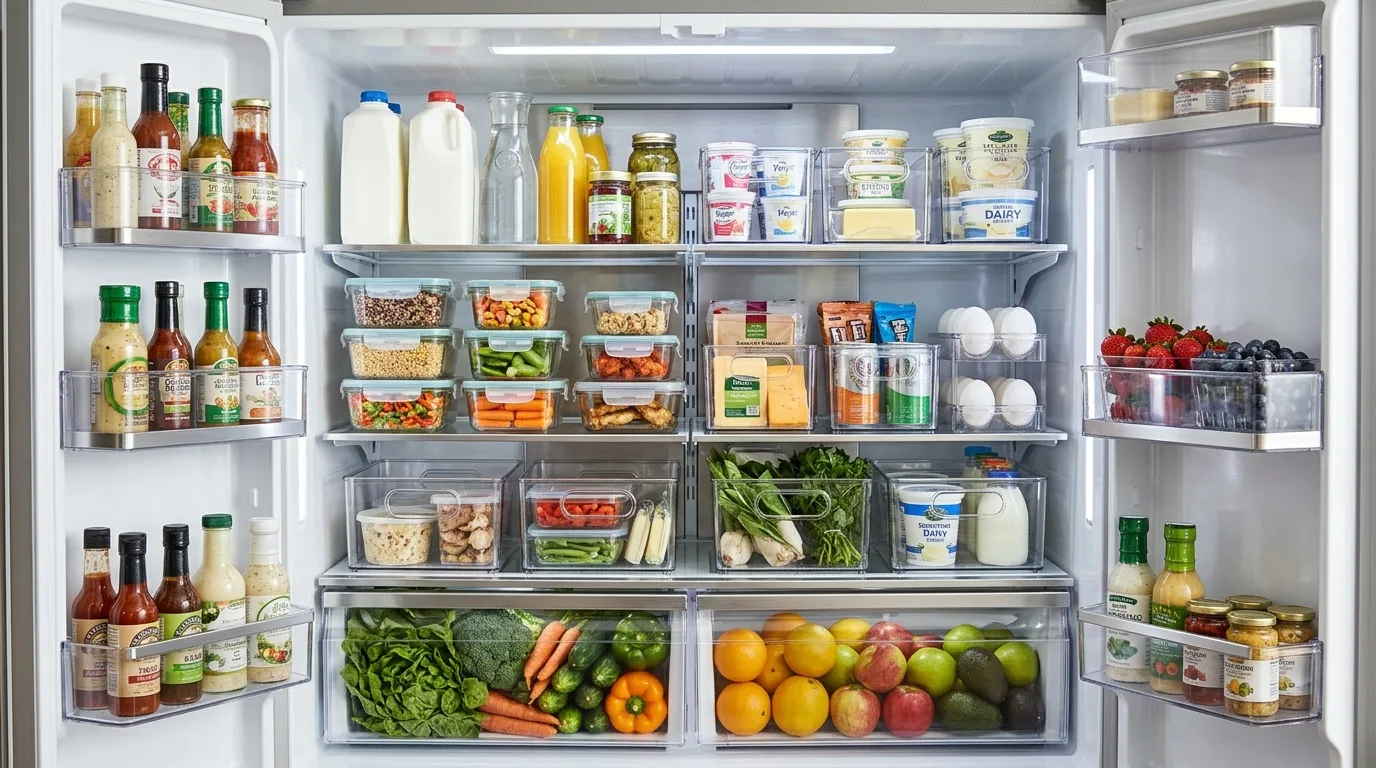
18. Organize the Refrigerator With Clear Storage Bins
Refrigerator organization is an important part of making a small kitchen work efficiently. Clear storage bins help group similar foods together, prevent smaller items from getting lost, and make it easier to see what needs to be used. Use separate containers for snacks, dairy products, condiments, and meal-preparation ingredients, adjusting the arrangement to your household’s needs. Label bins when helpful and choose sizes that allow cold air to circulate properly. Avoid blocking refrigerator vents or overfilling shelves, and follow food safety guidance for storing raw meat and other perishable ingredients. A simple organization system reduces forgotten groceries, makes meal preparation easier, and helps you use available refrigerator space more effectively.
Final Thoughts
Creating more storage in a small kitchen is about making thoughtful use of every available inch rather than filling the room with additional furniture. Pull-out shelves, vertical organizers, cabinet door racks, stackable containers, and clever wall-mounted solutions can make a noticeable difference without requiring an expensive renovation. Start with the areas that cause the most frustration, remove items you no longer use, and choose storage solutions that suit your actual cooking habits. By combining practical organization with a consistent design, you can create a small kitchen that feels more spacious, looks more inviting, and works beautifully every day.
Leave a Reply