
Maximalist living room design is all about embracing personality, creativity, and the beauty of meaningful details. Instead of following the less-is-more philosophy, this expressive decorating style celebrates layered colors, collected treasures, bold patterns, interesting artwork, and furniture with character. However, a beautifully maximalist room is not simply a space filled with everything you love. The secret is creating a thoughtful balance between abundance and intention, allowing every piece to contribute to the overall story of your home.
Whether you gravitate toward vintage furniture, dramatic wallpaper, colorful textiles, or an eclectic mix of personal collections, there are countless ways to create a living room that feels rich without becoming overwhelming. These maximalist living room ideas explore how to combine statement pieces, meaningful accessories, contrasting textures, and carefully coordinated colors. Use them as inspiration to build a welcoming, visually interesting space that reflects your personality while remaining comfortable, functional, and beautifully organized.
1. Create a Colorful, Collected Living Room
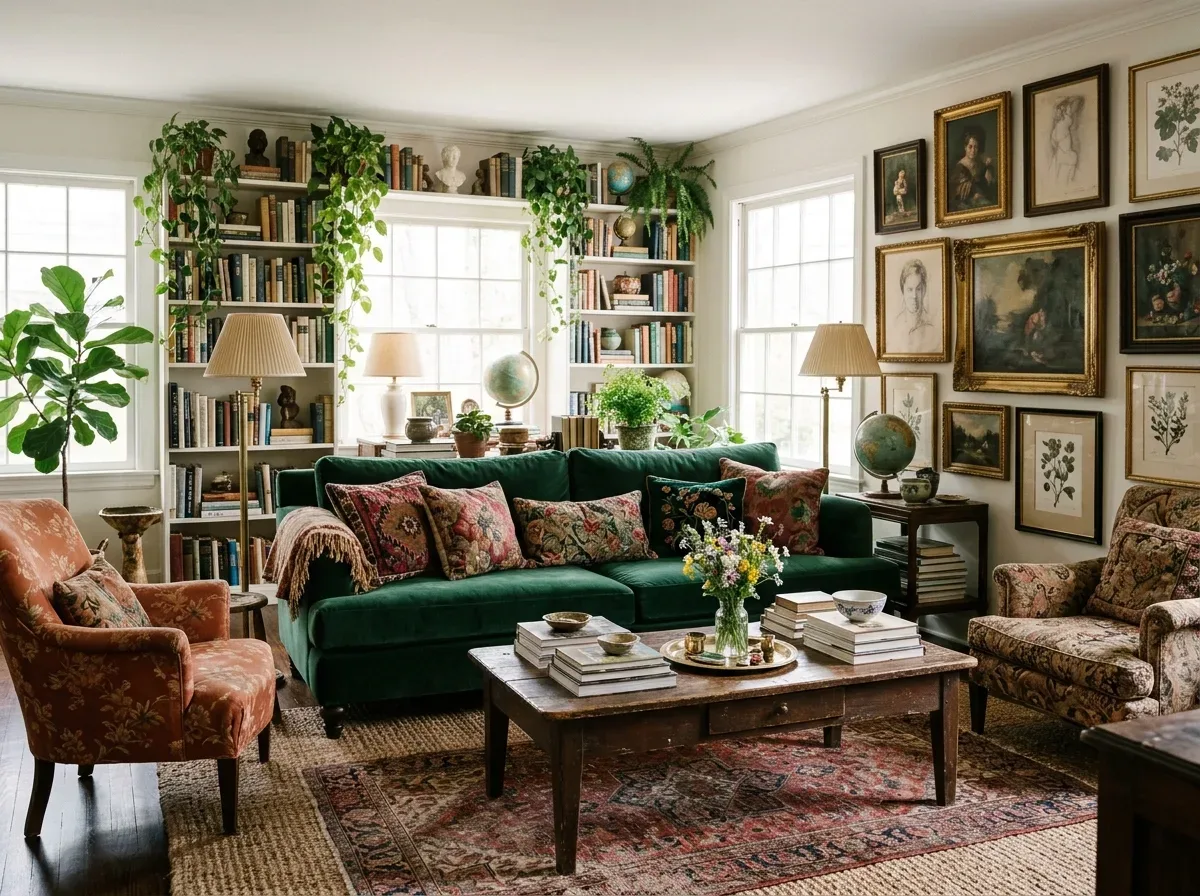
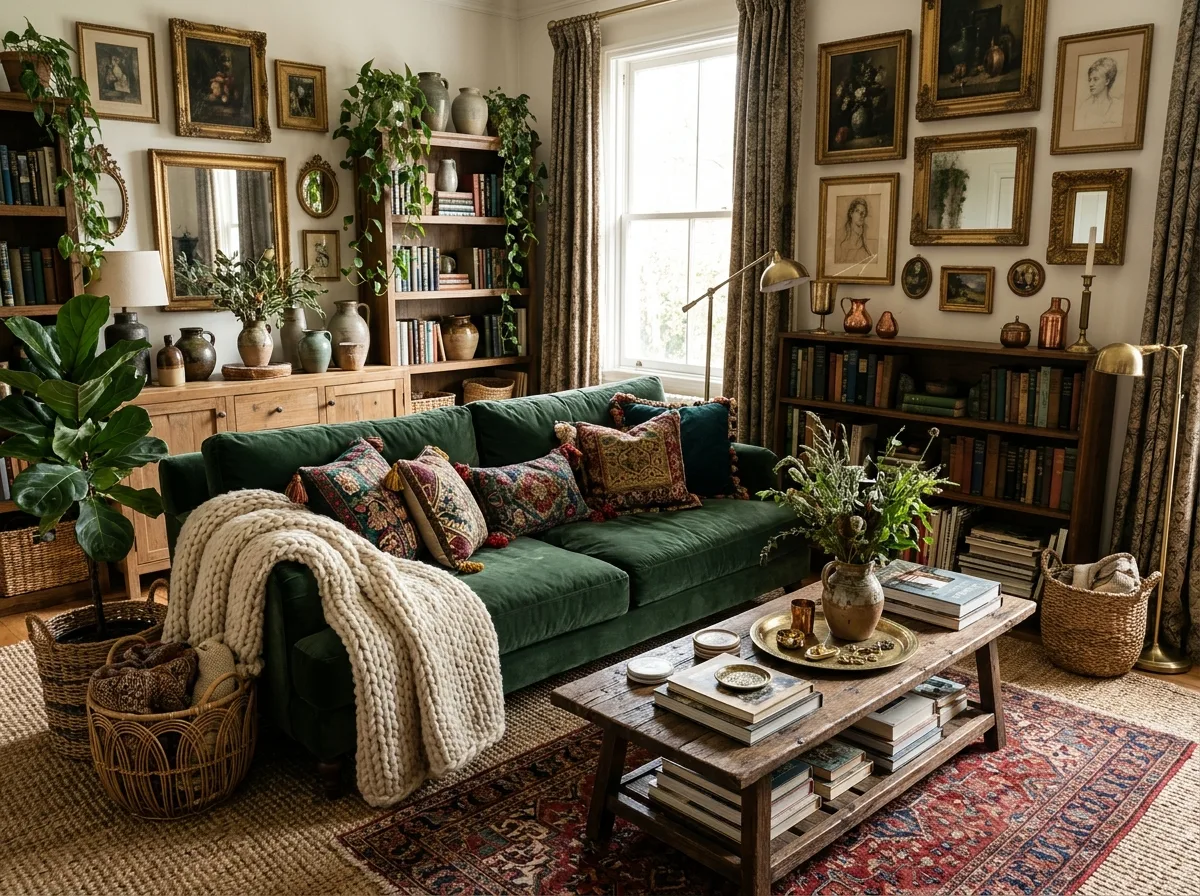
A colorful collected living room is a wonderful starting point for maximalist decorating. Rather than purchasing an entire matching furniture set, combine pieces that have different histories, finishes, and personalities. A jewel-toned sofa, vintage wooden coffee table, patterned armchairs, and colorful cushions can create a space that feels naturally assembled over time. To keep the arrangement cohesive, repeat two or three colors throughout the room. For example, emerald green might appear in the upholstery, artwork, and decorative accessories. The goal is to make the room feel like a collection of meaningful discoveries rather than a showroom filled with unrelated objects.
2. Embrace Bold and Beautiful Wallpaper
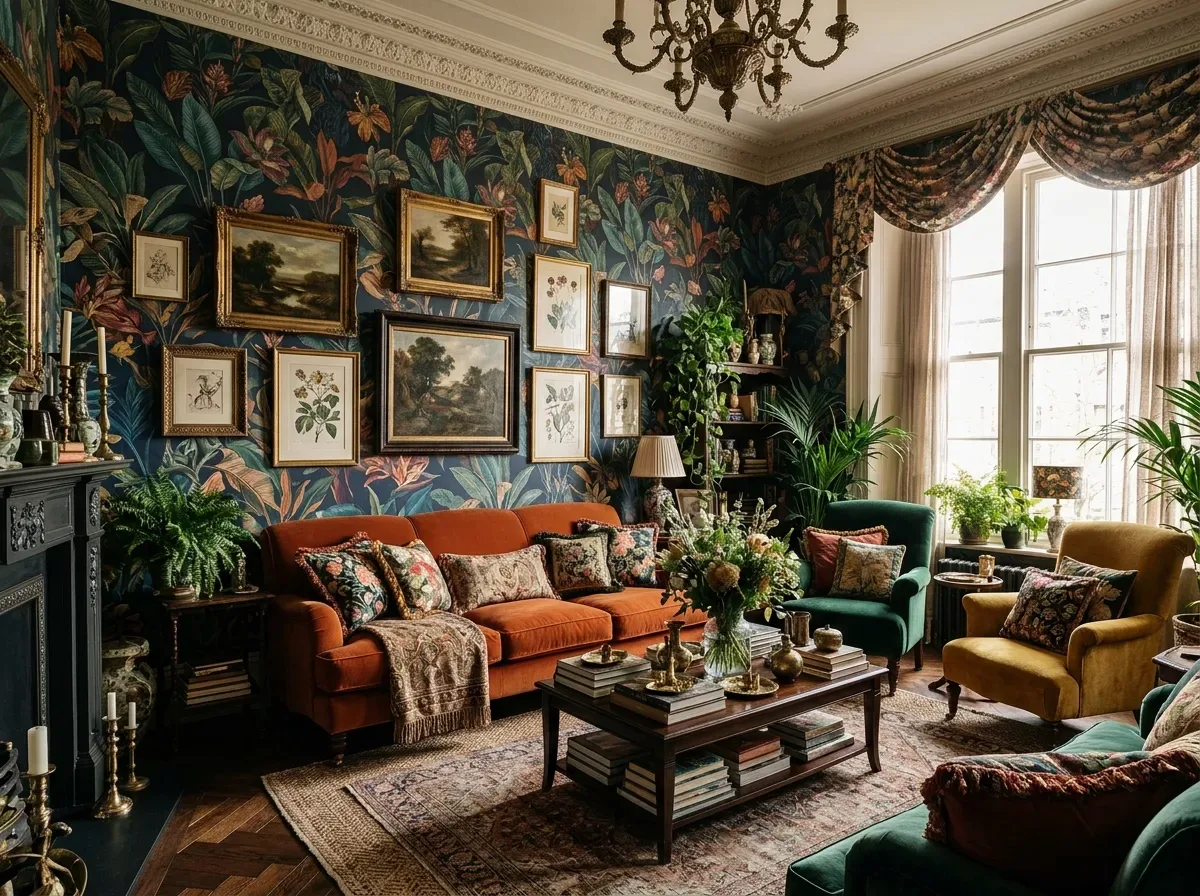
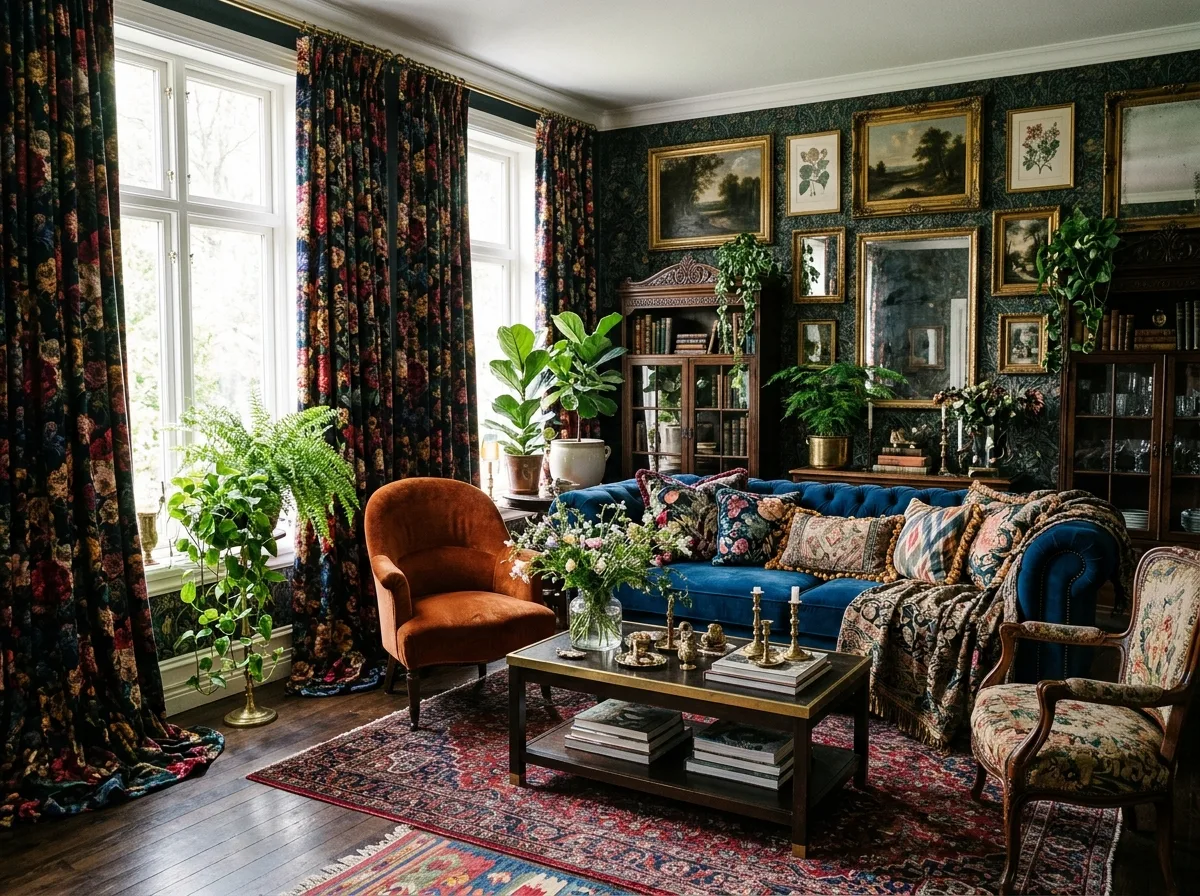
Wallpaper can transform a maximalist living room into an immersive expression of personality. Consider oversized botanical prints, dramatic floral patterns, colorful geometric designs, or vintage-inspired illustrations. A striking wallpaper creates a visual foundation that makes even simple furniture feel more interesting. If you prefer an especially layered look, coordinate the wallpaper with complementary curtains, cushions, and upholstery rather than matching every pattern exactly. Choose a dominant color from the design and repeat it in smaller decorative details. For a more balanced result, keep the largest furniture pieces in relatively solid fabrics so the wallpaper remains a standout feature without overwhelming the entire space.
3. Design a Gallery Wall with Personal Meaning
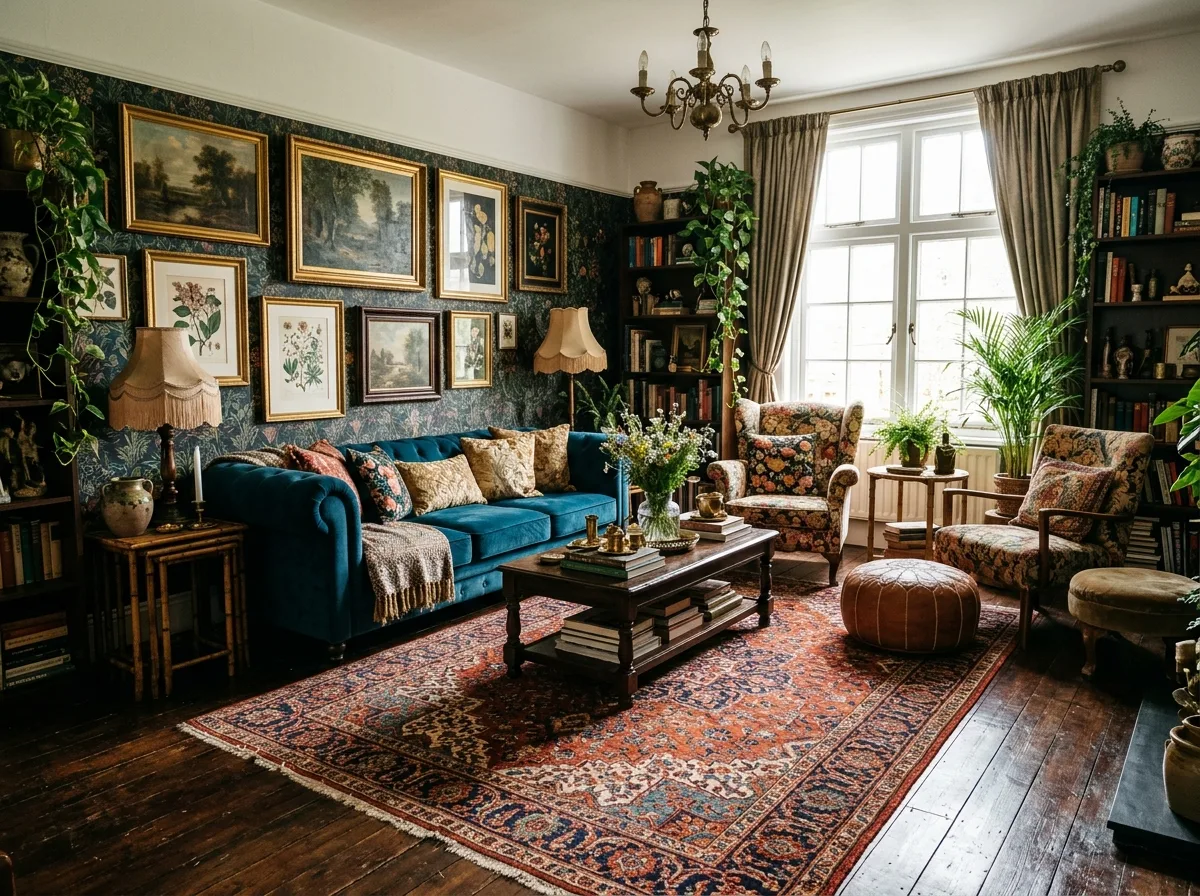
A thoughtfully arranged gallery wall gives a maximalist living room a personal story. Combine family photographs, vintage paintings, travel prints, illustrations, framed textiles, and artwork collected from local artists. Different frame finishes and sizes add visual depth, while a shared color palette helps the collection feel connected. Instead of arranging everything in perfectly symmetrical rows, experiment with an organic composition that grows around a central artwork. Leave enough space between frames to appreciate individual pieces, and include objects that genuinely mean something to you. A meaningful gallery wall is more interesting than a collection assembled simply to fill an empty wall.
4. Choose a Dramatic Jewel-Toned Sofa
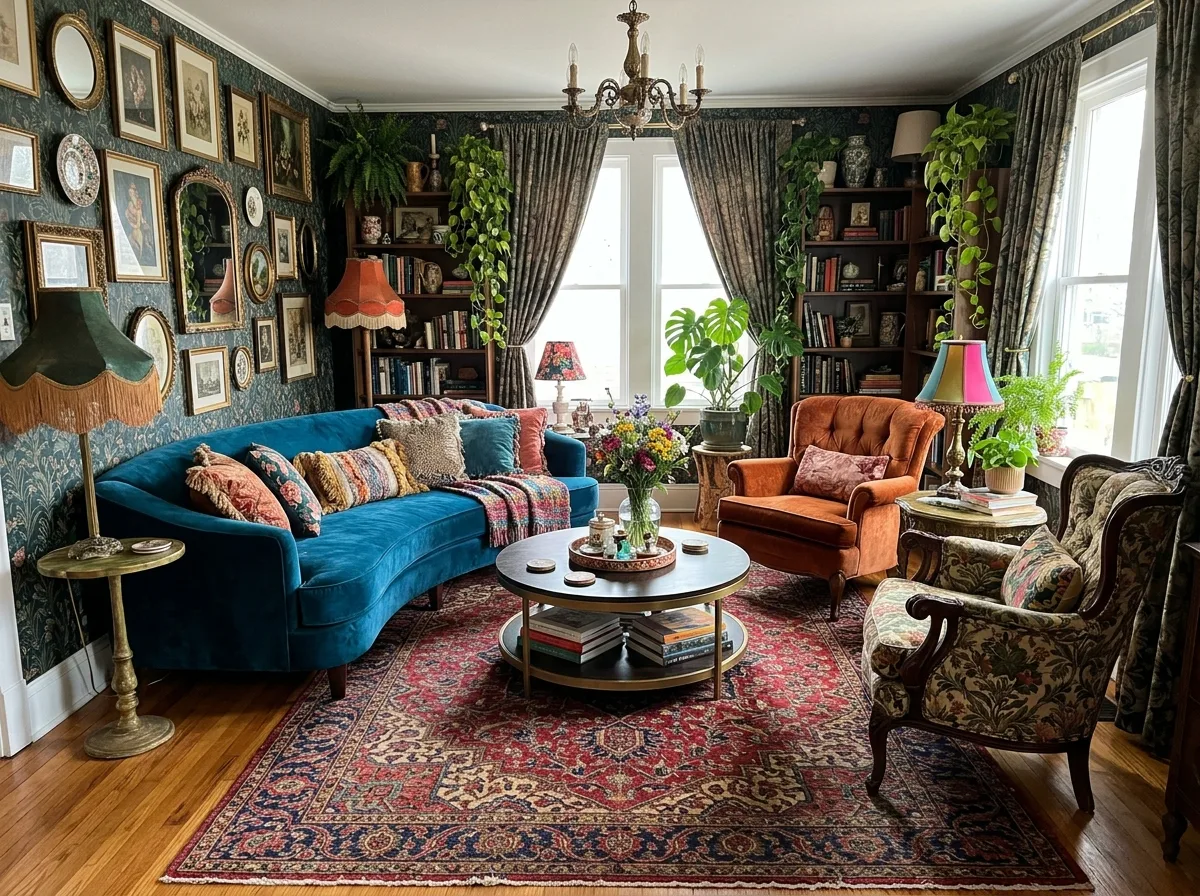
A jewel-toned sofa can become the defining feature of a maximalist living room. Think sapphire blue, ruby red, emerald green, amethyst purple, or deep teal. These rich colors bring depth and sophistication while creating an inviting place to relax. Velvet upholstery is particularly effective because its soft surface catches the light and enhances the intensity of the color. Surround the sofa with contrasting cushions, a patterned rug, and artwork that incorporates similar shades. If the sofa is your main statement piece, allow its shape and color to stand out instead of competing with too many equally dramatic furniture designs.
5. Layer Different Patterns with Confidence
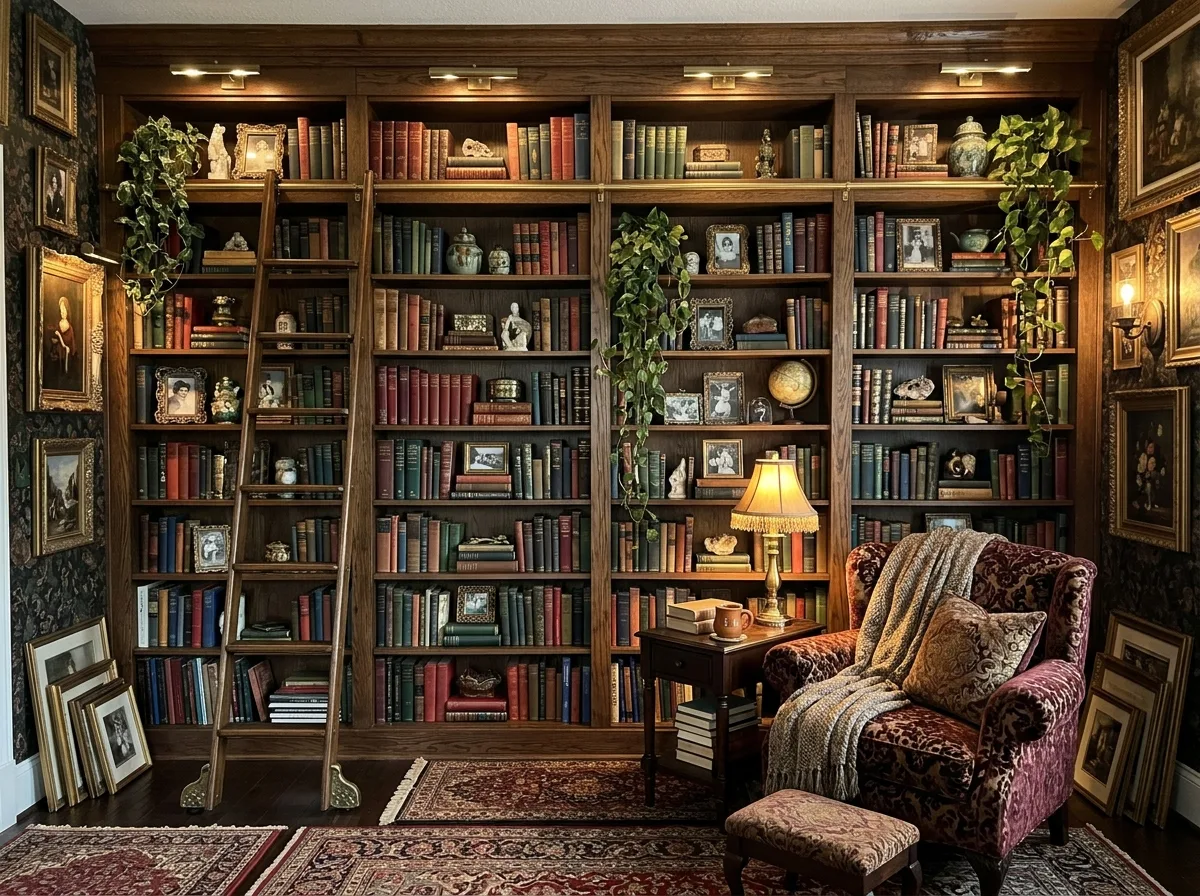
Mixing patterns is one of the most recognizable features of maximalist interior design. The trick is to combine designs that have different scales and visual weights. Pair large floral curtains with small geometric cushions, striped upholstery with an intricate rug, or abstract artwork with delicate decorative prints. A shared color palette helps these contrasting patterns work together. For example, navy, rust, cream, and mustard can connect several otherwise unrelated designs. Try keeping one pattern dominant, a second pattern supporting it, and smaller prints as accents. This approach creates visual richness while preventing the living room from feeling chaotic.
6. Display a Meaningful Collection of Vintage Finds
Vintage accessories give a maximalist living room warmth and individuality. Look for antique mirrors, ceramic vases, decorative boxes, brass candlesticks, old books, and unusual objects gathered during travels or passed down through family. Instead of spreading every item throughout the room, create small collections on bookshelves, consoles, and coffee tables. Vary the heights and shapes to make each arrangement visually engaging. A few imperfections can make these pieces even more appealing because they reveal their history. Displaying vintage finds thoughtfully allows your living room to feel collected and personal rather than crowded with decorative objects.
7. Bring in an Oversized Statement Rug
An oversized rug can anchor a maximalist living room and bring multiple decorative elements together. Choose a richly colored Persian-inspired design, a vintage-style floral rug, or an expressive abstract pattern. The rug should be large enough to connect the main seating arrangement, ideally allowing the front legs of sofas and chairs to rest on it. Repeat a few colors from the rug in cushions, artwork, or curtains to create visual continuity. If the walls and furniture already feature strong patterns, select a rug with a softer design. A well-chosen rug provides both comfort and a foundation for the room’s layered aesthetic.
8. Style Floor-to-Ceiling Bookshelves
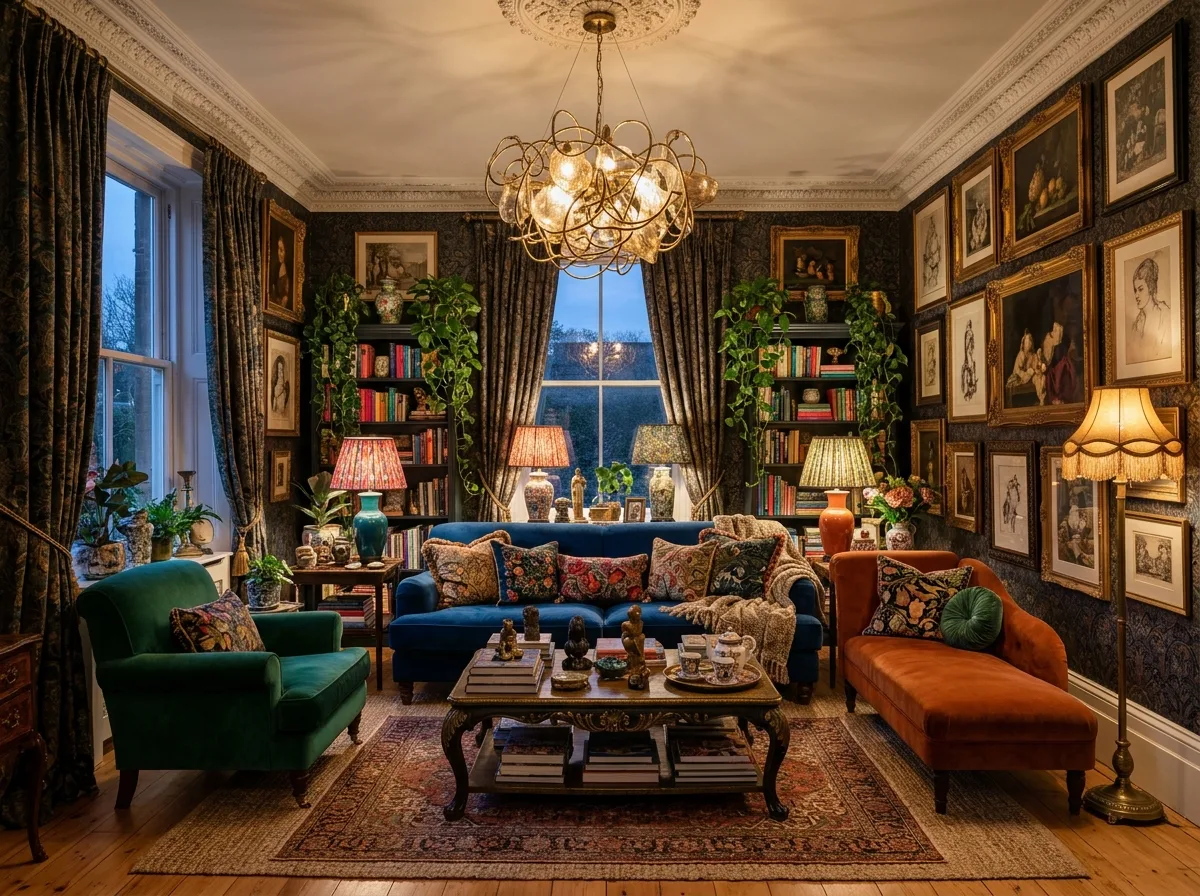
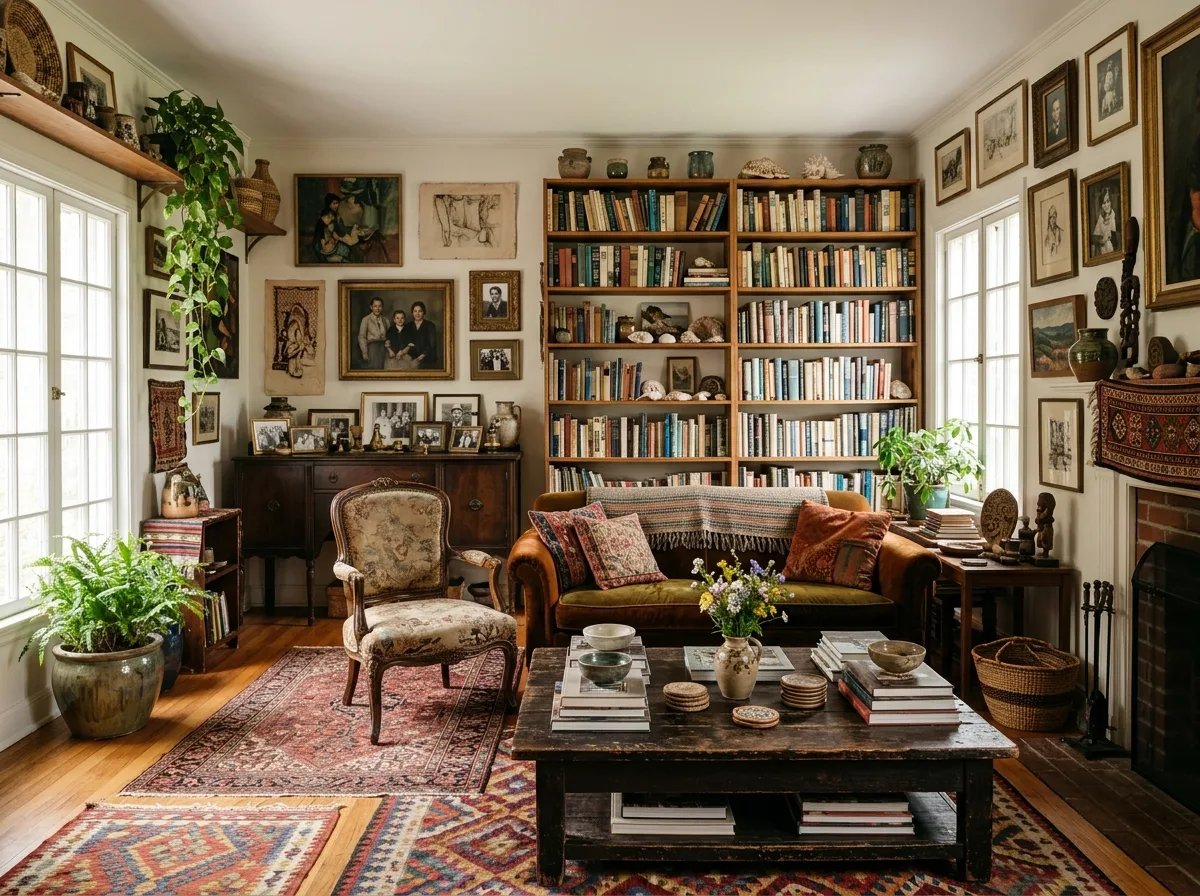
Floor-to-ceiling bookshelves offer an opportunity to combine practical storage with expressive maximalist styling. Fill them with books, framed photographs, small sculptures, decorative ceramics, and meaningful souvenirs. Arrange books both vertically and horizontally to introduce different shapes and heights. You can also organize some shelves by color while allowing other sections to display a more relaxed mixture. Avoid filling every inch with accessories; leaving occasional open spaces helps individual collections remain visible. A comfortable reading chair nearby makes the shelving feel like part of a functional living environment rather than a purely decorative display.
9. Mix Furniture from Different Design Eras
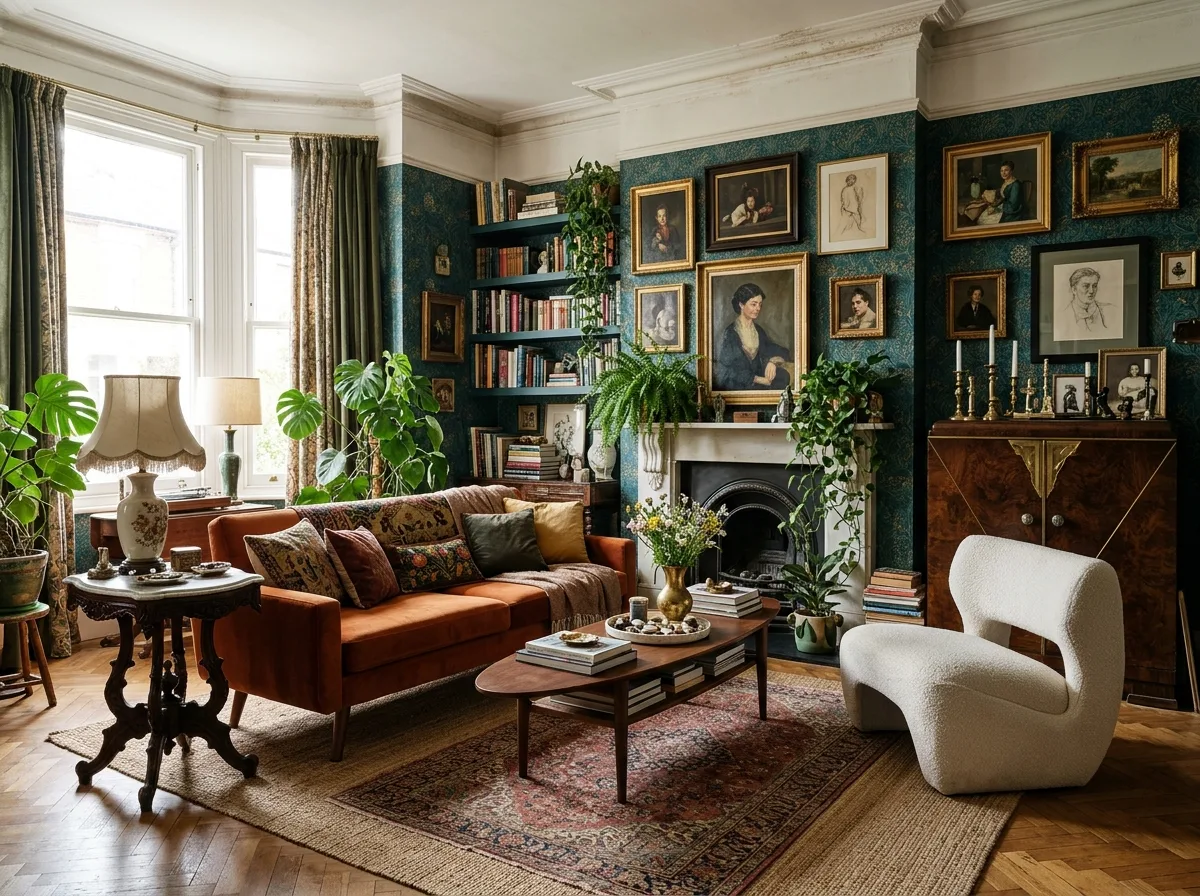
Combining furniture from different decades creates an eclectic living room with genuine character. Pair a mid-century modern sofa with a Victorian side table, an Art Deco cabinet, or a contemporary sculptural chair. The contrast between silhouettes, materials, and finishes gives the space an interesting collected appearance. To prevent the mixture from feeling disconnected, repeat certain details such as warm wood tones, rounded shapes, or brass accents. Consider the practical proportions of each piece as well, ensuring that chairs, tables, and sofas work comfortably together. A thoughtful mix of eras creates a room that feels individual rather than tied to one decorating trend.
10. Make Your Ceiling Part of the Design
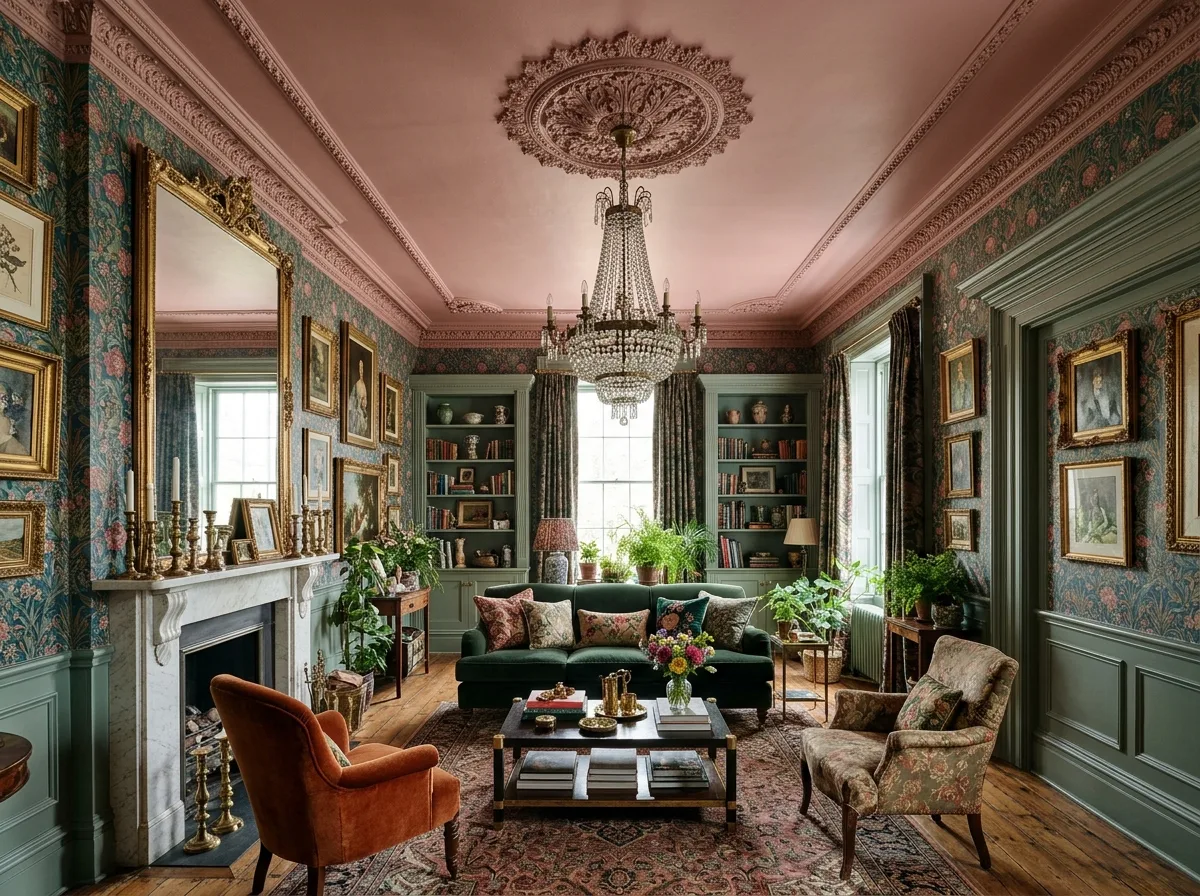
Maximalist decorating does not have to stop at eye level. A beautifully designed ceiling can add another layer of personality to your living room. Consider painting it a deep contrasting color, introducing decorative molding, installing patterned wallpaper, or adding an ornate ceiling medallion around a statement light fixture. A painted ceiling in dusty rose, deep blue, or warm terracotta can make a neutral room feel much more expressive. If the walls already feature bold patterns, a single complementary ceiling color may be enough. Treating the ceiling as an intentional design surface creates a more complete and immersive interior.
11. Add Personality with Sculptural Lighting
Lighting can function as both a practical necessity and an artistic statement in a maximalist living room. Look for sculptural chandeliers, colorful ceramic table lamps, vintage floor lamps, or oversized pendant lights with distinctive silhouettes. Mixing lighting styles creates a collected atmosphere, particularly when each fixture contributes a different shape or material. Combine ambient lighting with task and accent lighting so the room feels comfortable throughout the day. Warm bulbs help rich colors and layered fabrics appear inviting. Rather than relying on one central ceiling fixture, distribute several light sources around the room to highlight artwork, architectural details, and favorite decorative collections.
12. Create a Lush Indoor Plant Corner
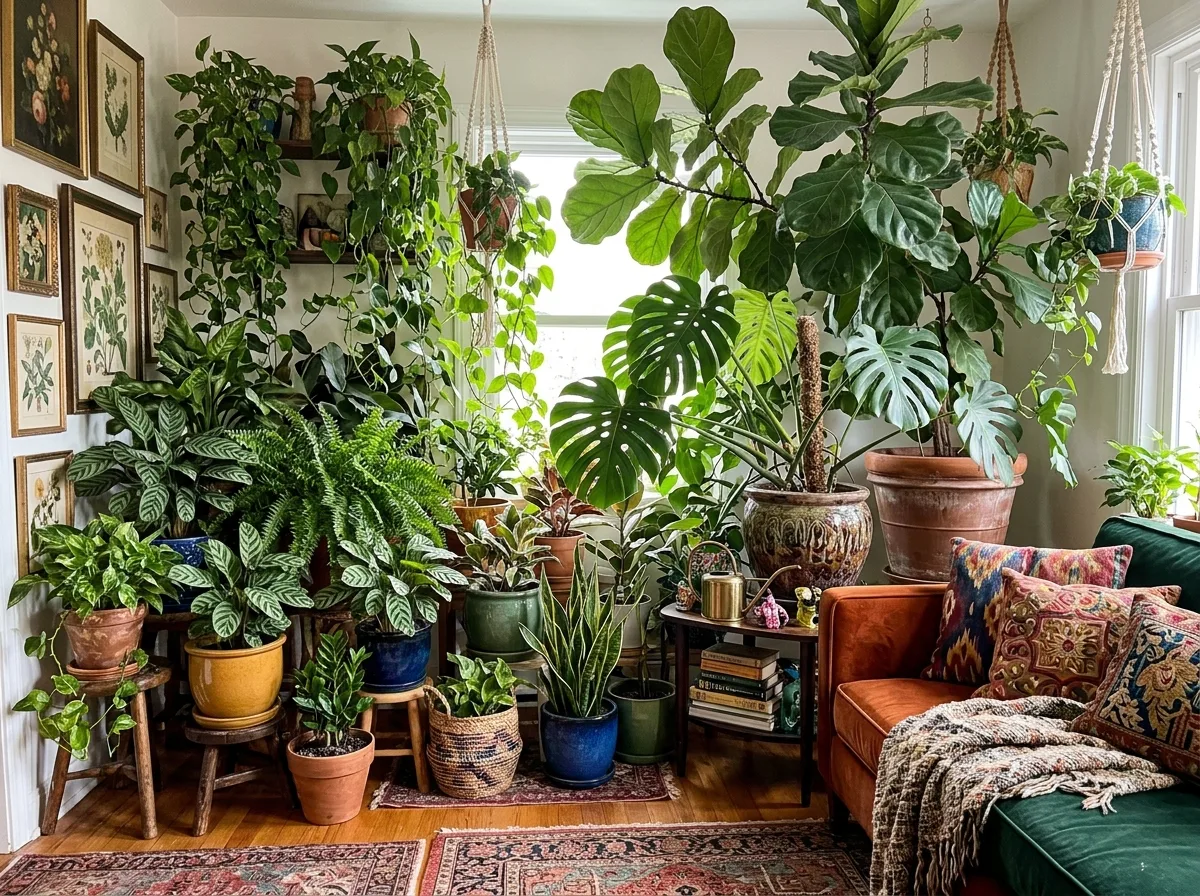
Plants introduce natural color, organic shapes, and a refreshing sense of movement into a maximalist living room. Group different varieties together, combining tall fiddle-leaf figs, trailing pothos, sculptural monstera leaves, and smaller tabletop plants. Use pots in complementary materials such as terracotta, ceramic, woven fibers, and aged metal. Varying plant heights creates a more natural arrangement than placing everything in a straight line. Choose varieties according to your room’s available light and your ability to care for them. A thoughtfully arranged plant corner softens bold furniture and patterns while adding a lively, welcoming quality.
13. Incorporate Rich and Contrasting Textures
Texture is essential when creating a maximalist living room that feels inviting rather than visually flat. Combine velvet upholstery, chunky knitted throws, woven baskets, embroidered cushions, smooth ceramics, natural wood, and metallic accents. These materials provide variety even when the color palette remains relatively controlled. For example, a velvet sofa can look especially beautiful beside a rustic wooden coffee table and a softly textured wool rug. Consider adding tactile details through curtains, upholstery trims, and decorative wall hangings. Mixing contrasting surfaces makes the room feel layered and comfortable, giving every corner something interesting to discover.
14. Style an Eclectic Coffee Table
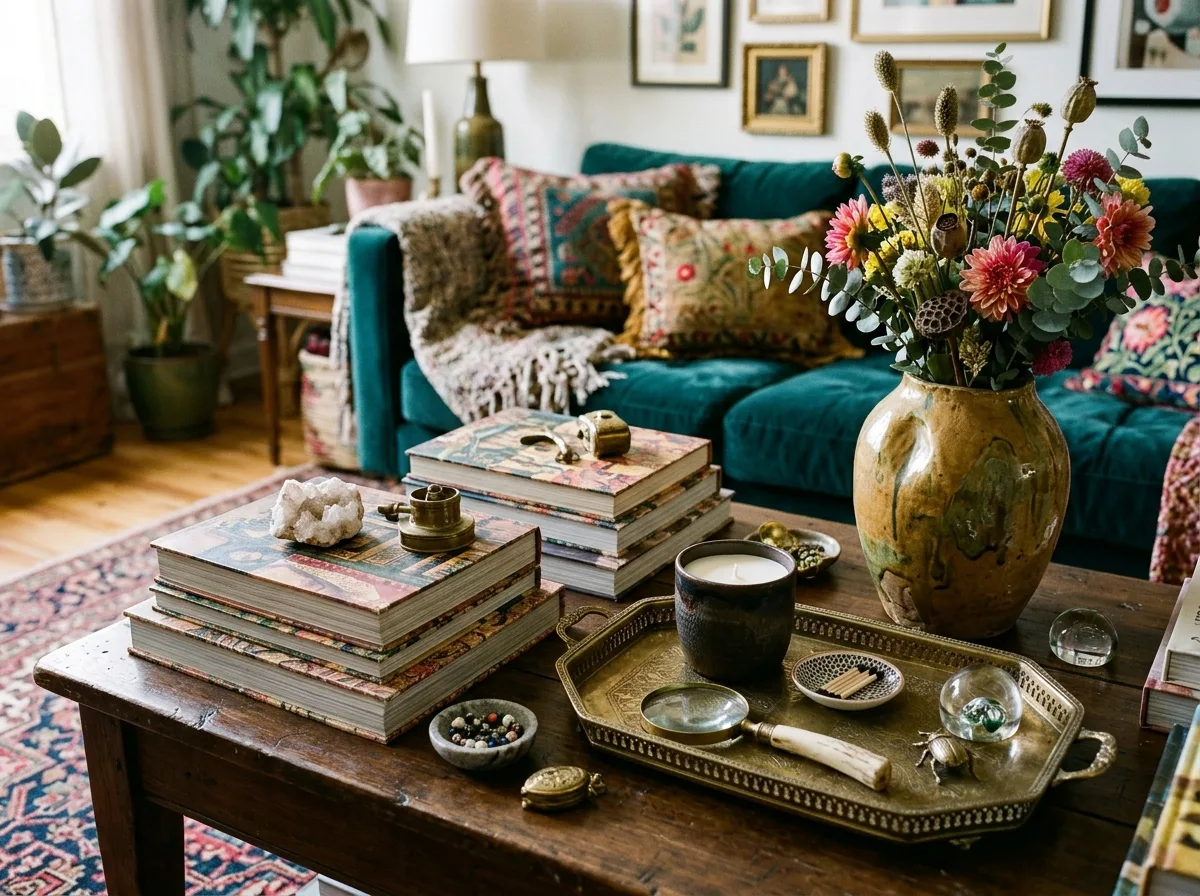
Your coffee table is an ideal place to display a small, meaningful collection without filling the entire living room with accessories. Start with a decorative tray to create a defined styling area, then add a stack of favorite books, a ceramic vase, a sculptural object, and a small candle. Combine different heights and materials to create visual interest. If you have a beautiful vintage coffee table, allow some of its surface to remain visible so its design can be appreciated. Keep everyday essentials such as remotes and coasters accessible without allowing them to dominate the arrangement. The best styling feels attractive and easy to use.
15. Introduce Colorful and Artistic Curtains
Curtains offer an opportunity to introduce another layer of color and pattern into a maximalist living room. Consider floral drapes, dramatic botanical prints, textured velvet panels, or colorful stripes. Floor-length curtains can make windows appear taller and create a more luxurious atmosphere. If your wallpaper is already bold, select curtains that repeat one of its secondary colors in a simpler design. Alternatively, let the curtains become the main statement by choosing an expressive pattern against relatively restrained walls. Pay attention to fabric weight and natural light requirements so the window treatment remains both beautiful and practical.
16. Build a Beautifully Curated Bar Cabinet
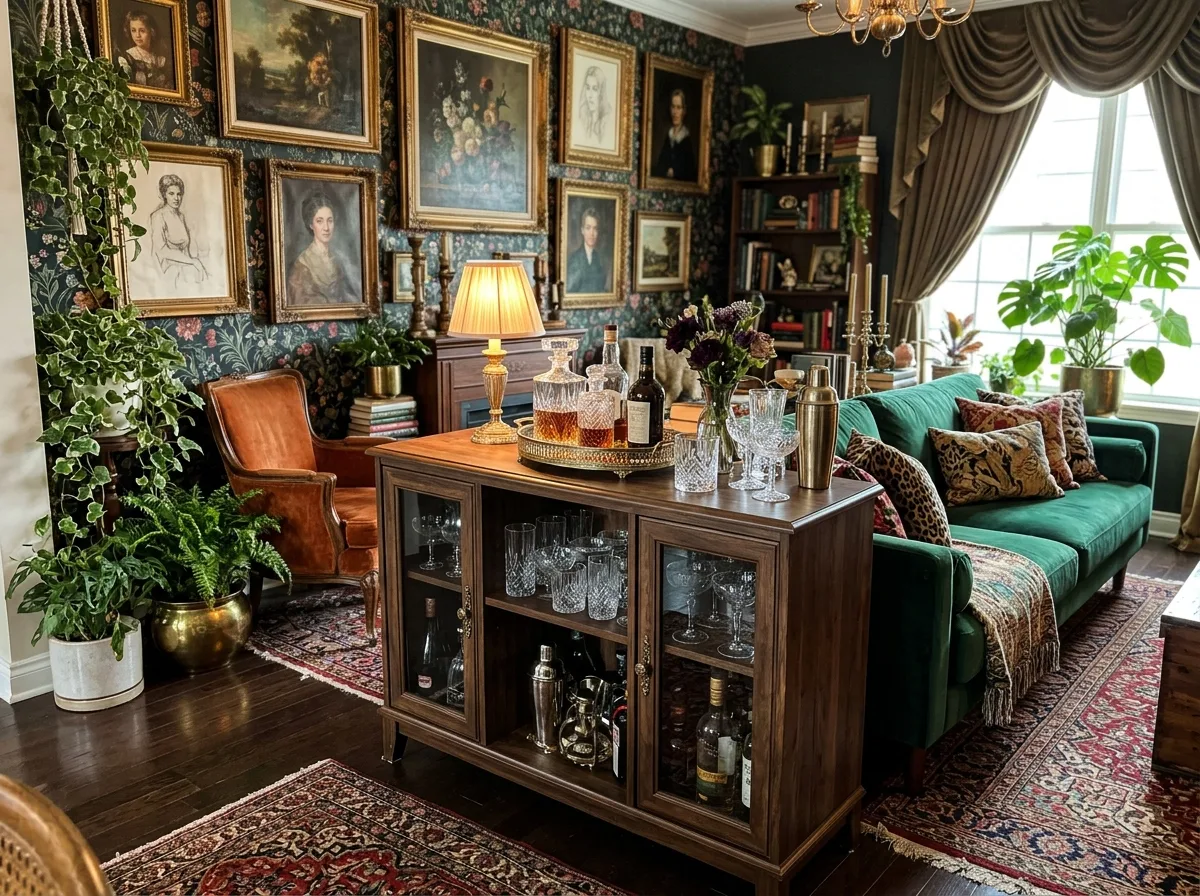
A vintage bar cabinet or decorative drinks station can add sophistication and purpose to a maximalist living room. Choose a cabinet with interesting details, such as carved wood, glass doors, brass hardware, or a colorful painted finish. Style the surface with attractive glassware, a small decorative lamp, a tray, and a few meaningful accessories. If you prefer a non-alcoholic entertaining area, use the cabinet for sparkling water, specialty teas, coffee accessories, or beautiful serving pieces. Keep the arrangement organized so the cabinet remains functional. A curated drinks station creates a welcoming focal point while making entertaining feel more special.
17. Use Mirrors to Add Light and Dimension
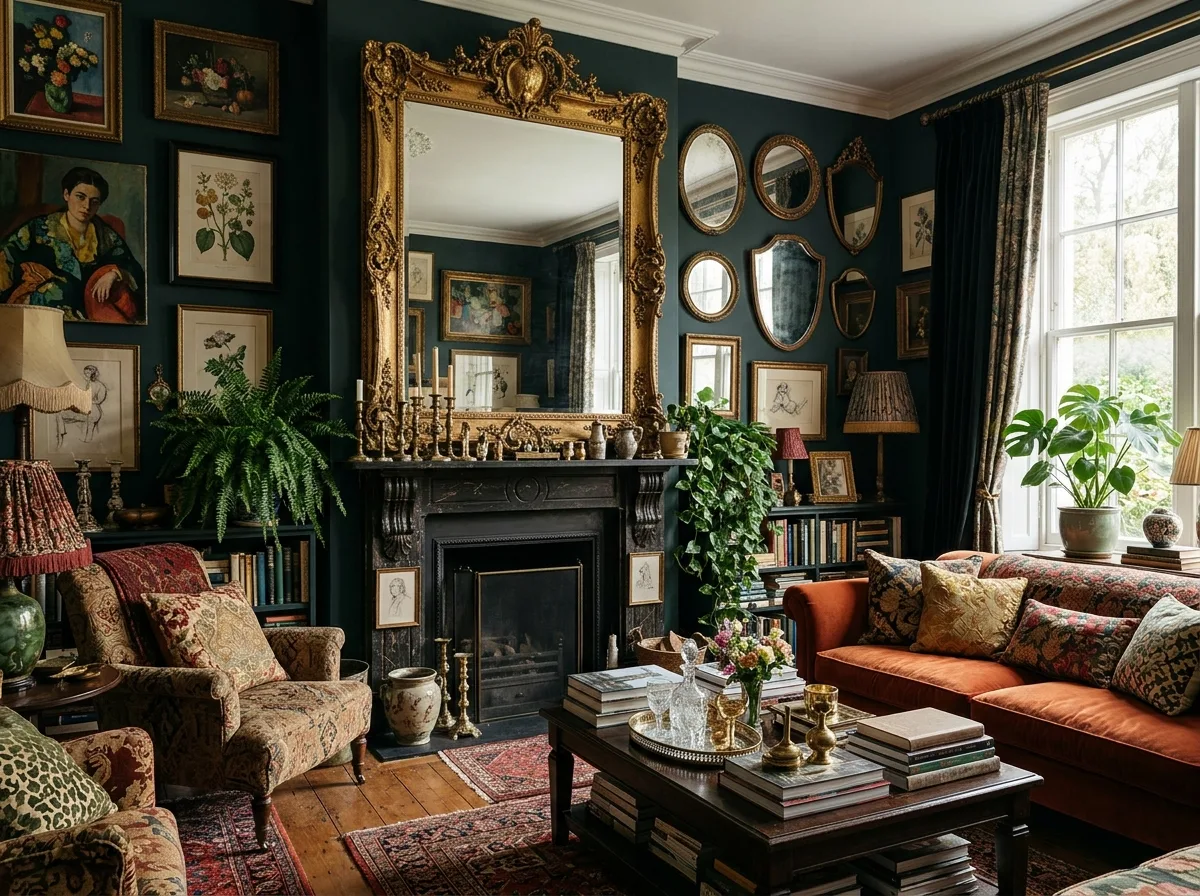
Decorative mirrors bring depth and brightness to a richly layered living room. Choose an oversized ornate mirror, a collection of smaller vintage mirrors, or an unusual sculptural design that doubles as wall art. Position mirrors where they can reflect natural light, an attractive view, or a particularly beautiful part of the room. Mixing frame finishes such as antique gold, dark wood, and painted details adds to the eclectic character. Avoid placing too many mirrors without a clear arrangement, as repeated reflections can make the space feel visually busy. A carefully positioned mirror balances the richness of maximalist decorating.
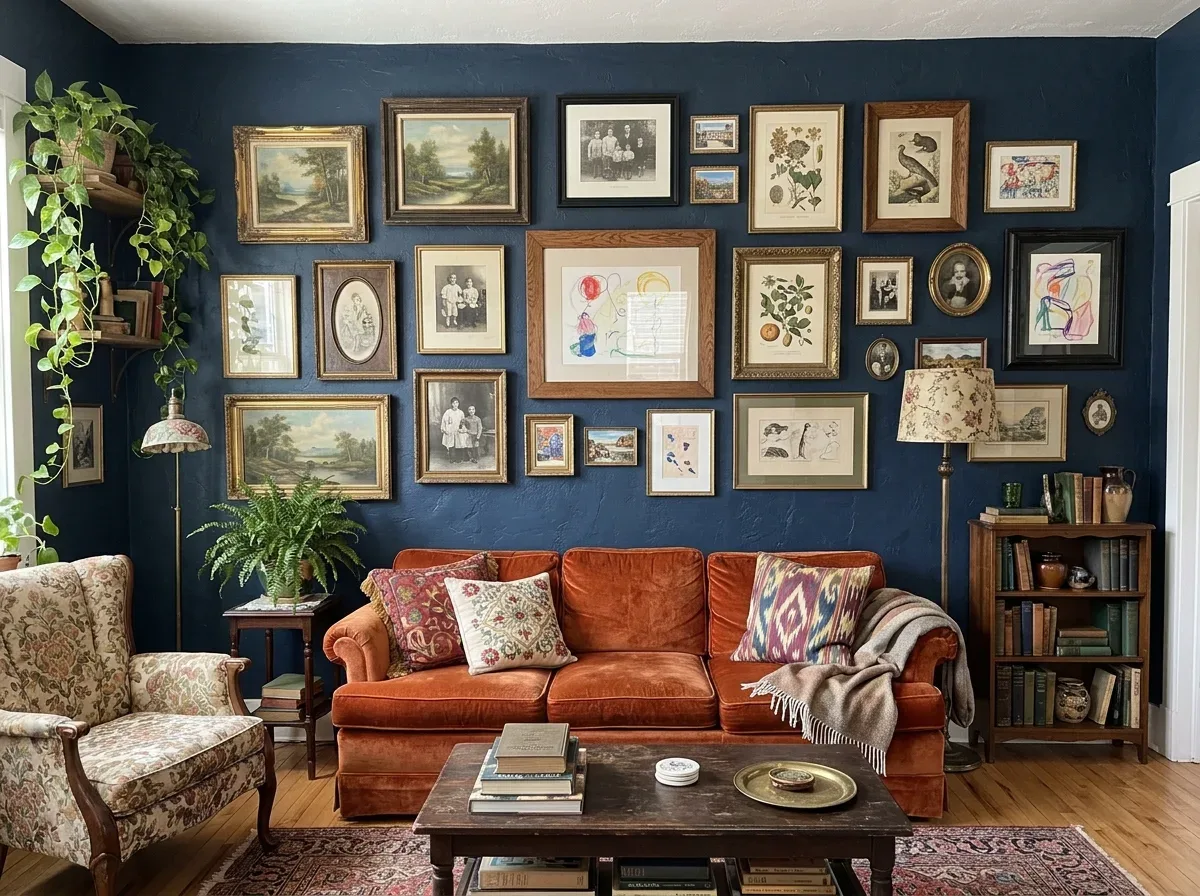
18. Display Art and Objects on Layered Consoles
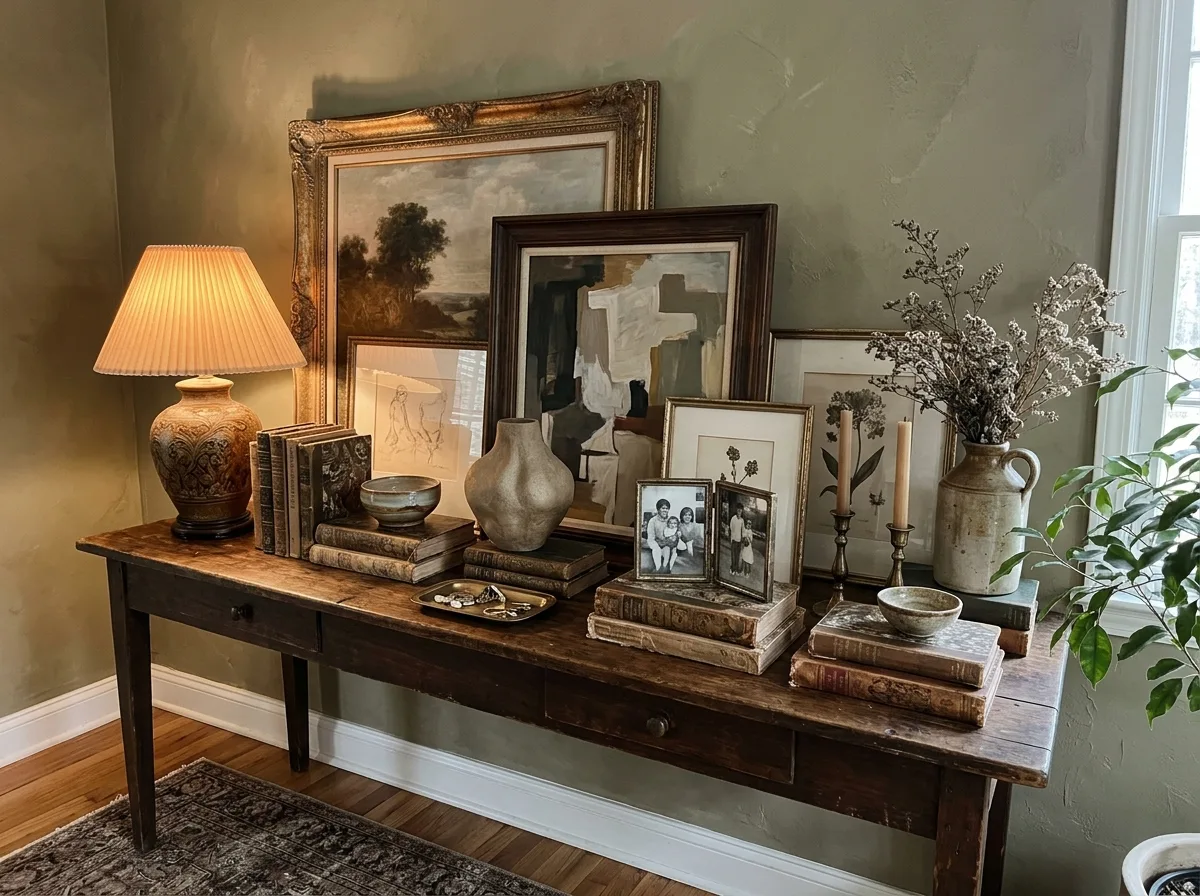
A console table behind the sofa or against an empty wall can become a miniature gallery within your living room. Layer framed artwork against the wall, add a statement lamp, and display a few sculptural objects, decorative books, or personal photographs. Combining different heights creates an interesting composition, while repeating a few materials connects the arrangement to the rest of the interior. You can also rotate smaller decorative pieces seasonally without changing the overall look. Keep enough clear surface area for practical use, and avoid displaying every collectible at once. Curated console styling gives meaningful objects room to shine.
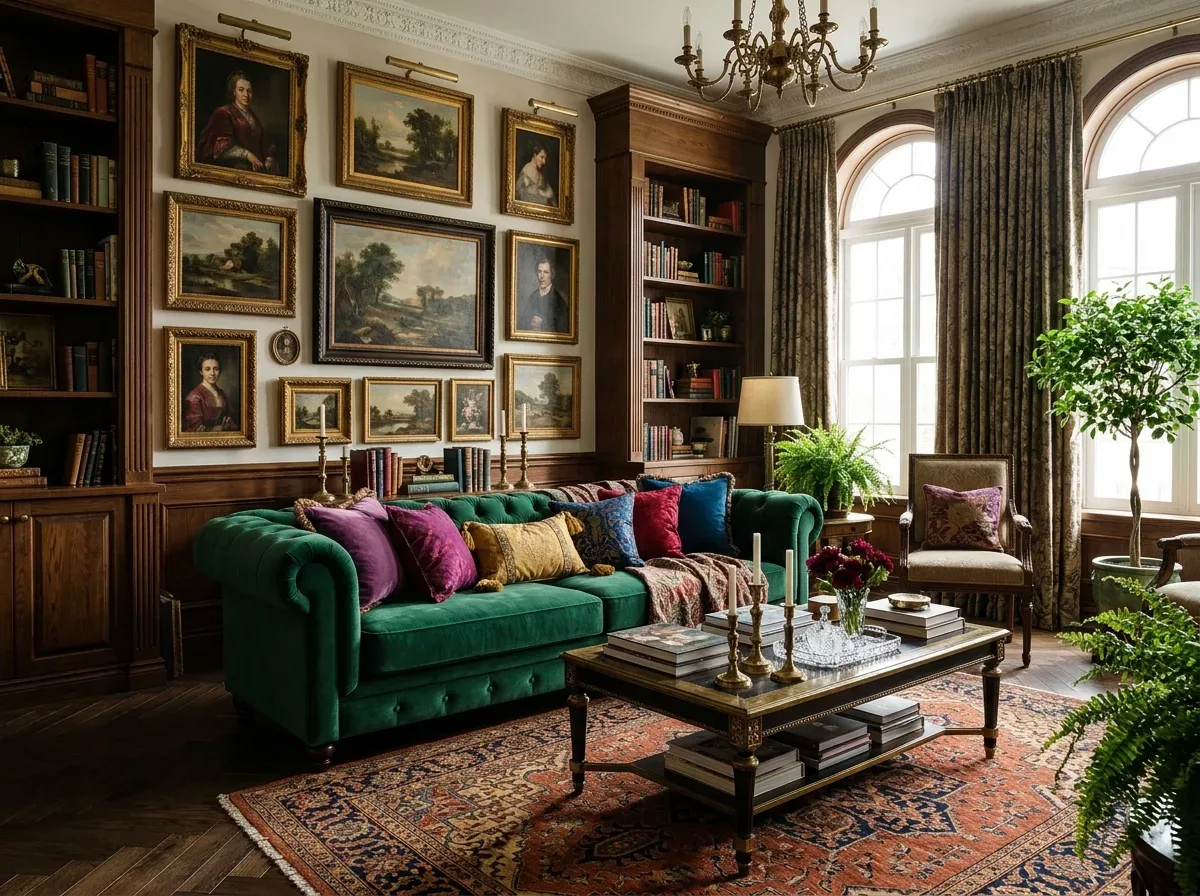
19. Create a Cozy Conversation-Focused Seating Arrangement
A maximalist living room should feel as comfortable as it looks beautiful. Arrange sofas and armchairs to encourage conversation rather than simply pushing every piece against the walls. Consider a curved sofa, two contrasting accent chairs, and a central coffee table that everyone can reach. Add colorful cushions and soft throws to make the seating inviting. If the room is large, use a rug or a pair of occasional tables to define a smaller conversation zone. Leave clear pathways between furniture and ensure that doors, windows, and frequently used areas remain accessible. A practical layout gives the decorative abundance a comfortable foundation.
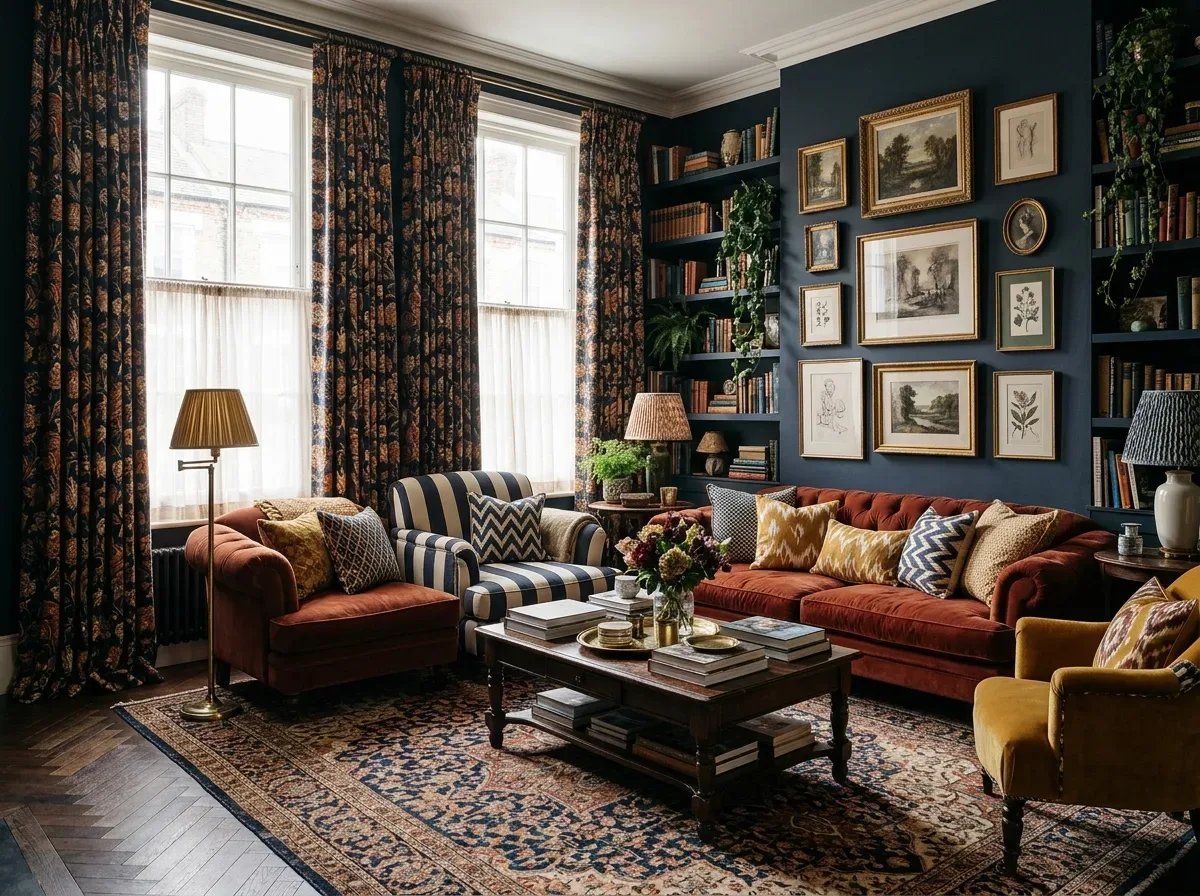
20. Tell Your Story Through Meaningful Decor
The most memorable maximalist living rooms reflect the people who live in them. Display travel souvenirs, handmade ceramics, inherited furniture, favorite books, family photographs, and artwork that represents meaningful experiences. These objects give your interior emotional depth and make it feel different from any other home. Instead of buying accessories simply to fill empty surfaces, select pieces that connect to your interests, memories, and personal style. Rotate collections when they become too extensive, and give your favorite objects enough space to be appreciated. When every decorative choice has a reason to be there, maximalism becomes an expression of individuality rather than clutter.
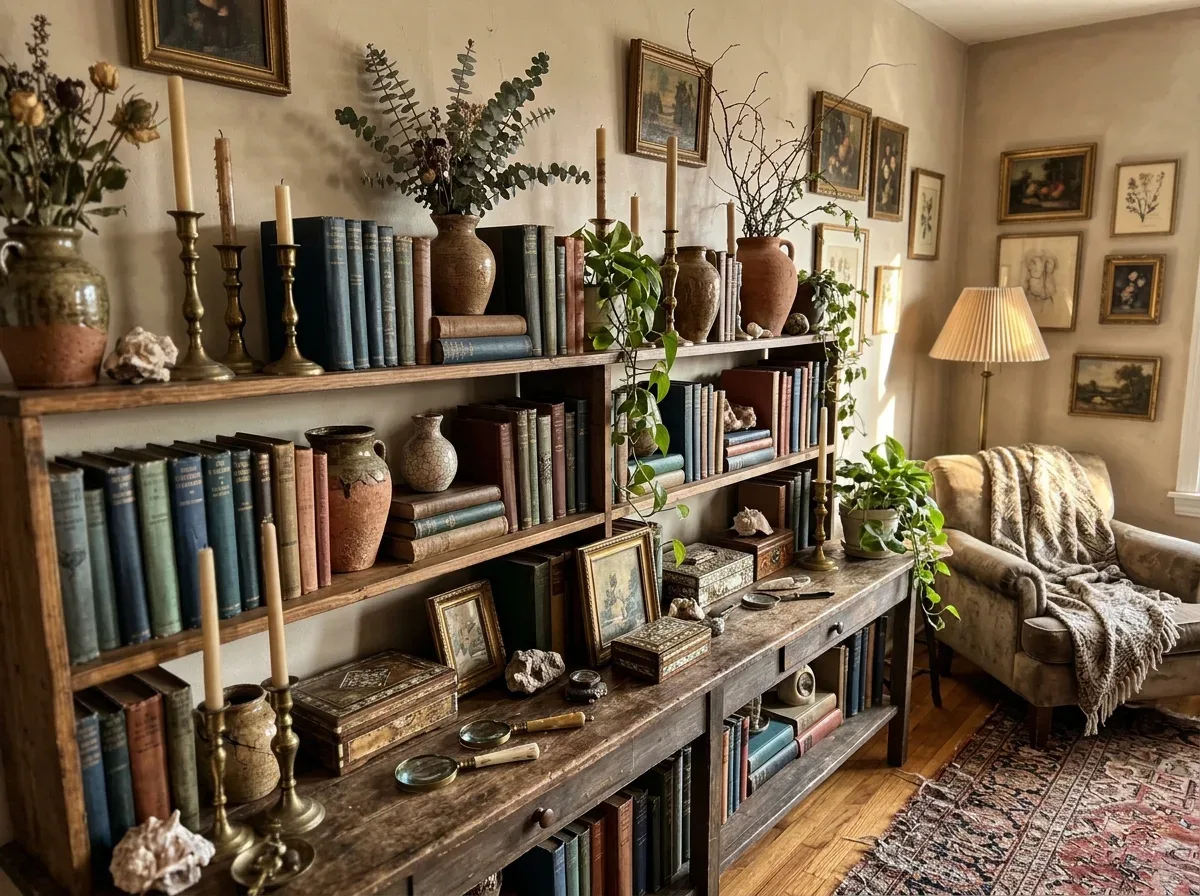
How to Make Maximalist Decor Feel Intentional, Not Cluttered
The secret to successful maximalist decorating is creating a visual connection between different elements. A bold room can still feel organized when colors, materials, and shapes repeat throughout the space. Before adding something new, consider how it relates to the furniture and accessories you already own.
- Choose a connecting color palette: Repeat a handful of complementary shades across furniture, textiles, artwork, and accessories.
- Mix patterns thoughtfully: Combine large and small designs instead of allowing every pattern to compete for attention.
- Give collections breathing room: Arrange meaningful objects in intentional groups and leave some surfaces open.
- Prioritize functionality: Maintain clear walkways, accessible storage, and comfortable seating.
- Edit regularly: Rotate decorative objects and remove pieces that no longer contribute to the room’s overall story.
Final Thoughts
A beautiful maximalist living room is not defined by how many things you own but by how thoughtfully you bring them together. From colorful sofas and expressive wallpaper to vintage treasures, layered textiles, and meaningful artwork, every detail can help tell a story. Start with the pieces you genuinely love, build a cohesive color palette, and introduce patterns and textures gradually. Most importantly, leave enough room for everyday comfort and functionality. With a little creativity and thoughtful editing, you can create a richly layered living room that feels personal, welcoming, and full of meaning rather than unnecessary clutter.
Leave a Reply