
Mediterranean interior design brings the relaxed beauty of coastal homes into everyday living. Inspired by the sun-soaked landscapes of Greece, Italy, Spain, and southern France, this timeless decorating style combines natural textures, earthy colors, rustic finishes, and beautifully imperfect details. Think creamy limewashed walls, terracotta floors, warm wooden furniture, woven baskets, and soft linen fabrics that make every room feel inviting.
One of the best things about Mediterranean decor is its balance between rustic charm and understated elegance. You don’t need a seaside villa or an expensive renovation to recreate the look. A few thoughtful changes, such as introducing handcrafted pottery, adding natural wood accents, or choosing warm neutral textiles, can completely transform your home. Whether you’re decorating a living room, bedroom, kitchen, or outdoor space, these Mediterranean decor ideas will help you create a cozy, organic, and effortlessly sophisticated atmosphere.
1. Create Beautiful Limewash Walls
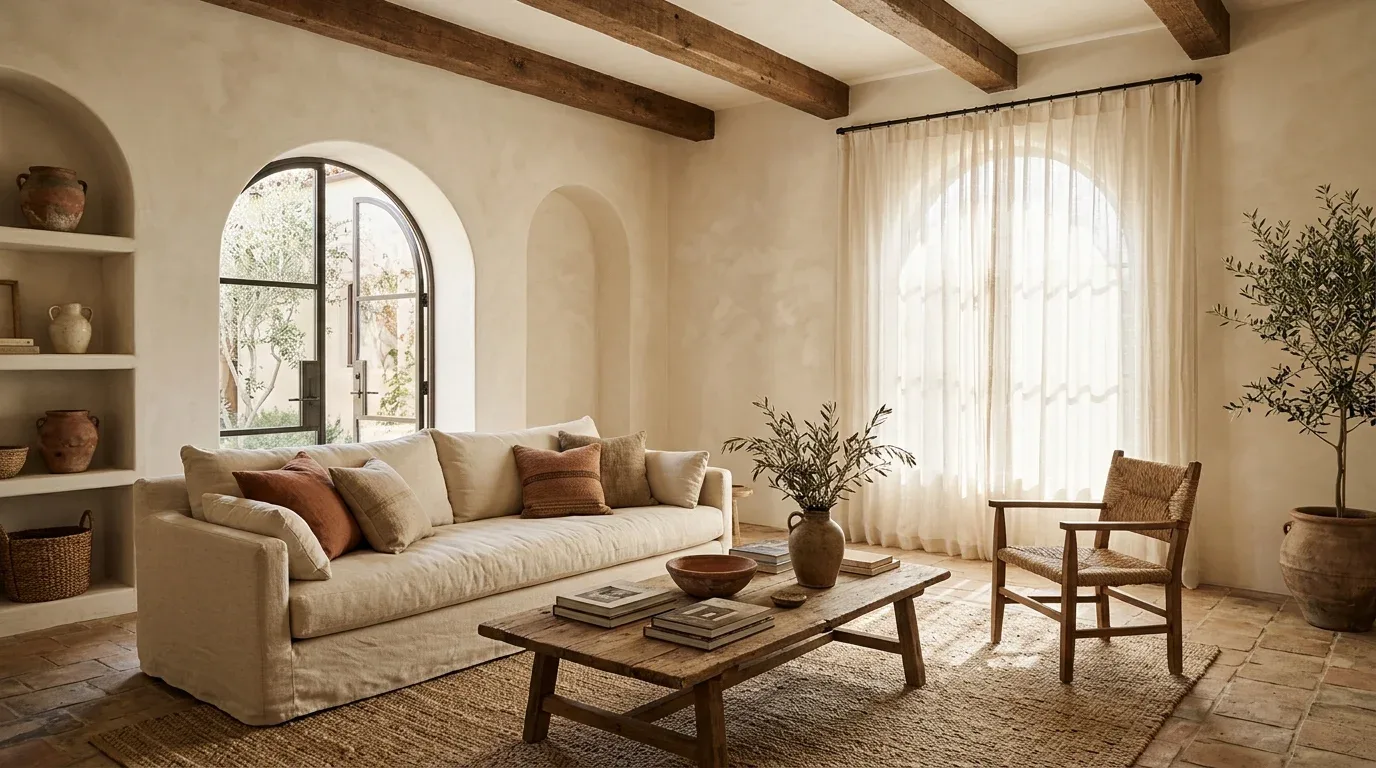
Limewash walls are one of the defining features of Mediterranean interior design. Their softly mottled appearance creates depth and movement without relying on bold patterns or glossy finishes. Choose warm white, ivory, sandy beige, or pale mushroom tones to establish a peaceful backdrop. Unlike perfectly smooth painted walls, limewash has a natural variation that makes a room feel lived-in and authentic. Apply it throughout a living room or use it on a single accent wall behind the bed. Pair the finish with wooden furniture, linen upholstery, and handmade ceramics. The result is a relaxed, sun-washed interior that feels timeless rather than overly decorated.
2. Bring in Rustic Terracotta Flooring
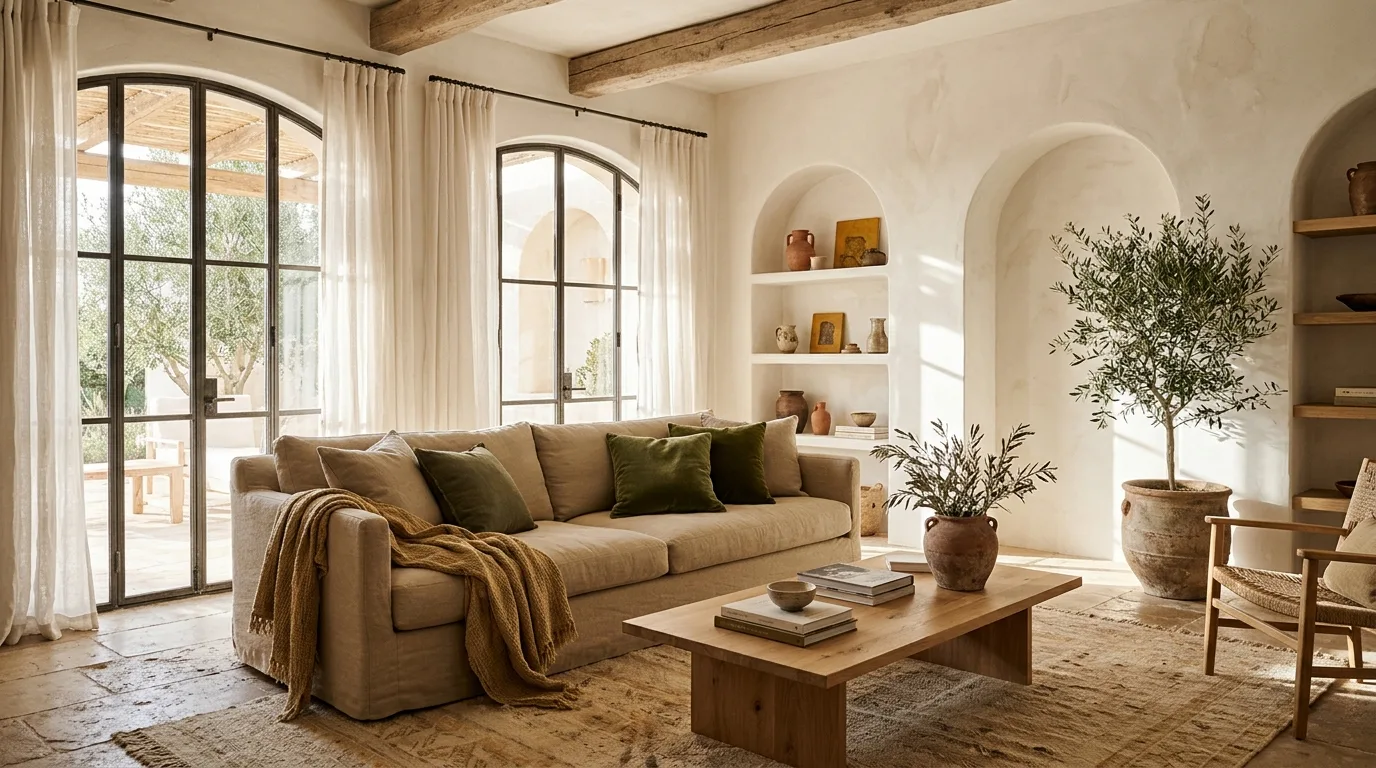
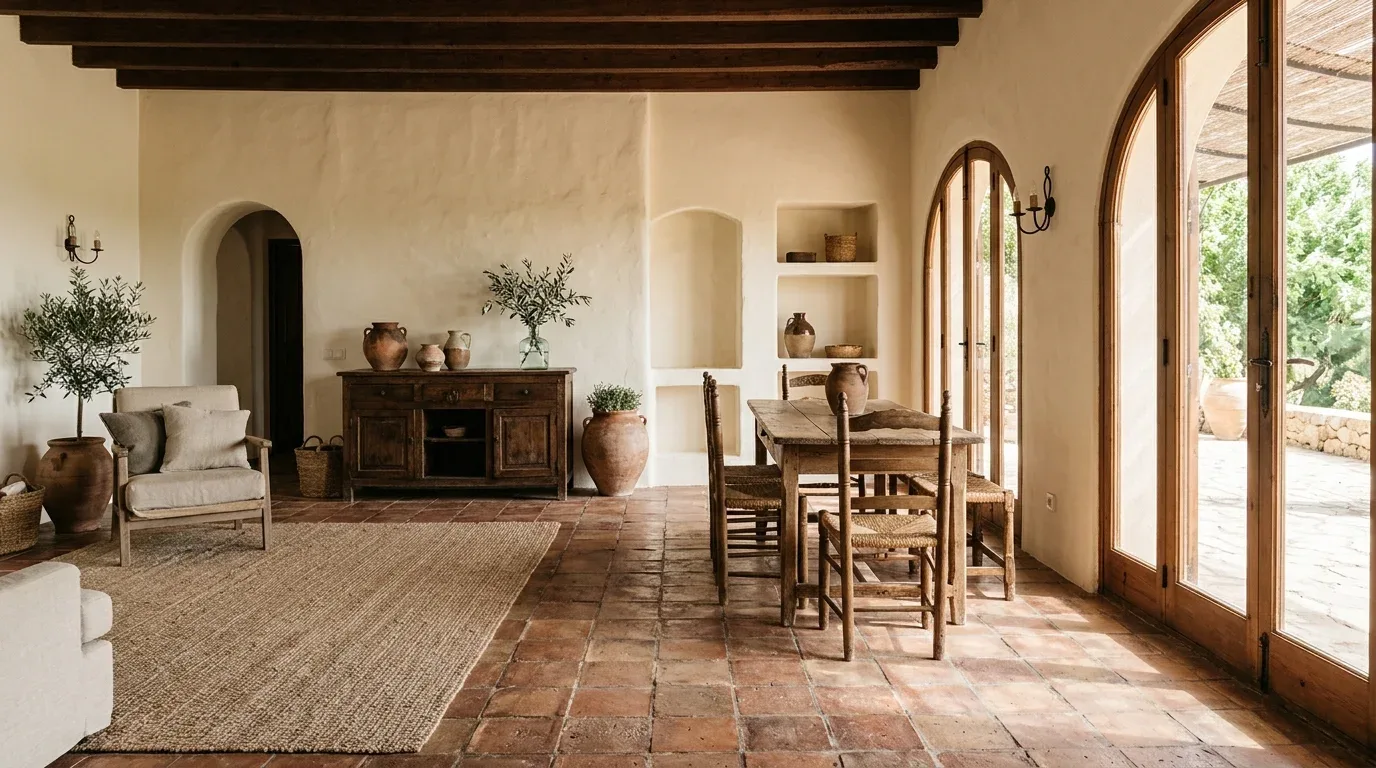
Terracotta flooring adds immediate Mediterranean character through its warm reddish-brown color and natural texture. Traditional clay tiles work beautifully in kitchens, entryways, dining rooms, and open-plan living spaces. Their subtle color variations make each floor feel unique, especially when paired with creamy walls and natural wood cabinetry. For a contemporary interpretation, consider large-format terracotta tiles or handmade-look porcelain alternatives that offer easier maintenance. Aged finishes and slightly irregular edges help preserve the rustic atmosphere. Add a neutral woven rug to soften seating areas while allowing the earthy floor to remain a prominent design feature.
3. Decorate with Warm Wooden Furniture
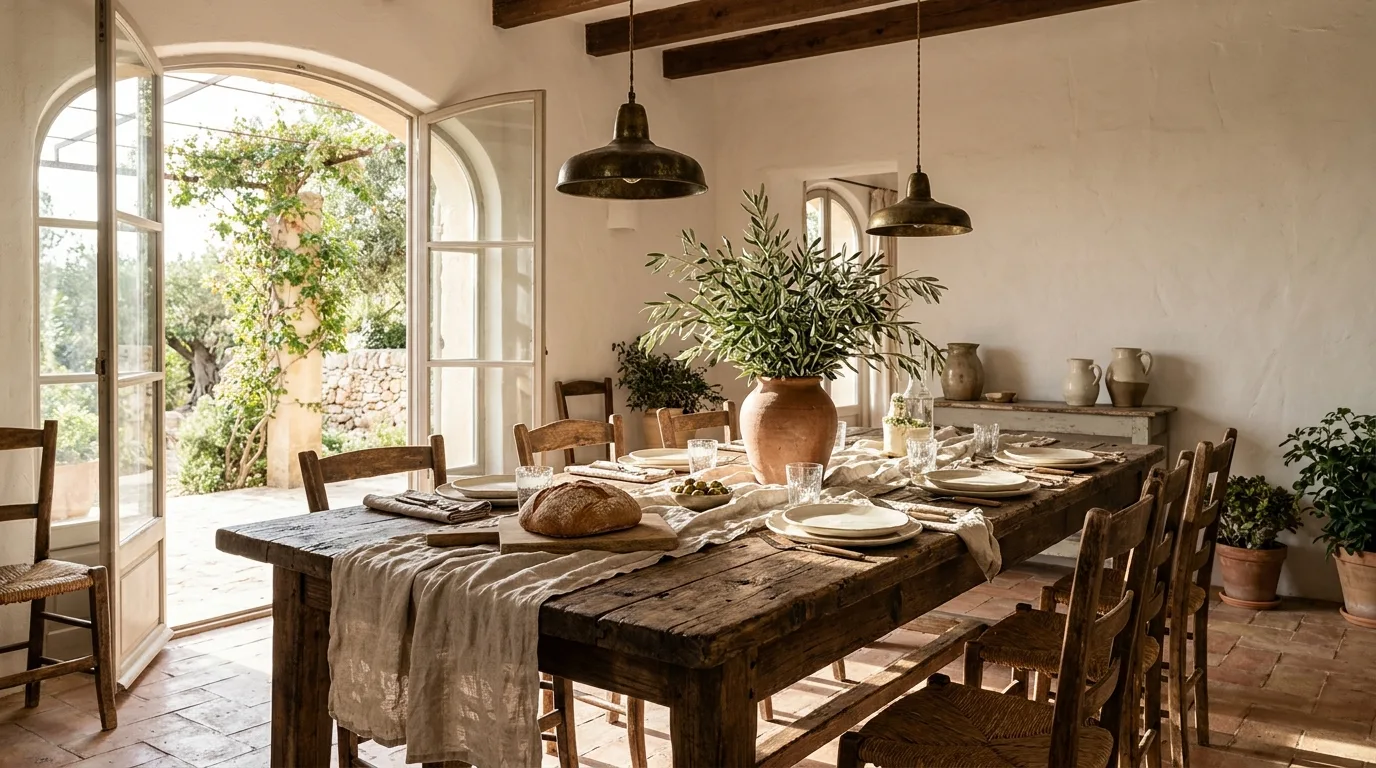
Warm wood is essential for creating the welcoming atmosphere associated with Mediterranean homes. Look for furniture made from oak, walnut, pine, or reclaimed timber, particularly pieces with visible grain and natural imperfections. A substantial wooden dining table, rustic coffee table, or simple bedside cabinet can become a beautiful focal point. Avoid overly polished finishes because matte and lightly aged surfaces feel more authentic. Combine different wood tones carefully to create depth without making the room appear mismatched. When surrounded by limewash walls, textured fabrics, and terracotta accessories, wooden furniture brings warmth and balance to the overall design.
4. Add an Arched Architectural Feature
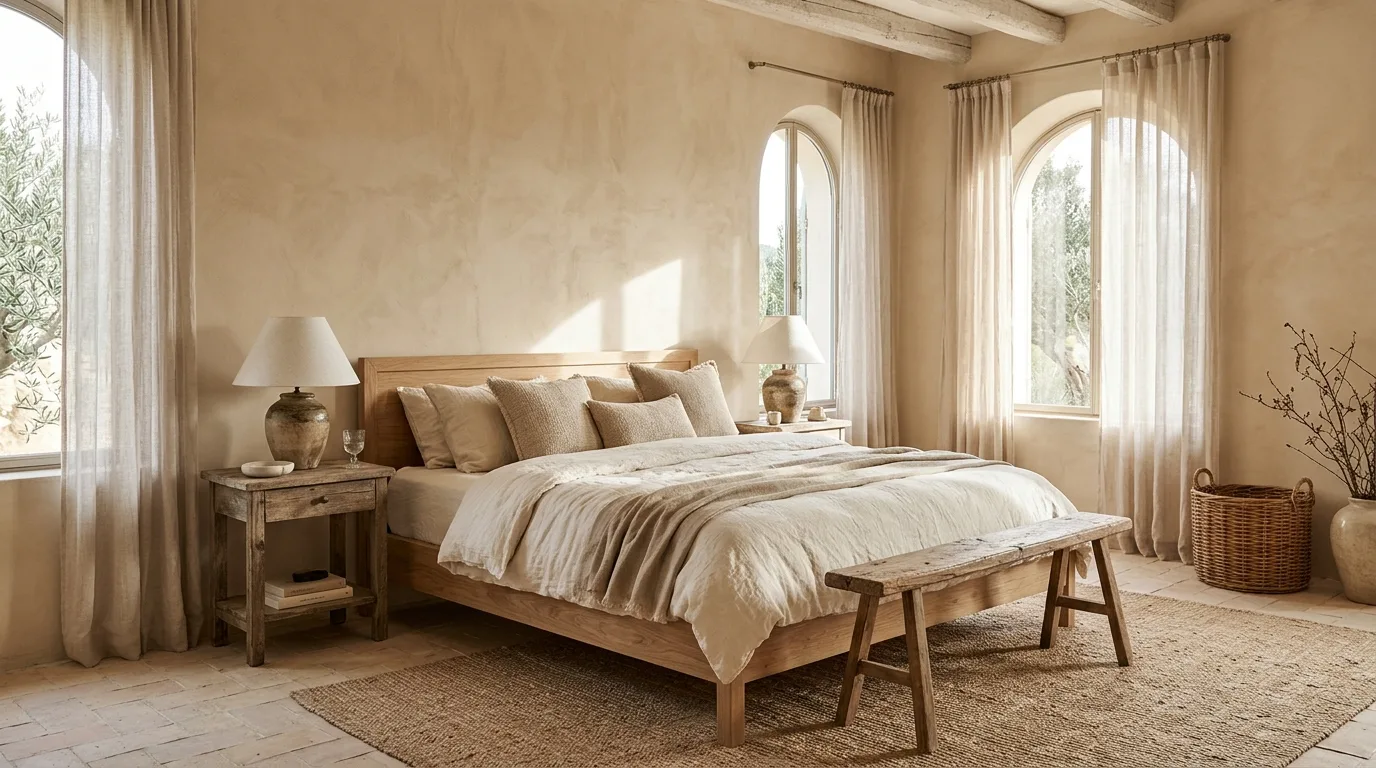
Arches introduce the soft architectural shapes that make Mediterranean interiors so recognizable. If your home already has an arched doorway or window, emphasize it with a contrasting limewash finish or subtle decorative lighting. For a simpler update, create a painted arch behind a console table, bed, or reading corner. Built-in arched shelving is another attractive option, providing practical storage while adding visual interest. Keep the surrounding palette restrained with warm whites, sand, and muted clay shades. These curved details soften straight architectural lines and give even a modern apartment a little of the character of an old Mediterranean villa.
5. Style with Handmade Terracotta Pottery
Handmade pottery is an easy way to introduce Mediterranean craftsmanship into your home. Choose terracotta pitchers, rustic bowls, ceramic vases, and oversized planters with organic shapes and imperfect surfaces. Display a collection on open kitchen shelves, a dining table, or a living room console. You can mix natural clay with cream, olive green, and muted brown ceramics for a layered look. Instead of arranging everything symmetrically, group pieces in different heights and shapes to create a relaxed display. Even a single sculptural clay vase filled with olive branches can make a neutral space feel thoughtfully styled and connected to nature.
6. Choose Natural Linen Curtains
Lightweight linen curtains bring softness and an airy quality to Mediterranean-inspired rooms. Choose natural ivory, oatmeal, warm white, or pale beige fabrics that allow sunlight to filter gently through the windows. Floor-length panels create an elegant effect, particularly when hung from simple black or aged-brass curtain rods. Linen’s slightly uneven texture adds character without competing with architectural details or decorative accessories. For a relaxed appearance, allow the curtains to fall naturally rather than using heavily structured pleats. This treatment works especially well alongside limewashed walls, wooden furniture, and woven rugs, creating a peaceful atmosphere reminiscent of a coastal retreat.
7. Incorporate Olive Trees and Mediterranean Greenery
Plants bring freshness and organic beauty into Mediterranean decor. An olive tree in a large terracotta planter is an especially recognizable choice, with its slender branches and silvery-green leaves providing an elegant vertical accent. If indoor light is limited, consider a realistic faux olive tree or other suitable greenery. Rosemary, bay trees, lavender, and trailing plants can also contribute to the look. Arrange smaller plants near windows, kitchen counters, or outdoor seating areas. Choose simple clay, stone, or textured ceramic pots instead of brightly colored containers. The combination of greenery and earthy materials makes interiors feel connected to the natural Mediterranean landscape.
8. Design a Cozy Stone Fireplace
A stone fireplace can become the heart of a Mediterranean-inspired living room. Natural limestone, travertine, or irregular stone surrounds create a rustic focal point with plenty of texture. For a softer contemporary appearance, use pale stone with warm undertones and a simple mantel. Decorate the mantel sparingly with handmade pottery, a small arrangement of branches, or an antique-style mirror. Keep the seating comfortable with linen cushions and a wooden coffee table nearby. Even if a traditional fireplace isn’t possible, a decorative stone surround or textured plaster feature can recreate some of the same warmth and architectural charm.
9. Use Woven Jute and Natural Fiber Rugs
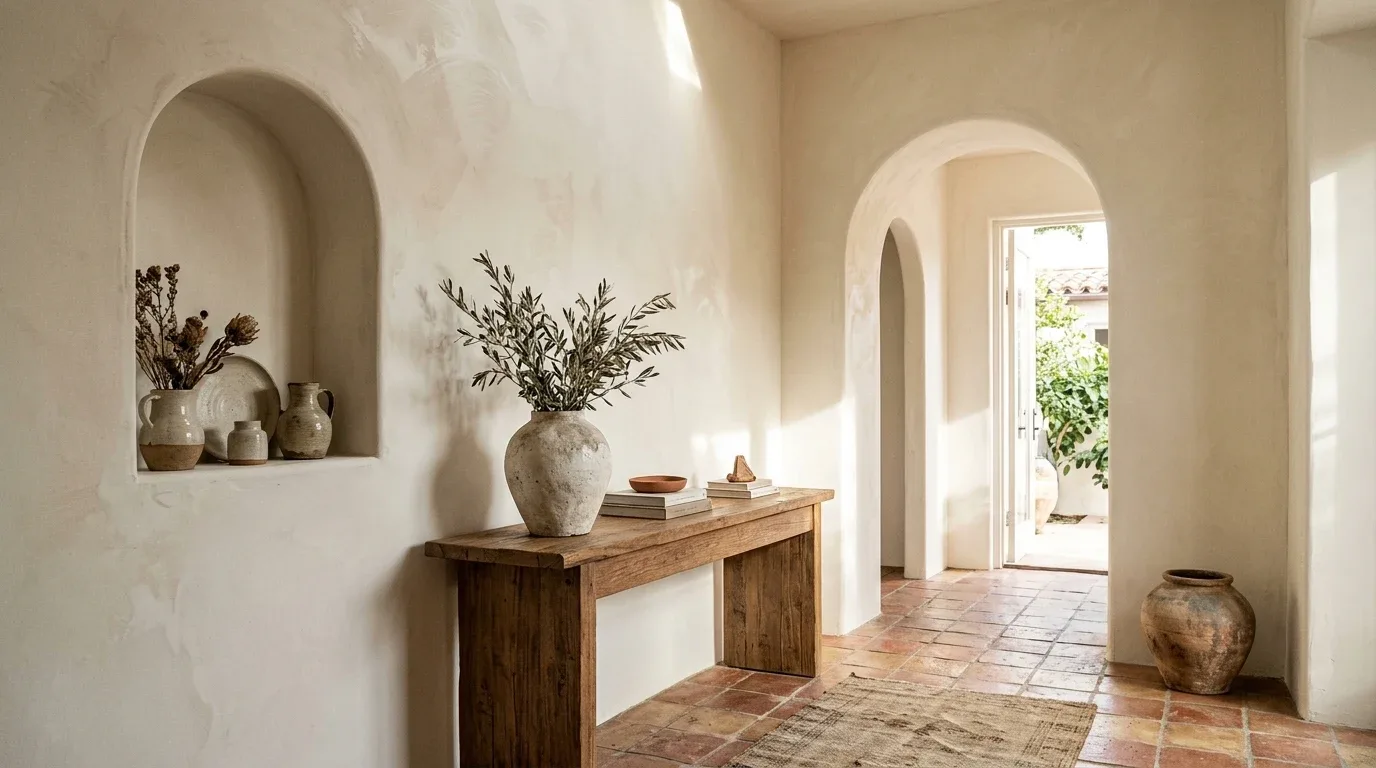
Natural fiber rugs are practical accessories that reinforce the relaxed character of Mediterranean interiors. Jute, sisal, and wool-blend rugs introduce subtle texture while grounding furniture arrangements. Choose a large rectangular rug beneath a living room seating group or a smaller runner for a hallway or kitchen. Neutral shades such as tan, sand, and natural beige work particularly well with terracotta floors and warm wooden furniture. For extra comfort, layer a softer patterned wool rug over a larger jute base. This combination creates visual depth without making the room feel busy. Look for durable construction and suitable care instructions, especially in high-traffic areas.
10. Create a Mediterranean-Inspired Kitchen
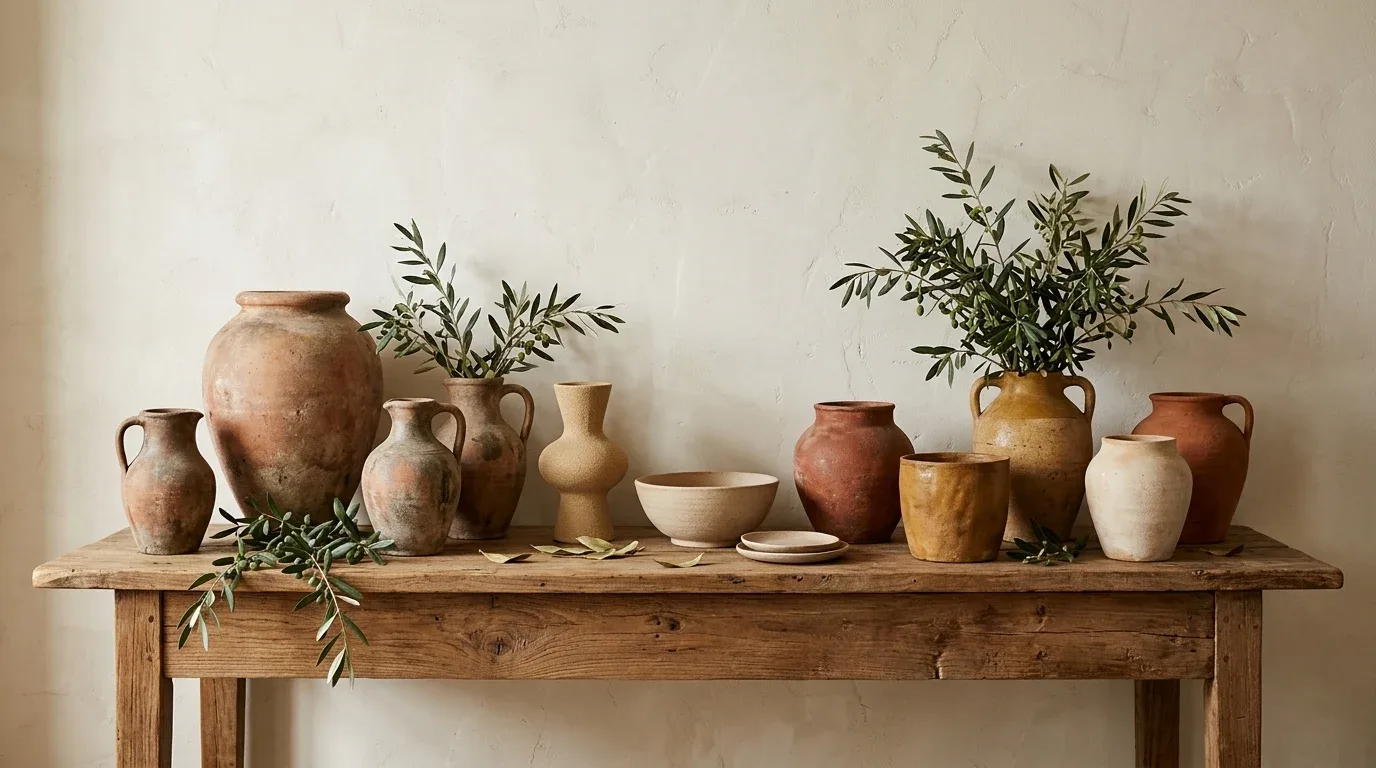
A Mediterranean kitchen combines functional simplicity with beautiful natural materials. Start with warm white or cream cabinetry, then introduce wooden countertops, terracotta flooring, or a handmade-look tile backsplash. Open shelving provides an opportunity to display ceramic plates, glass bottles, clay bowls, and everyday cooking essentials. Brass or aged bronze hardware adds a subtle vintage touch. If you prefer closed storage, incorporate a few open niches to prevent the kitchen from feeling too streamlined. Finish the space with fresh herbs, a wooden chopping board, and a bowl of seasonal produce. These small details make the kitchen feel welcoming, practical, and full of character.
11. Introduce Rustic Exposed Wooden Beams
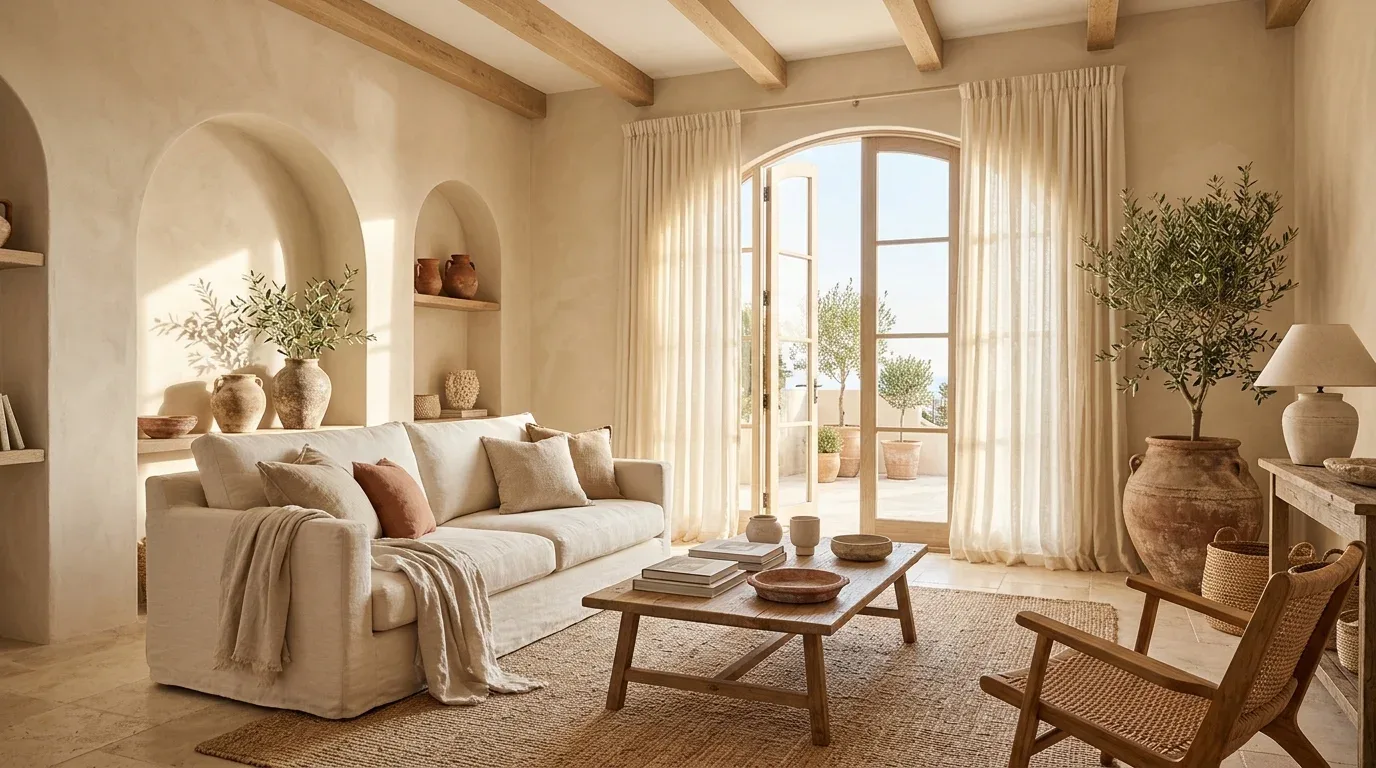
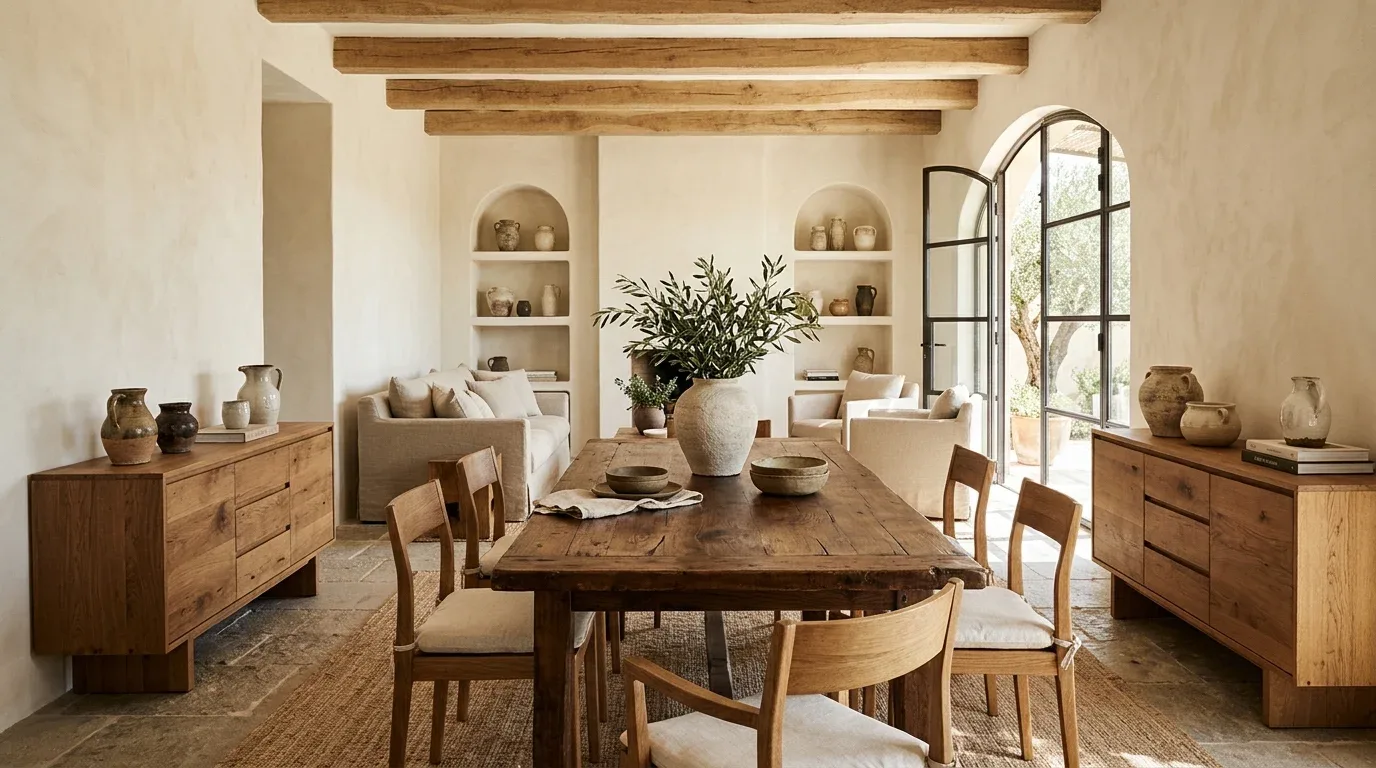
Exposed wooden ceiling beams bring architectural interest and rustic warmth to Mediterranean interiors. Natural oak, reclaimed timber, and lightly weathered finishes are particularly effective against white or cream ceilings. In homes with existing beams, consider cleaning and refinishing them rather than covering them up. If structural beams aren’t available, decorative faux beams can create a similar visual effect when installed thoughtfully. Keep the rest of the ceiling relatively simple so the wood remains the main attraction. Pair the feature with limewash walls, stone accents, and understated lighting. The result is a room that feels grounded, authentic, and reminiscent of a traditional countryside home.
12. Decorate with Vintage Mediterranean Mirrors
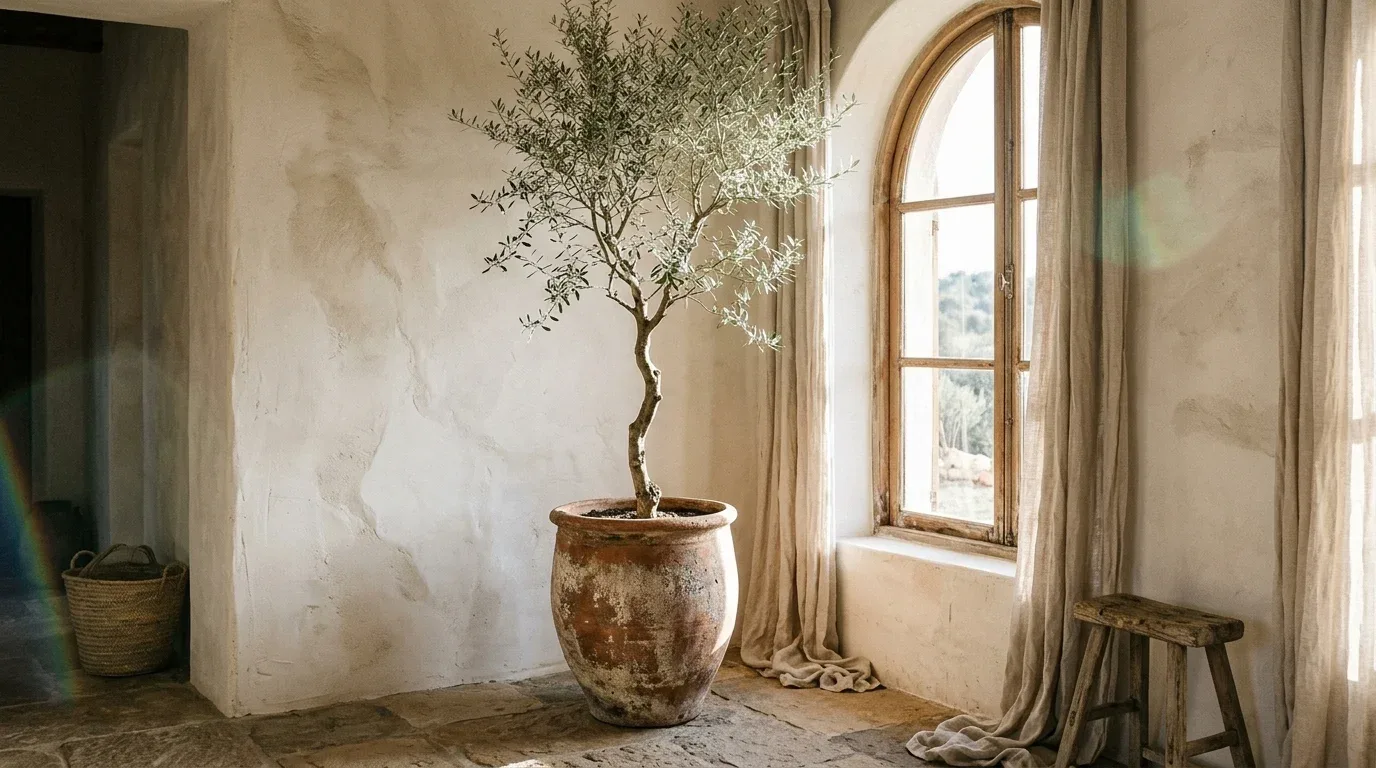
Vintage-style mirrors add personality while helping smaller rooms feel brighter and more spacious. Look for frames made from aged wood, distressed metal, carved plaster, or antique-inspired brass. An oversized mirror above a console table makes an attractive entryway feature, while a smaller decorative mirror can bring character to a bedroom or bathroom. Arched and irregular silhouettes work particularly well with Mediterranean architecture. Avoid using too many highly decorative frames in one room; a single distinctive mirror is often more effective. Position it to reflect natural light, a beautiful architectural detail, or greenery to make the space feel more open and layered.
13. Choose a Warm Mediterranean Color Palette
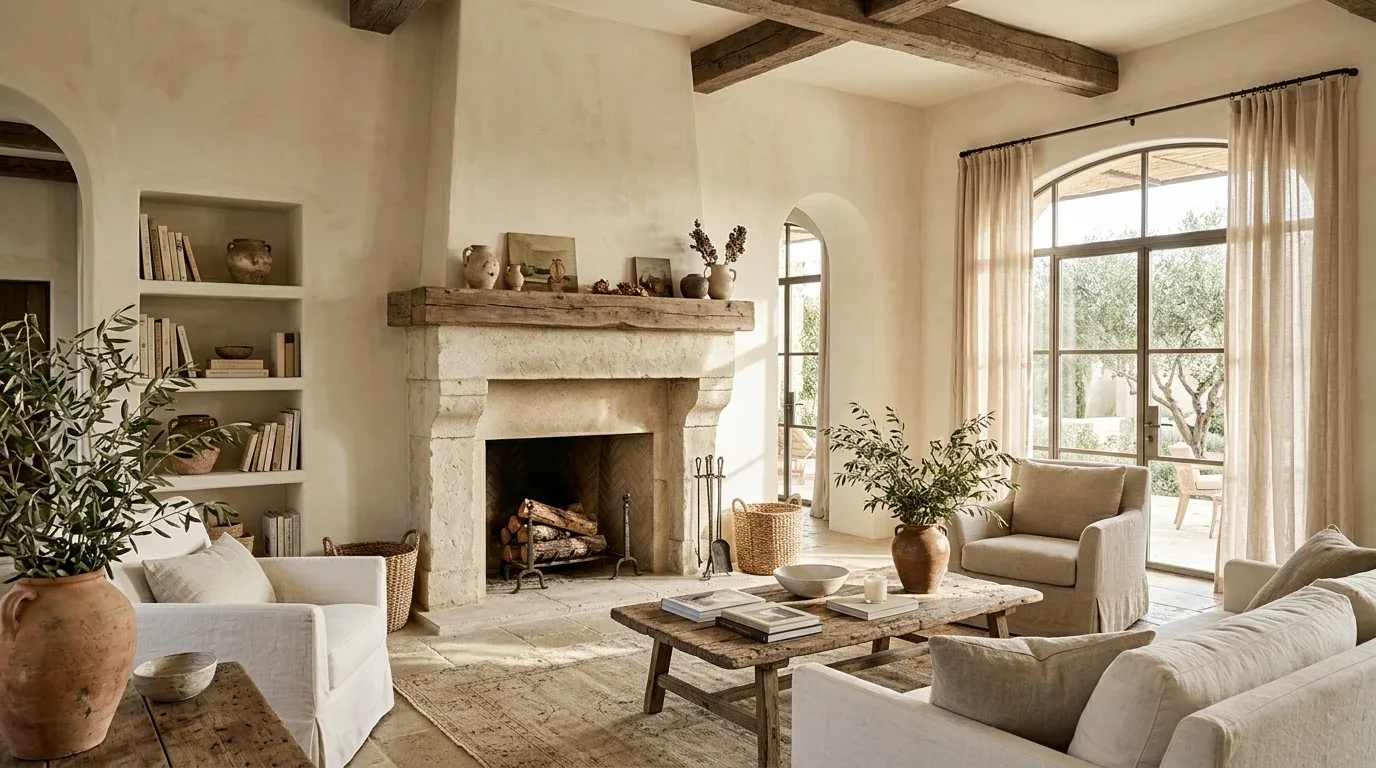
Color is central to the relaxed beauty of Mediterranean decorating. Build your palette around warm whites, creamy beige, sandy taupe, terracotta, muted olive, and soft ochre. These shades reflect the natural colors of sunlit stone, clay, coastal landscapes, and olive groves. You can introduce deeper accents through chocolate brown, rust, dusty blue, or muted burgundy. Rather than using every color equally, choose two or three dominant shades and introduce the others through accessories and textiles. This creates a cohesive appearance that feels rich without being overwhelming. Natural daylight will also bring out the subtle undertones in these warm, earthy colors.
14. Add a Rustic Mediterranean Dining Table
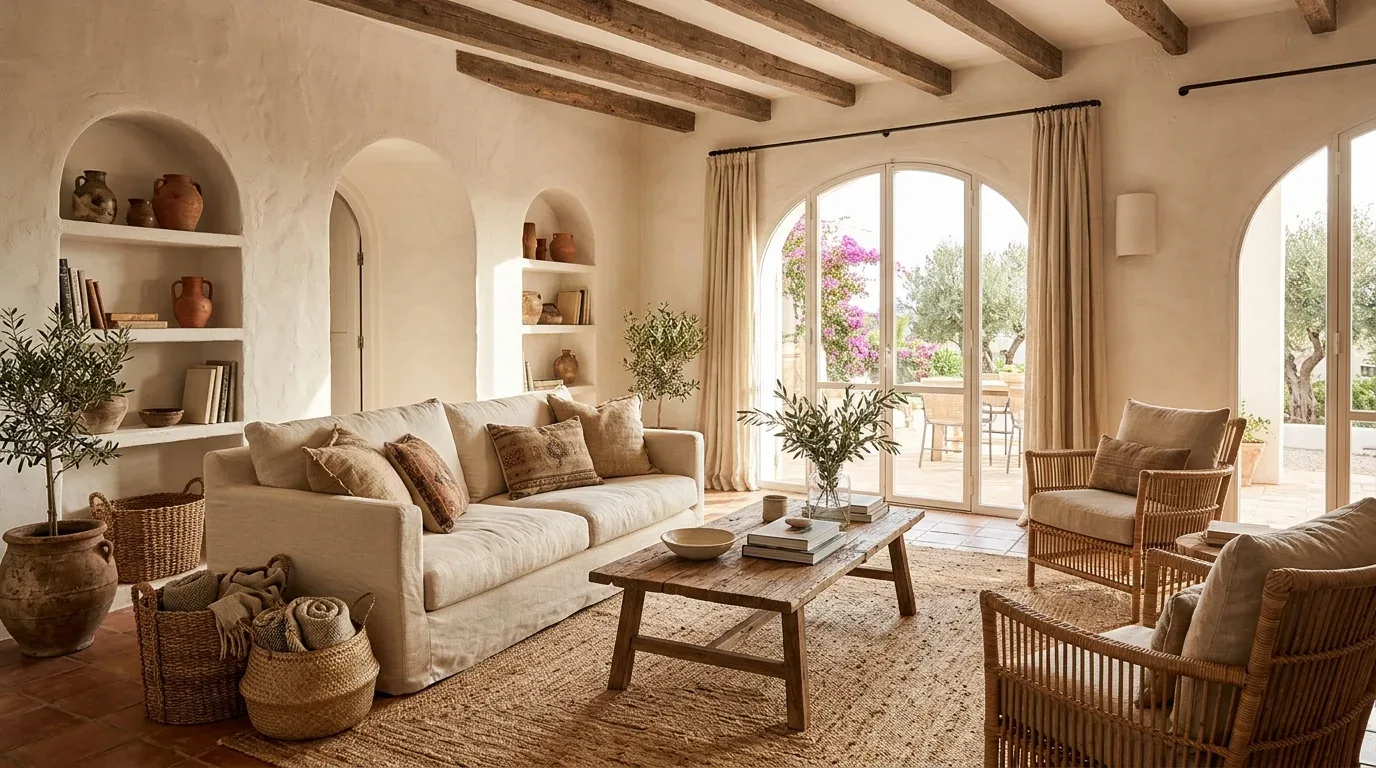
A rustic dining table creates an inviting gathering place for everyday meals and relaxed entertaining. Choose a solid wooden design with a substantial top, visible grain, and a natural or lightly distressed finish. Pair it with simple wooden chairs, woven seating, or a combination of vintage-style pieces for an collected appearance. Dress the table with a linen runner, handmade ceramic plates, and a terracotta vase filled with seasonal greenery. Keep the centerpiece low enough for comfortable conversation. Aged brass pendant lighting above the table can complete the arrangement. The goal is to create a dining space that feels comfortable, personal, and effortlessly elegant.
15. Incorporate Handmade Mediterranean Tile
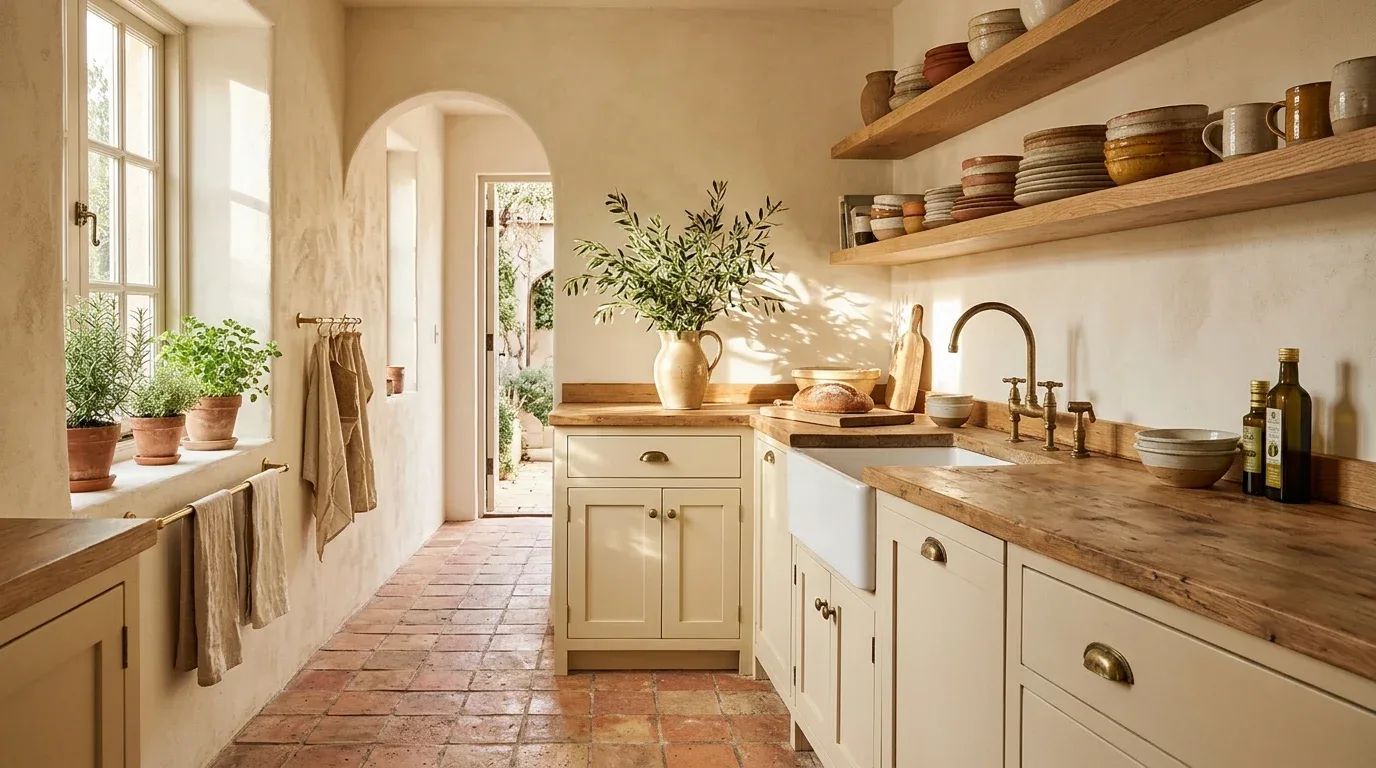
Decorative tiles offer a beautiful opportunity to introduce color, pattern, and craftsmanship. Consider hand-painted ceramic tiles in muted blue, earthy green, cream, and terracotta. They work especially well as kitchen backsplashes, bathroom accents, fireplace surrounds, or decorative borders. If you prefer a more restrained interior, use patterned tiles in a small area and balance them with plain limewashed walls and natural wood. Moroccan-inspired geometric patterns and traditional Spanish or Portuguese tile influences can both complement Mediterranean styling. Pay attention to grout color and tile finish because these details affect the overall appearance. Handmade-look tiles are a useful alternative when authentic artisan pieces are outside your budget.
16. Make a Relaxing Mediterranean Bedroom
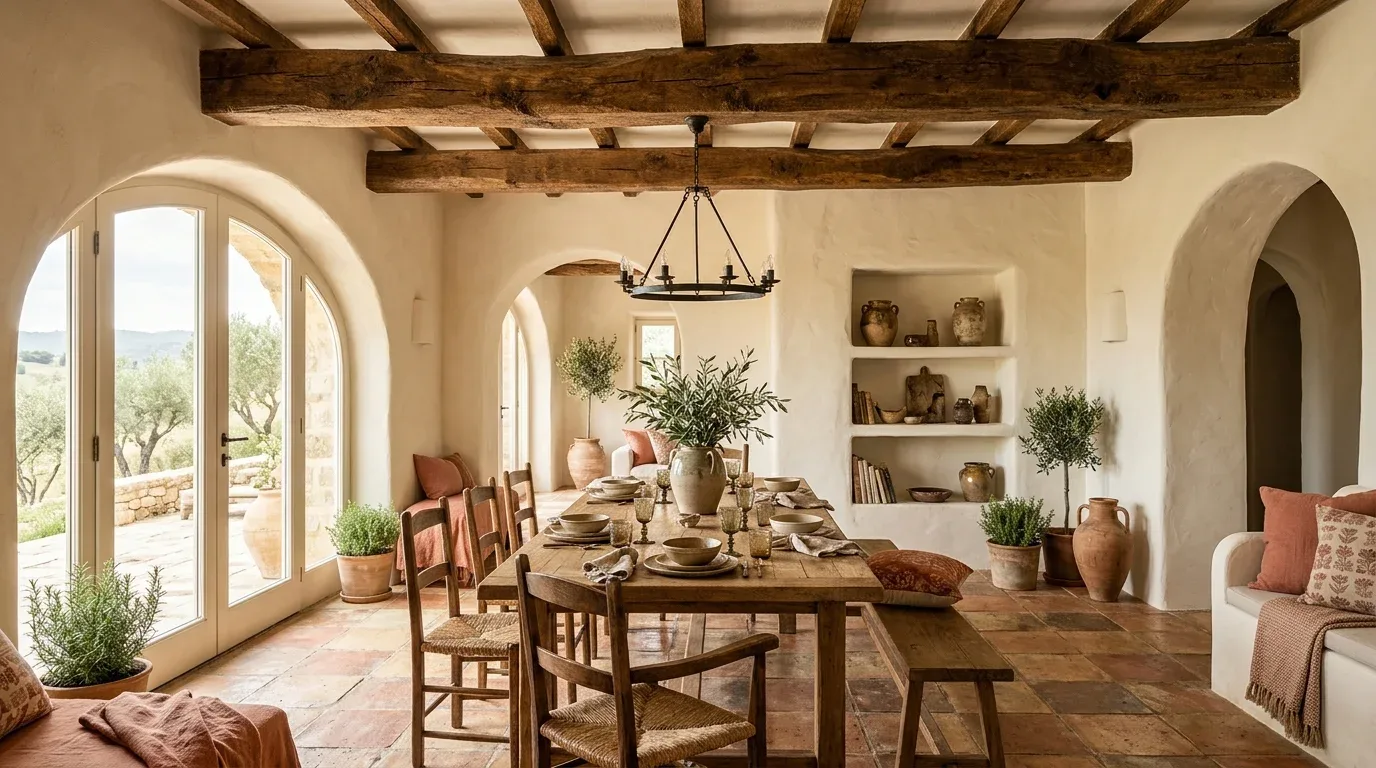
A Mediterranean bedroom should feel calm, natural, and free from unnecessary visual clutter. Begin with warm white walls and a simple wooden or upholstered bed frame. Layer the bedding with breathable linen sheets, textured cotton blankets, and cushions in sand, cream, and muted olive shades. Wooden bedside tables and ceramic lamps add subtle rustic character. If space allows, include an upholstered bench or a woven chair near the window. Keep decorative accessories minimal, perhaps adding a handmade vase or a small piece of landscape artwork. Soft lighting and natural fabrics help transform the bedroom into a peaceful retreat inspired by relaxed Mediterranean living.
17. Use Natural Stone in Bathrooms
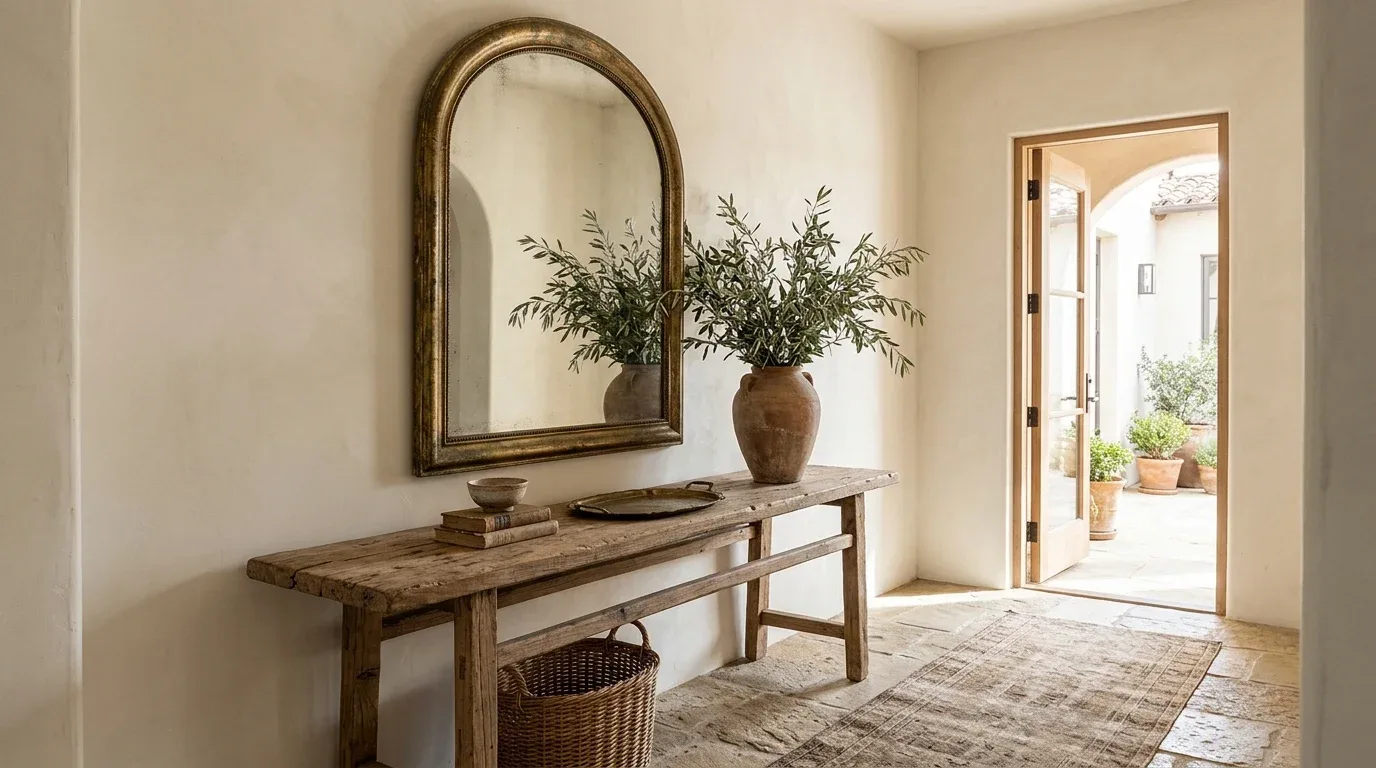
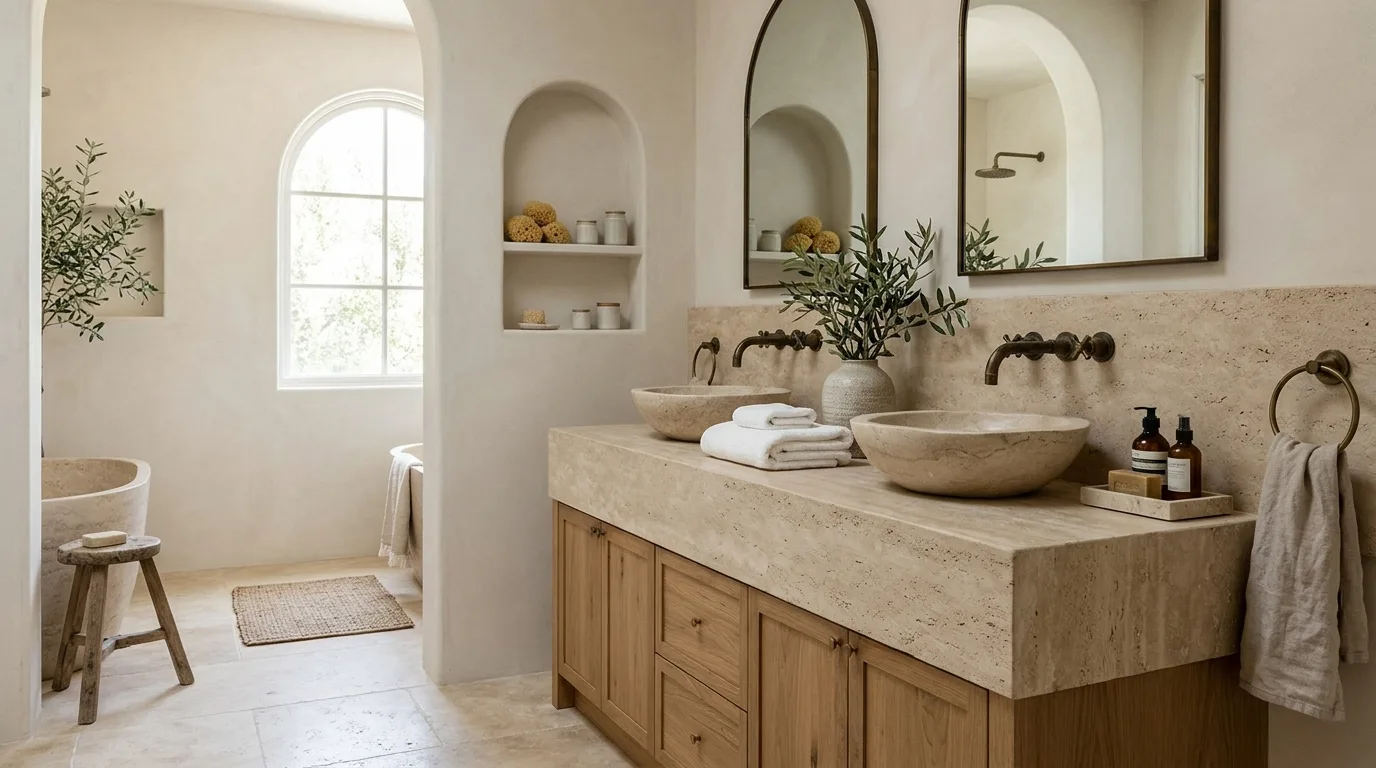
Natural stone gives Mediterranean bathrooms a spa-like atmosphere through its organic patterns and understated elegance. Travertine, limestone, and marble can be used for vanity tops, shower walls, flooring, or decorative niches. Choose warm beige and cream variations to complement brass fixtures and wooden accessories. A simple stone basin can become a striking focal point, especially when paired with a limewash-inspired wall finish. For a more affordable renovation, consider porcelain tiles that recreate the appearance of natural stone. Make sure all materials are suitable for wet areas and properly sealed where required. Finish with rolled cotton towels, handmade soap dishes, and a small plant.
18. Create an Inviting Outdoor Mediterranean Patio
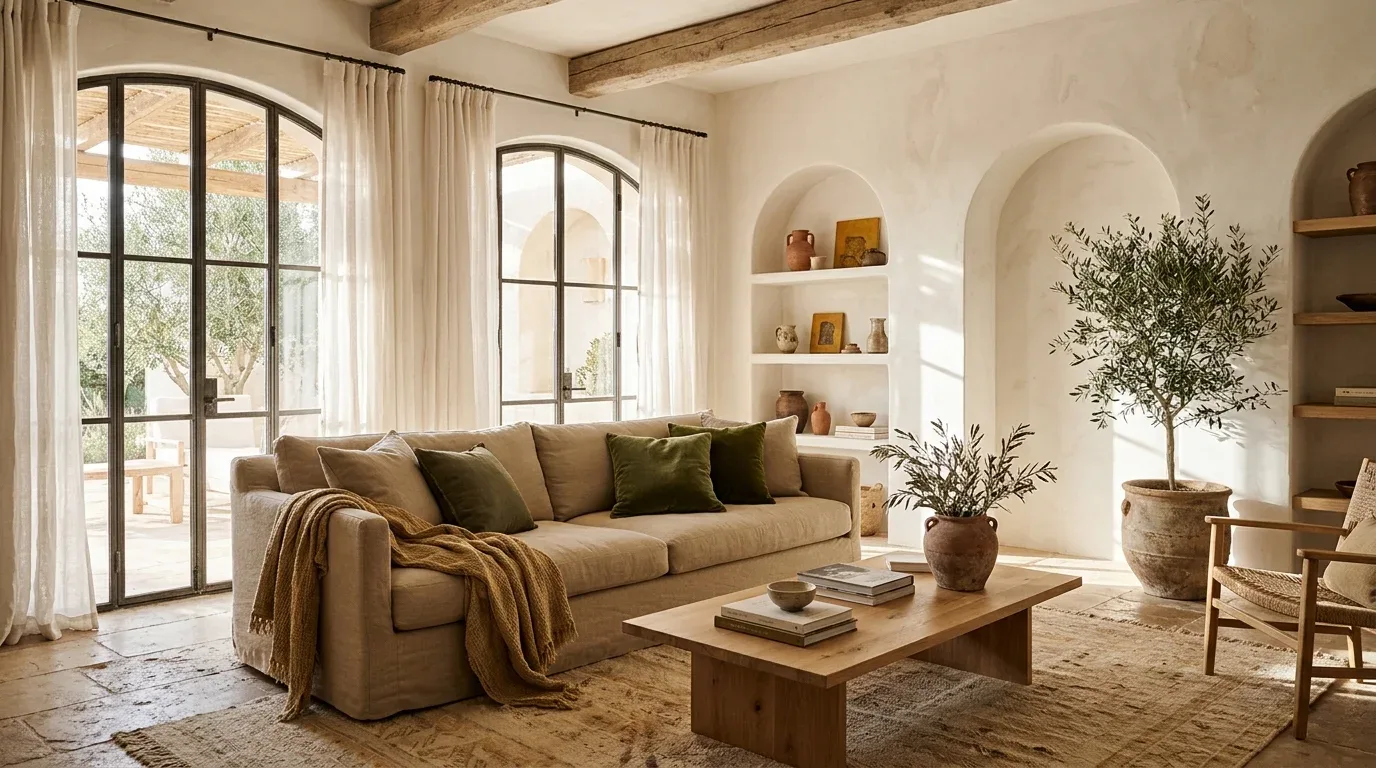
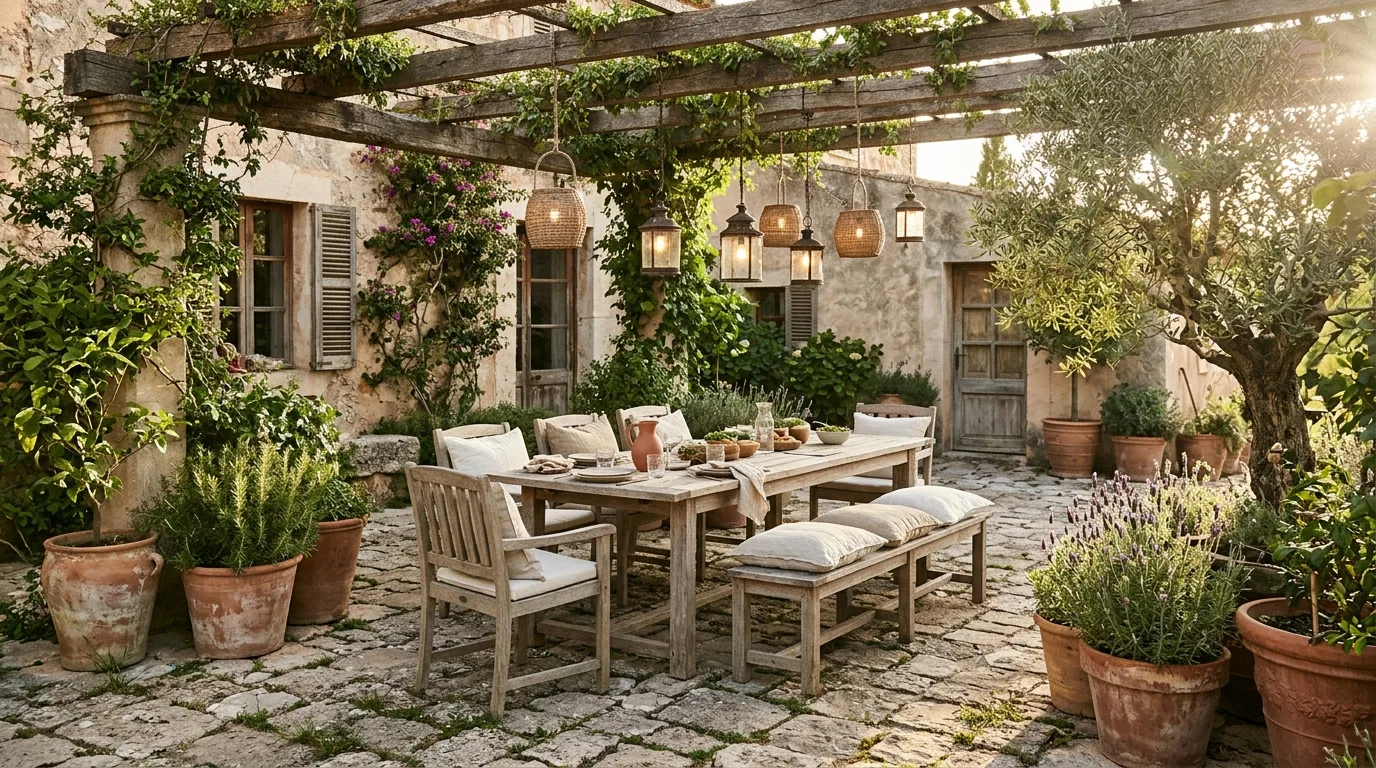
Outdoor living is an important part of Mediterranean home design, so a welcoming patio can extend the style beyond your interior rooms. Use terracotta planters, natural stone paving, wooden benches, and comfortable outdoor cushions in neutral fabrics. A simple dining table provides space for leisurely meals, while lanterns and string lights create a warm atmosphere after sunset. Add lavender, rosemary, olive trees, or other plants suited to your climate. If the patio receives strong sunlight, include a pergola, umbrella, or shade sail for comfort. Choose weather-resistant materials and fabrics so the space remains attractive and functional throughout the seasons.
19. Layer Soft Textures and Cozy Fabrics
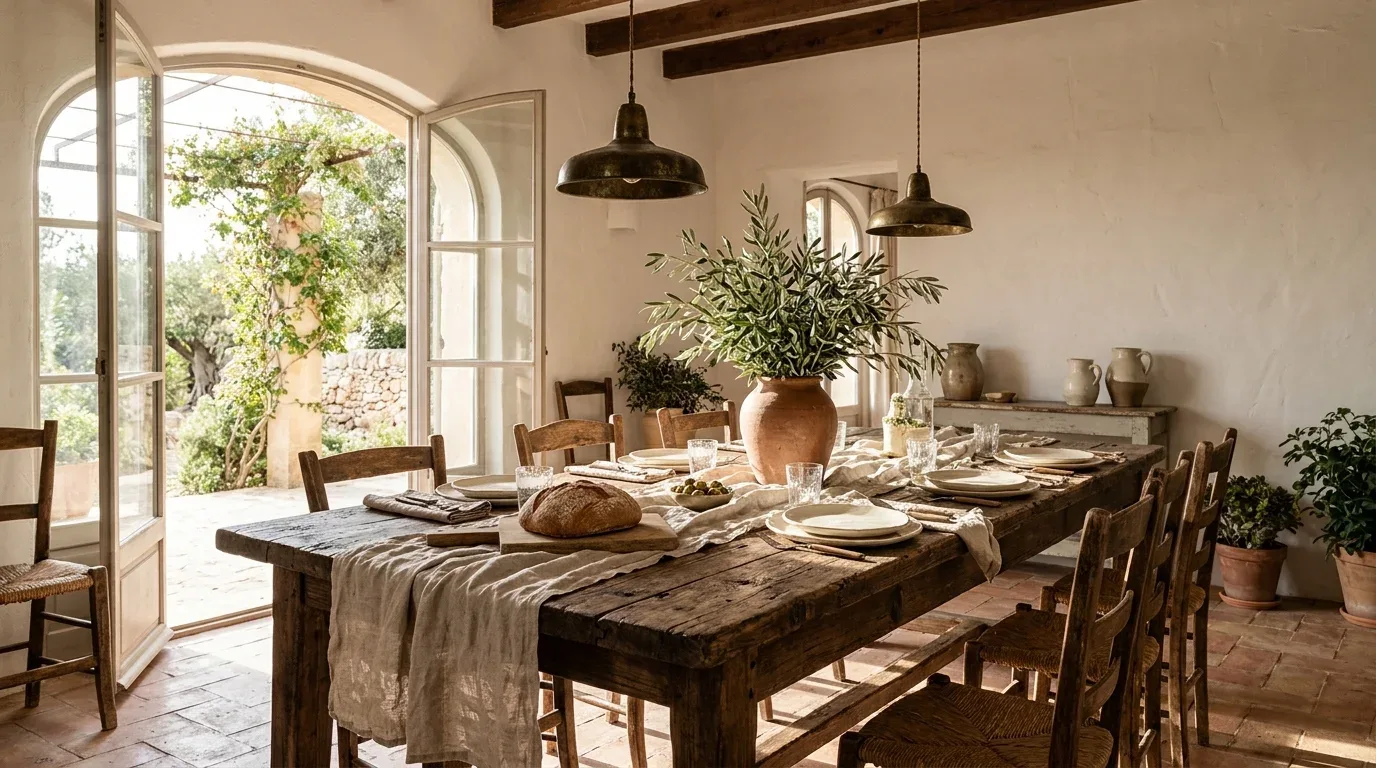
Layering different natural textures is one of the easiest ways to make Mediterranean interiors feel comfortable and sophisticated. Combine linen upholstery, chunky cotton throws, wool cushions, woven baskets, and textured rugs to create a space with visual depth. The secret is to keep the colors relatively coordinated while allowing materials to provide contrast. For example, a smooth plaster wall looks beautiful beside a rough wooden table and a soft linen sofa. Add a woven pendant light or a handcrafted cushion cover to introduce another layer of interest. Avoid overcrowding the room; leave enough open space for each material and decorative detail to stand out.
20. Finish with Thoughtful Mediterranean Lighting
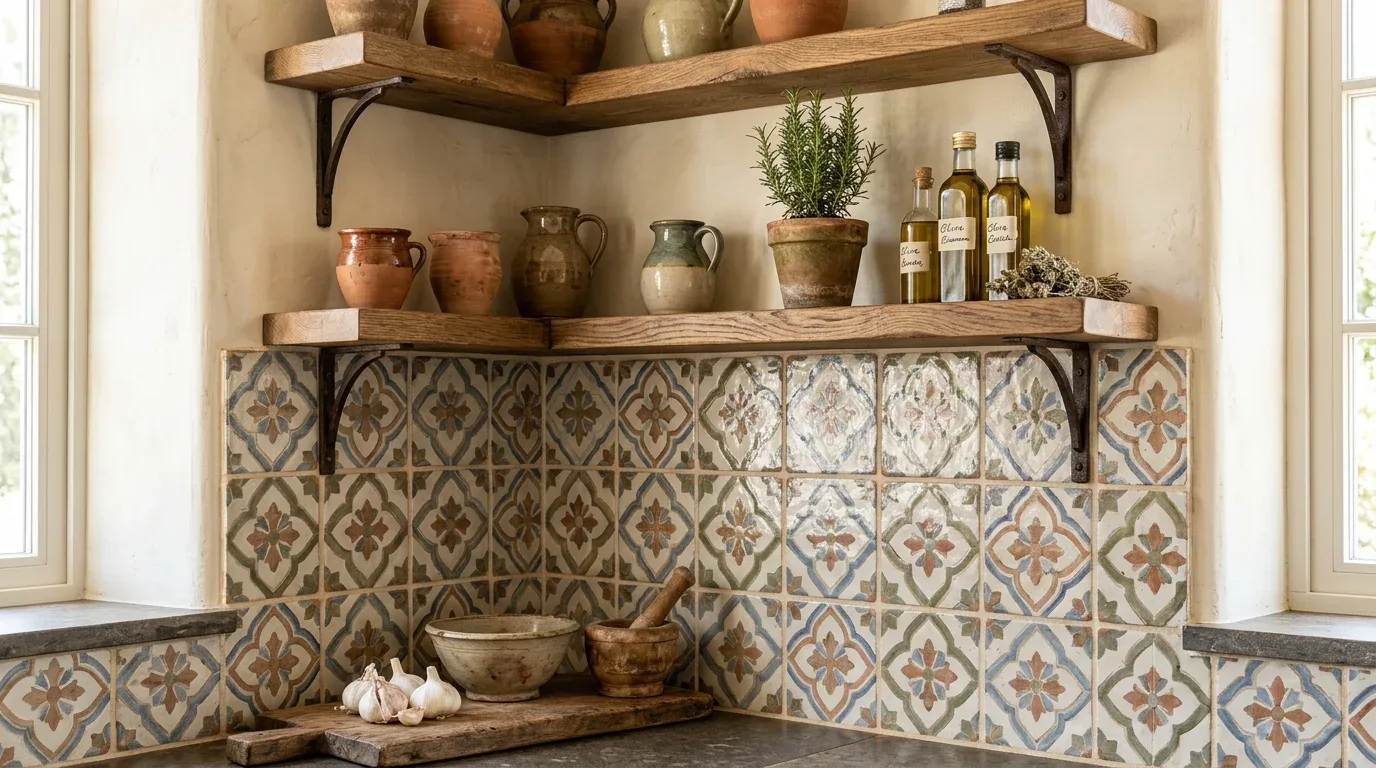
Lighting can completely change the mood of a Mediterranean-inspired home. Choose fixtures made from woven rattan, natural fibers, aged brass, ceramic, or wrought iron. Large pendant lights work beautifully above dining tables and kitchen islands, while wall sconces provide gentle illumination in hallways and bedrooms. Table lamps with textured ceramic bases are another excellent option for creating cozy evening corners. Whenever possible, use warm-white bulbs to complement earthy colors and natural materials. Layer overhead lighting with task and accent lighting instead of relying on one bright source. The result is a welcoming atmosphere that feels intimate, relaxed, and beautifully balanced.
How to Bring Mediterranean Decor Together
The most successful Mediterranean interiors feel collected rather than overly coordinated. Start with a foundation of warm neutral colors, then introduce natural materials such as wood, stone, terracotta, linen, and woven fibers. Choose a few distinctive architectural or decorative features, such as limewash walls, an arched doorway, handmade pottery, or a rustic dining table. You don’t need to incorporate every element into one room. Instead, focus on balance, natural texture, comfortable furniture, and thoughtful details that reflect your personal style.
Whether you’re updating a single corner or redesigning your entire home, these Mediterranean decor ideas can help create a space that feels warm, inviting, and timeless. Embrace imperfect finishes, celebrate natural materials, and let sunlight bring your chosen colors and textures to life. With a thoughtful combination of limewash, terracotta, and warm wood, you can enjoy the relaxed elegance of Mediterranean living every day.
Leave a Reply